

Affiliate Disclosure: This article contains affiliate links. If you purchase through these links, we may earn a commission at no additional cost to you. We only recommend products that align with sustainable fitness practices.
If you’re over 40 and frustrated by stubborn belly fat that won’t budge despite eating well and staying active, you’re experiencing something shared by millions. This isn’t about willpower or discipline—it’s about biology. Your body is undergoing significant hormonal shifts that fundamentally change how and where you store fat.
The good news? Once you understand what’s happening, you can implement targeted strategies that actually work. This guide provides science-backed methods to lose belly fat after 40 women face, addressing the hormonal, metabolic, and lifestyle factors that make midlife weight management uniquely challenging.
- One short workout a day, no equipment
- Active rest day and stretch day included
- Printable one-page plan with tips
Instant download • 100% free • No email required
Why Belly Fat Accumulates After 40: Understanding the Biology

Belly fat accumulation after 40 isn’t simply aging—it’s dramatic hormonal changes that reshape body composition. Understanding these changes represents the first step toward addressing them effectively.
The Hormonal Shift: Menopause and Perimenopause
Research published in Climacteric demonstrates that while weight gain during menopause cannot be attributed solely to the transition itself, hormonal changes are directly associated with increased total body fat and specifically increased abdominal fat.
According to University Hospitals’ menopause specialist Jean Marino, CNP, the balance of estrogen and progesterone—which work together during reproductive years—begins shifting dramatically during perimenopause, with levels of both hormones dropping sharply.
What happens hormonally:
Declining estrogen: Before menopause, estrogen helps regulate fat distribution, favoring hips and thighs. As estrogen levels drop, your body shifts fat storage patterns toward the abdomen. Research from Harvard Medical School confirms that decreased estrogen causes women’s bodies to store more fat around the abdomen instead of hips and thighs.
Increased available testosterone: When estrogen levels drop, the relative amount of testosterone increases, triggering fat redistribution to the abdominal region. A study published in PMC found that biologically available testosterone and sex hormone-binding globulin independently predict incident obesity in menopausal women.
Changes in hunger hormones: Less estrogen causes decreased leptin (a natural appetite suppressant) and increased ghrelin (a hormone signaling hunger), making you feel hungrier and prompting your body to hold onto excess weight.
Insulin resistance: Insulin resistance becomes more common during and after menopause, even in women who aren’t overweight. Your body has a harder time using glucose effectively, which promotes fat storage, particularly around the midsection.
The Metabolic Slowdown
Beyond hormones, metabolism naturally slows with age due to declining muscle mass. Research shows adults lose 3-8% of muscle mass per decade after age 30, and this loss accelerates after 40.
Muscle tissue burns significantly more calories at rest than fat tissue. As you lose muscle, your resting metabolic rate decreases—meaning you burn fewer calories doing nothing. If calorie intake remains the same while metabolism slows, weight gain becomes inevitable.
The Type of Fat Changes
Perhaps most concerning, menopause triggers a shift from subcutaneous fat (stored just beneath skin) to visceral fat (stored deep within the abdominal cavity, surrounding organs).
According to Better Health Victoria, in postmenopausal women, belly fat accounts for 15-20% of total body weight, compared with just 5-8% in premenopausal women. Visceral fat increases risk of cardiovascular disease, type 2 diabetes, and certain cancers.
Best Exercises to Lose Belly Fat After 40 Women Should Prioritize

Endless crunches won’t eliminate belly fat. You cannot spot-reduce fat from any specific area. What does work is building lean muscle mass throughout your body while creating metabolic conditions for fat loss.
Strength Training: Your Most Powerful Tool
Research is clear: strength training is the most effective exercise approach for women over 40 dealing with belly fat.
A two-year study from the University of Pennsylvania School of Medicine followed 133 overweight women aged 25-44. Those who participated in twice-weekly strength training sessions lost nearly 4% of their body weight while the control group lost no significant body fat. Even more importantly, the strength training group gained 7% abdominal fat compared to 21% in the control group—a dramatic difference.
Why strength training works:
Increases resting metabolic rate: Research shows nine months of resistance training increased resting metabolic rate by an average of 5%, or about 158 calories per day. That’s calories burned while doing absolutely nothing.
Preserves and builds muscle: During menopause, you’re fighting against natural muscle loss. Strength training counteracts this, maintaining the calorie-burning tissue you have while potentially adding more.
Improves insulin sensitivity: As estrogen declines, insulin sensitivity decreases. Strength training improves how your body processes glucose, reducing fat storage signals.
Targets visceral fat: While you can’t spot-reduce, strength training triggers biochemical reactions that specifically mobilize visceral belly fat—the dangerous kind surrounding organs.
Increases bone density: Women lose up to 10% of bone density in the first five years after menopause. Weight training increases bone density even in postmenopausal women, reducing fracture risk.
The Best Strength Training Exercises
Focus on compound movements that work multiple muscle groups simultaneously:
Squats: Build lower body strength while engaging your core. Start with bodyweight squats, progress to goblet squats, then add heavier weights as you advance.
Deadlifts: One of the most effective full-body exercises. Properly performed deadlifts strengthen your entire posterior chain—glutes, hamstrings, back, and core.
Lunges: Forward, reverse, or walking lunges build single-leg strength and stability while challenging balance.
Push-ups: Modified or full push-ups strengthen chest, shoulders, triceps, and core. Progress gradually from wall push-ups to knee push-ups to full push-ups.
Rows: Dumbbell or resistance band rows strengthen your back and improve posture, which helps your midsection appear tighter.
Planks: Isometric core strength is essential. Hold planks for 20-60 seconds, focusing on maintaining a straight line from head to heels.
Overhead press: Builds shoulder strength and stability while engaging your core to maintain proper form.
How Much and How Often
For optimal results when trying to lose belly fat after 40 women should follow:
- Frequency: 2-4 strength training sessions per week
- Sets and reps: 2-4 sets of 8-12 repetitions
- Progressive overload: Gradually increase weight, reps, or sets over time
- Rest: 48 hours between training the same muscle groups
Strategic Cardio: Less May Be More
While cardio has its place, research shows that excessive cardio—especially without strength training—can actually be counterproductive for women over 40.
Why too much cardio backfires:
- Raises cortisol (stress hormone) levels, which promotes belly fat storage
- Can lead to muscle loss if not balanced with strength training
- Creates adaptive thermogenesis (your body becomes more efficient, burning fewer calories over time)
The smart cardio approach:
Walking: Research from the National Institutes of Health shows that people getting just 10+ minutes of daily aerobic exercise average six inches smaller around the waist than non-exercisers. Aim for 20-30 minutes of brisk walking most days.
HIIT (High-Intensity Interval Training): Short bursts of intense activity followed by recovery periods. Research demonstrates HIIT is particularly effective for reducing abdominal fat. However, limit HIIT to 2-3 sessions weekly to avoid excessive cortisol elevation.
Low-impact options: Swimming, cycling, or water aerobics provide cardiovascular benefits without joint stress. These are especially valuable if you have knee or hip issues.
Tai Chi: A surprising finding—research shows that adults 50+ practicing Tai Chi for 12 weeks achieved belly fat reduction similar to those doing aerobic or strength training, making it an excellent option for those preferring gentler movement.
Nutrition Strategies to Lose Belly Fat After 40 Women Need to Know

Exercise alone won’t eliminate belly fat if nutrition doesn’t support your goals. After 40, what and how you eat becomes increasingly important.
Prioritize Protein at Every Meal
As muscle mass declines with age and hormonal changes, protein becomes even more critical. Harvard Medical School recommends ramping up protein intake to build and maintain muscle mass, which sustains a higher metabolism.
How much protein: Aim for 0.7-1 gram of protein per pound of body weight. For a 150-pound woman, that’s 105-150 grams daily.
Quality protein sources:
- Lean meats (chicken, turkey, lean beef)
- Fish (especially fatty fish like salmon, rich in omega-3s)
- Eggs (whole eggs provide complete protein plus vital nutrients)
- Greek yogurt and cottage cheese
- Legumes (beans, lentils, chickpeas)
- Tofu and tempeh
- Protein powder (whey or plant-based)
Timing matters: Distribute protein throughout the day rather than consuming most at dinner. Aim for 25-35 grams per meal to optimize muscle protein synthesis.
Focus on Hormone-Balancing Foods
Certain foods support hormonal balance and reduce inflammation, creating metabolic conditions favorable for fat loss.
Cruciferous vegetables: Broccoli, Brussels sprouts, cauliflower, and kale contain compounds that help metabolize estrogen and support detoxification.
Healthy fats: Omega-3 fatty acids from fatty fish, walnuts, flaxseeds, and chia seeds reduce inflammation. Monounsaturated fats from avocados and olive oil support hormone production.
Fiber-rich foods: Aim for 25-35 grams of fiber daily from vegetables, fruits, whole grains, and legumes. Fiber helps eliminate excess estrogen and promotes healthy blood sugar levels.
Fermented foods: Yogurt, kefir, sauerkraut, and kimchi support gut health. Your microbiome plays a significant role in hormone metabolism and weight regulation.
Manage Blood Sugar and Insulin
Insulin resistance increases during menopause, making blood sugar management crucial for belly fat loss.
Strategies to improve insulin sensitivity:
Eat protein and fiber first: Start meals with protein and vegetables before carbohydrates. This blunts blood sugar spikes.
Choose low-glycemic carbohydrates: Sweet potatoes, quinoa, oats, and legumes over refined grains and sugars.
Time carbohydrates strategically: If you’re active, consume most carbs around your workouts when your body is more insulin-sensitive.
Avoid sugary beverages: Liquid calories and sugar are particularly problematic for insulin management and belly fat accumulation.
Consider intermittent fasting: Some women find time-restricted eating (like 16:8—eating within an 8-hour window) improves insulin sensitivity. However, this doesn’t work for everyone, especially if it increases stress or disrupts sleep.
What to Minimize or Avoid
Alcohol: Your liver prioritizes alcohol metabolism over fat burning. Even moderate drinking can significantly impair belly fat loss efforts, especially in your 40s when metabolism is already slower.
Added sugars: The American Heart Association recommends no more than 25 grams (women) daily. Most women consume far more. Check labels—sugar hides in unexpected places.
Processed foods: Ultra-processed foods promote inflammation, disrupt hunger hormones, and provide empty calories that don’t satisfy.
Trans fats and excessive omega-6 fats: These promote inflammation and hormonal disruption.
Lifestyle Factors That Help Lose Belly Fat After 40 Women Often Overlook

Exercise and nutrition provide the foundation, but several lifestyle factors significantly impact belly fat accumulation in your 40s.
Sleep: Your Secret Weapon
Poor sleep dramatically undermines belly fat loss efforts. Research from Columbia University shows that sleep deprivation and disrupted sleep patterns contribute significantly to belly fat accumulation in menopausal women.
How poor sleep promotes belly fat:
Increases cortisol: Sleep deprivation elevates cortisol levels, promoting fat storage around your midsection.
Disrupts hunger hormones: Lack of sleep increases ghrelin (hunger hormone) and decreases leptin (satiety hormone), making you hungrier and less satisfied after eating.
- One short workout a day, no equipment
- Active rest day and stretch day included
- Printable one-page plan with tips
Instant download • 100% free • No email required
Reduces insulin sensitivity: Poor sleep impairs glucose metabolism, promoting fat storage.
Decreases motivation to exercise: Exhaustion makes you less likely to work out and more likely to skip planned exercise.
Impairs decision-making: When tired, you’re more likely to choose convenience foods over healthy options.
Strategies for better sleep:
- Maintain consistent sleep/wake times, even on weekends
- Aim for 7-9 hours nightly
- Keep your bedroom cool (65-68°F), dark, and quiet
- Limit caffeine after 2 PM
- Avoid alcohol close to bedtime (it disrupts sleep quality)
- Stop screen time 1-2 hours before bed
- Consider magnesium supplementation (200-400mg) to support relaxation
Stress Management: Lower Cortisol, Lose Belly Fat
Chronic stress is one of the most overlooked contributors to stubborn belly fat. When you’re constantly in “fight or flight” mode, your body clings to fat—especially around your midsection.
Why stress targets your belly:
High cortisol levels directly promote visceral fat accumulation. Research consistently shows the strongest correlation between chronic stress and abdominal obesity.
Evidence-based stress management:
Daily movement: Walking, especially in nature, reduces stress hormones while supporting fat loss.
Breathing exercises: Box breathing or 4-7-8 breathing activates your parasympathetic nervous system, countering the stress response.
Meditation and mindfulness: Even 10 minutes daily reduces cortisol. Apps like Headspace or Calm make starting easy.
Yoga: Combines movement, breathwork, and mindfulness. Research shows regular yoga practice significantly reduces cortisol levels.
Social connection: Spending time with supportive friends and family buffers stress.
Set boundaries: Learn to say no. Overcommitment is a major source of chronic stress for women in their 40s juggling careers, family, and other responsibilities.
Hydration: An Overlooked Component
Proper hydration supports every metabolic process, including fat metabolism. Dehydration can slow metabolism and lead to increased hunger (often mistaken for thirst).
Hydration guidelines:
- Aim for 8-10 glasses of water daily, more if you’re active
- Start your day with 16-24 ounces of water
- Drink water before meals (can reduce calorie intake)
- Limit beverages with caffeine or alcohol, which are diuretic
- Check urine color—pale yellow indicates good hydration
Your 12-Week Plan to Lose Belly Fat After 40 Women Can Follow

This structured approach combines everything discussed into a sustainable, progressive plan.
Weeks 1-4: Foundation Building
Exercise:
- 2-3 strength training sessions weekly (full body workouts)
- 20-30 minutes daily walking
- Focus on learning proper form for basic exercises
Nutrition:
- Calculate and track protein intake (aim for target grams daily)
- Eliminate added sugars and liquid calories
- Add one serving of vegetables to each meal
- Eat protein with every meal and snack
Lifestyle:
- Establish consistent sleep schedule (same bedtime/wake time daily)
- Practice 5-10 minutes of breathing exercises or meditation daily
- Drink water first thing each morning
Weeks 5-8: Progressive Challenge
Exercise:
- 3-4 strength training sessions weekly
- Increase weights or reps from weeks 1-4
- Add 1-2 HIIT sessions weekly (20 minutes)
- Continue daily walking
Nutrition:
- Experiment with meal timing that works for you
- Focus on whole, minimally processed foods
- Plan and prep meals in advance
- Consider tracking calories if progress has stalled
Lifestyle:
- Identify and address main stressors in your life
- Establish evening wind-down routine
- Connect with supportive friends or community
Weeks 9-12: Optimization and Refinement
Exercise:
- 4 strength training sessions weekly with progressive overload
- Mix steady-state cardio with HIIT (total 3-4 cardio sessions weekly)
- Focus on challenging yourself while maintaining good form
Nutrition:
- Fine-tune portions based on hunger, energy, and results
- Experiment with foods that make you feel best
- Maintain consistent protein intake
- Allow occasional treats (80/20 approach)
Lifestyle:
- Prioritize sleep as non-negotiable
- Maintain stress management practices
- Evaluate progress beyond scale (measurements, photos, how clothes fit, energy levels)
Realistic Expectations: What Progress Looks Like
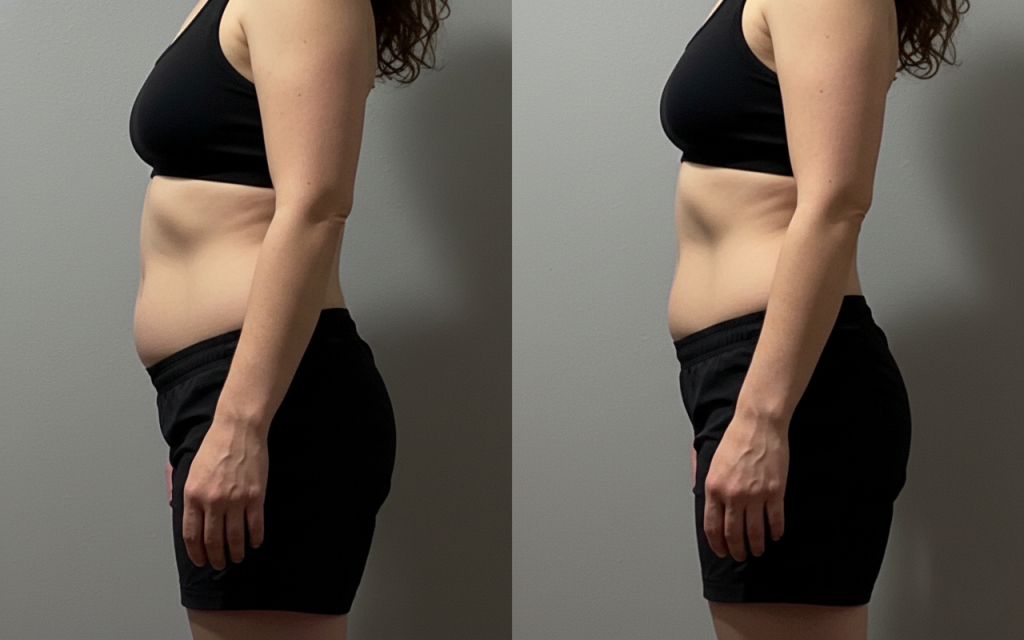
Setting realistic expectations prevents frustration and helps you stay committed to lose belly fat after 40 women commonly struggle with.
Timeline for Results
Weeks 1-2: You may notice improved energy, better sleep, and reduced bloating. Scale weight might fluctuate as your body adjusts.
Weeks 3-4: Strength increases become noticeable. You might feel clothes fitting slightly differently, even if scale hasn’t changed much.
Weeks 5-8: Visual changes begin appearing. Measurements show progress even if weight loss seems slow. This is when muscle gain might offset fat loss on the scale.
Weeks 9-12: Consistent effort produces visible results. Friends and family notice changes. You feel significantly stronger and more energetic.
Beyond 12 weeks: Fat loss continues if you maintain the program. Expect 0.5-1.5 pounds weekly fat loss (though scale may not reflect this due to muscle gain and water fluctuations).
How to Track Progress Beyond the Scale
The scale doesn’t tell the complete story, especially when building muscle while losing fat.
Better progress indicators:
Measurements: Measure waist, hips, thighs weekly. Waist measurement is particularly valuable for tracking belly fat loss.
Progress photos: Take photos every 2-4 weeks in consistent lighting, clothing, and poses. Visual changes often appear before scale changes.
How clothes fit: That favorite pair of jeans or dress is an excellent indicator. Muscle is denser than fat, so you can be smaller while weighing the same or even more.
Strength gains: If you’re lifting heavier weights or doing more reps, you’re building muscle and getting stronger—both contribute to belly fat loss over time.
Energy and mood: Improved energy, better sleep quality, elevated mood, and reduced cravings all indicate metabolic improvements.
Health markers: If you have access, track fasting blood glucose, hemoglobin A1C, cholesterol panel, and blood pressure. These often improve before dramatic visual changes.
Focus on Health, Not Perfection
The goal isn’t to achieve an unrealistic body composition—it’s to be healthy, strong, and confident. Your body in your 40s looks different than in your 20s, and that’s completely normal.
What matters:
- Sustainable habits you can maintain long-term
- Feeling energetic and capable in daily life
- Reducing health risks associated with excess visceral fat
- Feeling confident and comfortable in your body
Common Mistakes That Sabotage Progress

Avoiding these pitfalls increases your success rate dramatically.
Mistake 1: Doing Too Much Cardio, Too Little Strength
Many women default to hours of cardio because that’s what they’ve always done. But research is clear: for women over 40, strength training produces better body composition changes than cardio alone.
The fix: Make strength training your priority. Add moderate cardio (like walking) as a complement, not the main event.
Mistake 2: Under-Eating Protein
Most women over 40 don’t eat nearly enough protein to support muscle maintenance during menopause. Without adequate protein, you’ll lose muscle even as you lose weight, slowing metabolism further.
The fix: Calculate your protein needs and track intake for a week to understand where you stand. Make hitting protein targets non-negotiable.
Mistake 3: Restricting Calories Too Severely
Crash diets and extreme calorie restriction backfire by:
- Slowing metabolism further
- Promoting muscle loss
- Triggering intense hunger and cravings
- Becoming unsustainable, leading to regain
The fix: Create a modest calorie deficit (300-500 calories below maintenance) that allows steady fat loss while supporting muscle retention and hormonal balance.
Mistake 4: Neglecting Sleep and Stress Management
You can’t out-exercise or out-diet chronic stress and poor sleep. These factors fundamentally alter your hormonal environment in ways that promote belly fat storage.
The fix: Treat sleep and stress management with the same importance as exercise and nutrition. They’re not optional—they’re essential.
Mistake 5: Expecting Linear Progress
Weight loss isn’t linear. You’ll have weeks where the scale doesn’t move despite perfect adherence. Water retention, hormonal fluctuations, muscle gain, and other factors create normal fluctuations.
The fix: Focus on trends over 4-6 weeks rather than week-to-week changes. Use multiple progress indicators, not just the scale.
Mistake 6: Comparing Yourself to Others
Your hormonal profile, metabolism, genetics, stress levels, sleep quality, and history are unique. Your friend’s timeline won’t be yours.
The fix: Compete only with yourself. Celebrate your own progress and improvements.
When to Seek Professional Help
25/12/Woman-over-40-consulting-with-healthcare-provider-585×390.png 585w, https://fitnessdaily.net/wp-content/uploads/2025/12/Woman-over-40-consulting-with-healthcare-provider-263×175.png 263w, https://fitnessdaily.net/wp-content/uploads/2025/12/Woman-over-40-consulting-with-healthcare-provider.png 1248w” sizes=”auto, (max-width: 1024px) 100vw, 1024px” />While many women successfully lose belly fat after 40 women using the strategies in this guide, certain situations warrant professional support.
Consider Seeing a Healthcare Provider If:
- You’ve implemented these strategies consistently for 3+ months without any progress
- You’re experiencing severe menopausal symptoms that interfere with daily life
- You have diagnosed conditions like hypothyroidism, PCOS, or diabetes
- You’re taking medications that affect weight or metabolism
- You’re considering hormone replacement therapy
- You have a history of disordered eating
- You need personalized medical guidance
Consider Working With Specialists:
Registered dietitian: Can create personalized meal plans accounting for your unique needs, preferences, and goals.
Personal trainer or strength coach: Ensures proper form, designs progressive programs, and provides accountability.
Functional medicine practitioner: Takes a comprehensive approach to hormonal balance and metabolic health.


Therapist or counselor: If emotional eating, stress, or psychological barriers are significant obstacles.
The Bottom Line: You Can Lose Belly Fat After 40

Learning to lose belly fat after 40 women experience requires a different approach than what worked in your 20s and 30s. The hormonal changes during perimenopause and menopause are real, significant, and require you to adjust your strategy accordingly.
But here’s the empowering truth: armed with the right knowledge and approach, you absolutely can lose belly fat and improve your body composition after 40. Research consistently demonstrates that women who implement strength training, eat adequate protein, manage stress, prioritize sleep, and stay consistent achieve meaningful results.
The key is understanding that this isn’t about deprivation, extreme restriction, or spending hours exercising. It’s about working intelligently with your changing body rather than against it.
Your Action Plan:
- Start strength training 2-3 times weekly with compound exercises that build full-body muscle
- Increase protein intake to 0.7-1 gram per pound of body weight daily
- Walk daily for 20-30 minutes, gradually building intensity
- Prioritize sleep, aiming for 7-9 hours nightly with consistent schedule
- Manage stress through daily practices like breathing exercises, meditation, or yoga
- Stay consistent for at least 12 weeks before evaluating overall progress
- Track multiple indicators—measurements, photos, how clothes fit, strength gains, energy levels
You didn’t gain belly fat overnight, and you won’t lose it overnight. But with patience, consistency, and the right strategies, you will see progress. More importantly, you’ll feel stronger, more energetic, and more confident in your body.
The strategies in this guide aren’t a temporary fix—they’re sustainable habits that support lifelong health. Start today with one small change. Add another next week. Build momentum gradually.
Your body is capable of remarkable transformation at any age. You just need to give it what it needs to succeed.
- One short workout a day, no equipment
- Active rest day and stretch day included
- Printable one-page plan with tips
Instant download • 100% free • No email required