

High fiber foods for weight loss are among the most consistently supported dietary tools in nutrition research — not because they trigger rapid fat loss, but because they change how hunger behaves over time. When fiber intake increases, calorie intake tends to decrease. Satiety signals last longer. Digestive patterns stabilize. And adherence to a reduced-calorie diet becomes measurably easier to maintain.
This guide covers 30 foods ranked and explained by fiber content, calorie density, and satiety impact. It also addresses how fiber works mechanically, what separates useful sources from overhyped ones, and where the approach fails — because it does fail, under predictable conditions.
In Short
- High fiber foods for weight loss work primarily by slowing digestion and extending satiety signals
- Legumes, vegetables, and whole grains consistently outperform supplements in long-term adherence studies
- Soluble fiber is the primary driver of appetite regulation; insoluble fiber supports bowel regularity
- Increasing fiber too quickly produces GI distress — the transition matters as much as the target intake
- Daily targets are 25g for women, 38g for men; most U.S. adults consume roughly 16g
How High Fiber Foods for Weight Loss Actually Work
Before reviewing individual foods, it’s worth understanding the mechanism. Fiber is a carbohydrate the body cannot digest. Instead of being broken down into glucose, it passes through the digestive tract mostly intact. This has two major downstream effects relevant to weight management.

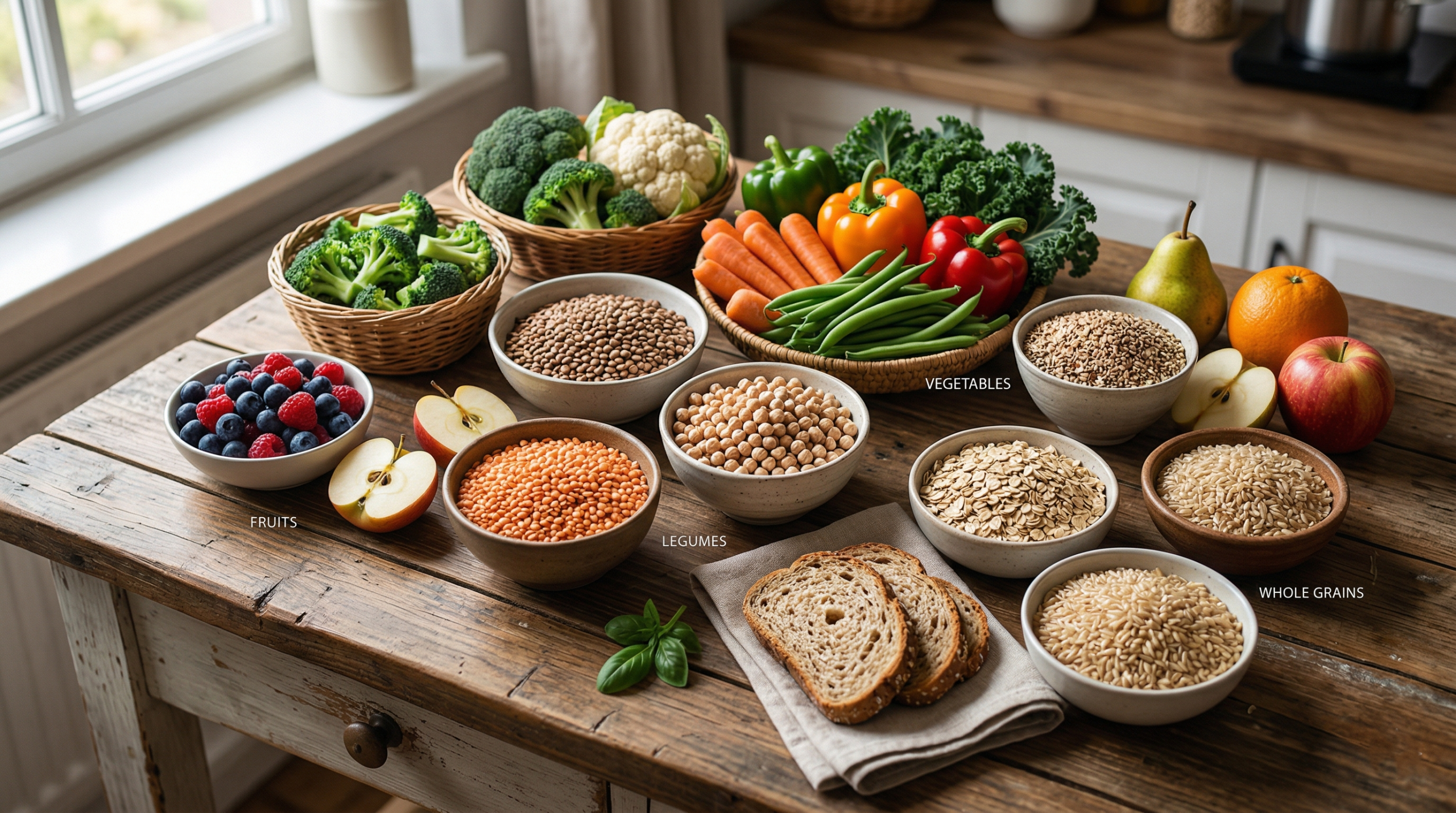
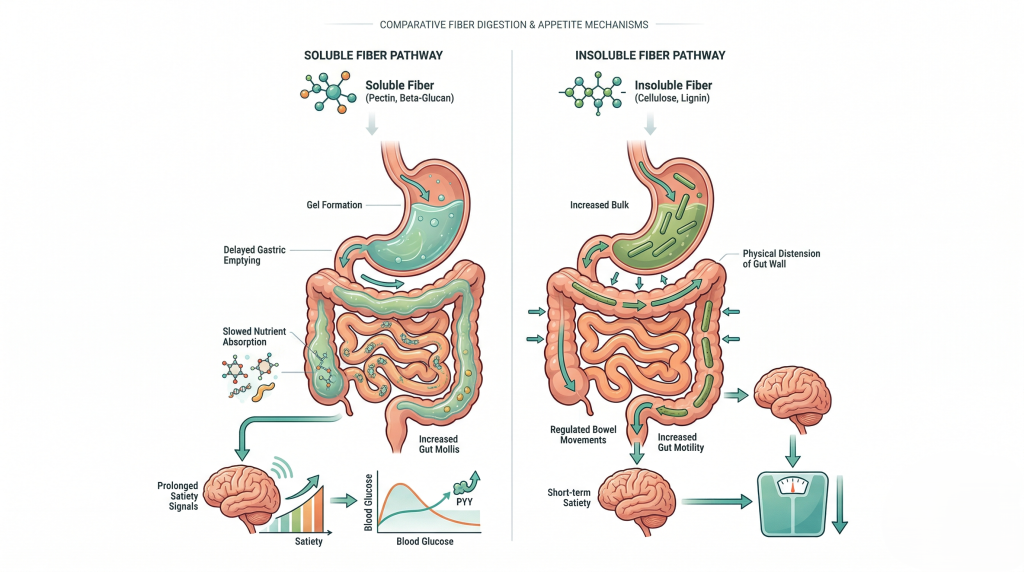
Soluble fiber dissolves in water and forms a gel-like substance in the gut. This slows gastric emptying — the rate at which food moves from the stomach into the small intestine. The result is a prolonged feeling of fullness after eating. Soluble fiber also blunts the post-meal blood sugar spike, which reduces subsequent hunger driven by blood glucose fluctuation. Found in oats, beans, apples, and flaxseed.
Insoluble fiber does not dissolve. It adds bulk to stool, accelerates transit time through the large intestine, and supports regular bowel movements. It contributes less directly to satiety but plays a critical role in gut health. Found in wheat bran, vegetables, and whole grains.
Most high-fiber whole foods contain both types in varying ratios. The practical implication: eating a variety of fiber sources matters more than targeting one type specifically.
Research from the POUNDS Lost clinical trial found that fiber intake was the single strongest predictor of weight loss across all dietary groups — independent of macronutrient composition. Participants who ate more fiber lost more weight, regardless of whether they were following a low-fat or low-carbohydrate protocol.
How Much Fiber Do You Need for Weight Loss
The National Academy of Medicine recommends 25 grams per day for women and 38 grams per day for men. The Mayo Clinic’s dietary guideline framework sets a target of 14 grams of fiber per 1,000 calories consumed.
The average U.S. adult currently eats approximately 14–16 grams per day — roughly half the recommended amount.
From a weight management perspective, the relevant threshold appears to be incremental increases from baseline rather than hitting an absolute number overnight. One widely cited review found that adding 14 grams of fiber per day was associated with a roughly 10% decrease in calorie intake and approximately 1.9 kg of body weight loss over 3.8 months, without any other dietary changes.
Who may need to be cautious about rapid increases:
- Individuals with irritable bowel syndrome (IBS) — certain fermentable fibers (FODMAPs) can worsen symptoms
- People with Crohn’s disease or colitis in active flares
- Those on medications that interact with fiber absorption (some cholesterol-lowering drugs, certain antibiotics)
30 High Fiber Foods for Weight Loss: Ranked and Explained
The following list is organized by food category. Fiber content values are based on standard serving sizes and sourced from USDA FoodData Central unless otherwise noted.
Legumes and Beans — The Highest Fiber Foods to Eat for Weight Loss
Legumes consistently produce the strongest satiety response per calorie of any food category. They combine high soluble fiber content with protein, which reinforces the fullness signal through two independent mechanisms.
1. Split Peas — 16.3g fiber per cooked cup Among the highest-fiber foods available. Split peas are also low in fat and moderately high in protein. The soluble fiber content is particularly high relative to other legumes.
2. Lentils — 15.6g fiber per cooked cup Lentils cook faster than most legumes, require no soaking, and absorb flavors well. Green, brown, and red lentils vary slightly in texture but are comparable in fiber content.
3. Black Beans — 15g fiber per cooked cup Strong mix of soluble and insoluble fiber. Black beans also contain resistant starch, which functions similarly to soluble fiber in the gut microbiome. A documented satiety enhancer in controlled meal studies.
4. Chickpeas (Garbanzo Beans) — 12.5g fiber per cooked cup Widely used across a range of cuisines, which makes them practical for dietary adherence. High in both fiber and protein. Roasted chickpeas serve as a useful replacement for processed snack foods.
5. Kidney Beans — 11.3g fiber per cooked cup Commonly available in canned form. The canning process does not significantly reduce fiber content. Rinsing canned beans reduces sodium by approximately 40%.
6. Edamame — 8g fiber per cooked cup Technically a whole soybean. Edamame is notable for being both high in fiber and one of the few plant foods with a complete amino acid profile. It functions well as a standalone snack with strong satiety properties.
Vegetables — High Fiber Low Calorie Foods List
Vegetables as a category represent the most efficient combination of low calorie density and high fiber volume. They increase the physical bulk of a meal — occupying stomach space — without adding proportional calories.
7. Avocado — 10g fiber per whole fruit Avocado is unusual in containing significant amounts of both soluble and insoluble fiber, along with monounsaturated fat. The fat content slows gastric emptying further, extending satiety beyond what the fiber content alone would predict.
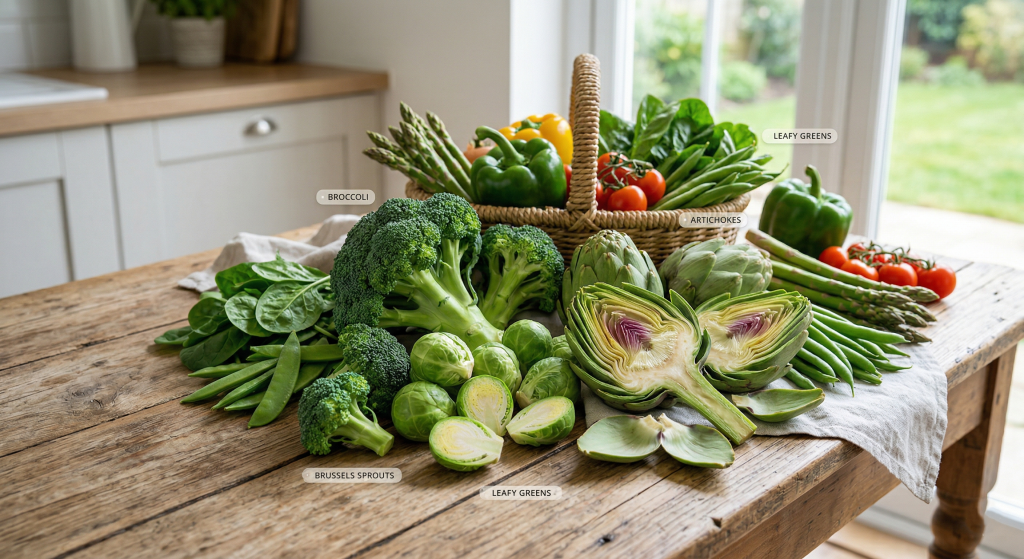
8. Artichoke — 9.6g fiber per medium cooked artichoke One of the highest-fiber vegetables available. Artichokes contain a specific type of soluble fiber called inulin, which acts as a prebiotic — feeding beneficial gut bacteria and supporting microbiome diversity. This has downstream implications for metabolic health and appetite regulation.
9. Brussels Sprouts — 4g fiber per cooked cup Brussels sprouts are glucosinolate-rich, which contributes to their satiety profile through appetite hormone signaling. They also contain high amounts of vitamin K and C relative to their calorie content.
10. Broccoli — 5.1g fiber per cooked cup Provides a combination of insoluble fiber and sulforaphane, a compound associated with anti-inflammatory effects. Broccoli is also high in volume relative to its calorie density — a cup of cooked broccoli contains roughly 55 calories.
11. Sweet Potato (with skin) — 4g fiber per medium baked potato The skin contains the majority of the fiber. Sweet potato is calorie-dense relative to other vegetables on this list, but the fiber content and glycemic modulation make it a reasonable inclusion in a calorie-conscious diet when portion is controlled.
12. Carrots — 3.6g fiber per cup raw Practical for snacking. The crunch and chewing time involved contribute modestly to satiety signals. Best consumed whole rather than juiced, as juicing removes the fiber.
13. Peas (Green) — 8.6g fiber per cooked cup Often underestimated. Green peas combine fiber with plant protein and are considerably lower in calorie density than most legumes.
14. Parsnips — 5.6g fiber per cooked cup Underused but nutritionally dense. High in both soluble and insoluble fiber. Texture holds up well in soups and roasted preparations.
Fruits — Best Fiber Foods That Support Satiety
Fruits contribute soluble fiber, primarily in the form of pectin — a gel-forming fiber found in cell walls. Pectin has documented appetite-suppressing effects in several controlled trials. Whole fruit consistently outperforms fruit juice for satiety, as juicing removes most of the fiber.
15. Raspberries — 8g fiber per cup Among the highest-fiber fruits available. Raspberries are also relatively low in sugar compared to other fruits in this calorie range, making them practical for calorie-restricted approaches.
16. Pears — 5.5g fiber per medium pear High in pectin. The skin contains approximately 40% of total fiber content, so consuming unpeeled pears is meaningfully more beneficial. Pears also have a relatively low glycemic index for a fruit of their sweetness level.
17. Apples — 4.5g fiber per medium apple (with skin) The “apple a day” pattern has some documented evidence behind it. Pectin content is highest in the skin and just beneath it. A medium apple eaten before a meal has been associated with reduced calorie intake at that meal in controlled studies.
18. Blackberries — 7.6g fiber per cup Comparable to raspberries in fiber content and calorie density. High in polyphenols, which have independent associations with gut microbiome diversity and metabolic health.
19. Kiwi — 2.7g fiber per fruit Notable for containing both soluble and insoluble fiber, plus actinidin, a digestive enzyme that supports protein digestion. Two kiwis provide more than 5g of fiber at roughly 90 calories.
20. Guava — 9g fiber per cup Exceptionally high fiber content for a fruit. Not as widely available in U.S. grocery stores as other options, but worth including when accessible. The edible seeds contribute significantly to total fiber content.
21. Oranges — 3.1g fiber per medium orange Notably, whole oranges contain much more fiber than orange juice. An 8-oz glass of commercial orange juice typically contains less than 0.5g of fiber, compared to the 3g in a whole fruit.
Whole Grains — High Fiber Breakfast Ideas for Weight Loss and Beyond
Whole grains retain all three parts of the grain — bran, germ, and endosperm — providing fiber, B vitamins, and trace minerals that are stripped away during refining.

22. Oats (Rolled or Steel-Cut) — 4g fiber per cooked cup Oats contain beta-glucan, a specific type of soluble fiber with particularly strong evidence for appetite suppression and cholesterol reduction. Steel-cut oats digest more slowly than instant oats, producing a more sustained satiety curve. An oat-based breakfast is one of the most consistent findings in the fiber-rich breakfast ideas for weight loss literature.
23. Barley — 6g fiber per cooked cup The highest-fiber whole grain commonly available. Also contains beta-glucan like oats. Barley has a noticeably lower glycemic index than rice or wheat, making it relevant for blood sugar management alongside weight control.
24. Quinoa — 5g fiber per cooked cup Technically a seed, though commonly classified with grains. Quinoa provides a complete protein alongside its fiber content — a combination uncommon in plant foods. This protein-fiber pairing has additive satiety effects.
25. Whole Wheat Bread — 2g fiber per slice A significant step up from white bread (roughly 0.6g per slice). The quality of whole wheat bread products varies considerably — reading the ingredient label for “whole wheat flour” as the first ingredient is the relevant filter. “Multigrain” or “wheat bread” labels do not necessarily indicate high fiber content.
26. Brown Rice — 3.5g fiber per cooked cup Compared to white rice (0.6g per cooked cup), brown rice retains the bran layer and germ. The difference in glycemic behavior between white and brown rice is measurable over time, particularly relevant for individuals managing blood sugar.
Nuts and Seeds — Concentrated Fiber with Caloric Density Trade-offs
Nuts and seeds are fiber-dense but also calorie-dense. The relevant consideration is portion control — fiber benefits accrue at realistic portions (1–2 oz), while caloric contribution can become significant at higher amounts.
27. Chia Seeds — 10g fiber per 2-tablespoon serving One of the most concentrated fiber sources by volume. Chia seeds absorb up to 10–12 times their weight in water, forming a gel that expands in the stomach. This volumetric expansion contributes to satiety at a relatively low calorie cost. They have no distinct flavor and integrate easily into smoothies, oatmeal, and puddings.
28. Flaxseeds (Ground) — 3.8g fiber per 2-tablespoon serving Ground flaxseeds are more bioavailable than whole flaxseeds, which may pass through the digestive tract intact. High in both soluble fiber (mucilage) and omega-3 fatty acids (ALA). The soluble fiber component supports bile acid binding, which has cholesterol-lowering secondary effects.
29. Almonds — 3.5g fiber per 1-oz serving Almonds are among the highest-fiber nuts. Research indicates that a portion of the fat in almonds is not fully absorbed due to their cellular structure, making their actual caloric contribution slightly lower than the label suggests. Still, portion discipline applies.
30. Sunflower Seeds — 3.1g fiber per 1-oz serving A practical snacking option. Lower in calories than many nuts at equivalent portions. Sunflower seeds are also high in magnesium and vitamin E.
High Fiber Low Calorie Foods: Understanding the Distinction
Not all high-fiber foods are low in calories. The distinction matters in practice.
| Food | Fiber per serving | Calories per serving |
|---|---|---|
| Split peas (1 cup cooked) | 16g | 231 |
| Raspberries (1 cup) | 8g | 64 |
| Chia seeds (2 tbsp) | 10g | 138 |
| Broccoli (1 cup cooked) | 5g | 55 |
| Almonds (1 oz) | 3.5g | 164 |
| Avocado (1 whole) | 10g | 234 |
The practical takeaway: for calorie-conscious approaches, vegetables and berries offer the most fiber per calorie. For situations where total food volume is more important than calorie density — such as post-workout eating or managing hunger on fewer total calories — legumes provide fiber in a form that also contributes to protein intake.
Neither category is universally superior. The right composition depends on total calorie target and individual digestive tolerance.
Fiber Rich Breakfast Ideas for Weight Loss
Breakfast is the meal where fiber-focused eating patterns produce the clearest satiety carry-through. A high-fiber morning meal has been associated with lower calorie intake at lunch and, to a lesser extent, dinner — likely through sustained effects on appetite hormones including GLP-1 and PYY.
Observed patterns that produce consistent fiber intakes above 10g at breakfast:
- Steel-cut oatmeal with chia seeds and raspberries — beta-glucan from oats, mucilage from chia, pectin from raspberries. Combined fiber: approximately 16–18g.
- Whole grain toast with avocado and flaxseed — soluble and insoluble fiber from multiple sources. Combined fiber: approximately 14–16g.
- Smoothie with frozen berries, spinach, chia seeds, and unsweetened almond milk — practical for time constraints. Combined fiber: approximately 10–12g depending on quantities.
- Greek yogurt with blackberries and ground flaxseed — combines protein with soluble fiber. Combined fiber: approximately 10g.
- Lentil-based breakfast bowl (savory approach, common in South Asian dietary patterns) — provides the highest fiber of any breakfast option listed here. Combined fiber: 15–18g.
The consistent pattern: multiple fiber sources at the same meal tend to produce additive rather than merely cumulative satiety effects, because different fiber types act through different mechanisms.
How to Increase Fiber Intake Without GI Distress
Increasing fiber too quickly is one of the most common reasons people abandon high-fiber dietary approaches. The discomfort — gas, bloating, cramping — is not permanent. It reflects the gut microbiome adapting to a new substrate.
Practical transition principles:
- Increase total fiber by no more than 5g per week from baseline
- Prioritize water intake alongside fiber increases — soluble fiber requires water to form gel; without adequate hydration, it can worsen constipation rather than prevent it
- Introduce fermentable fibers (beans, lentils, chicory root) gradually, as they produce the most gas during microbiome adaptation
- Cooked legumes are generally better tolerated than raw or canned versions for individuals with sensitive digestion — cooking breaks down some of the oligosaccharides that cause gas
The adaptation period for most individuals is 3–4 weeks. After that point, the gut microbiome has typically diversified enough to process fermentable fibers with significantly less gas production.
Who Should Approach High Fiber Diets with Caution
High-fiber eating is broadly appropriate for most adults. There are, however, population groups where standard recommendations require modification.
Individuals with IBS (Irritable Bowel Syndrome): Some high-fiber foods are also high in FODMAPs — fermentable oligosaccharides, disaccharides, monosaccharides, and polyols. For IBS-D (diarrhea-predominant) and IBS-M (mixed), high-FODMAP fiber sources like garlic, onion, wheat, and certain legumes can worsen symptoms. A low-FODMAP approach supervised by a registered dietitian is typically more appropriate than a standard high-fiber recommendation.
Individuals with Inflammatory Bowel Disease (IBD) in active flares: During active Crohn’s disease or ulcerative colitis flares, high-fiber intake may irritate inflamed intestinal tissue. Remission phases typically allow a return to higher fiber intake with appropriate supervision.
Older adults with chewing or swallowing difficulties: Fibrous whole foods may pose a practical barrier. Ground seeds, pureed legumes, and cooked soft grains are workable alternatives that preserve fiber content.
Anyone starting fiber supplementation alongside medication: Fiber can reduce the absorption rate of certain medications including digoxin, certain thyroid medications, and some cholesterol drugs. Spacing fiber-rich meals or supplements from medication doses by 2–4 hours is the standard mitigation.
The Evidence on Fiber and Long-Term Weight Management
Most discussions of weight loss focus on short-term results. The more relevant question for sustainable management is whether a dietary change can be maintained.
Fiber stands out in the research literature precisely because adherence to high-fiber eating patterns tends to improve rather than deteriorate over time. This contrasts with highly restrictive macronutrient approaches, where adherence typically declines sharply after 6–12 months.
A 2-year randomized clinical trial (the POUNDS Lost study) found that fiber intake was the single strongest dietary predictor of weight loss and dietary adherence — outperforming macronutrient composition, calorie restriction intensity, and baseline diet quality as independent predictors.
This adherence advantage is mechanically logical. High-fiber foods reduce hunger without requiring caloric deprivation. When hunger is managed through satiety rather than willpower, behavioral compliance holds more consistently over time.
The limitation worth naming: fiber is not a metabolic shortcut. Its effects on weight are real but moderate — on the order of 1–2 kg over several months in controlled conditions. It works best as a structural component of a broader dietary pattern, not as an isolated intervention.