

Affiliate Disclosure: This article contains affiliate links. If you purchase through these links, we may earn a commission at no additional cost to you. We only recommend products that align with sustainable fitness practices.
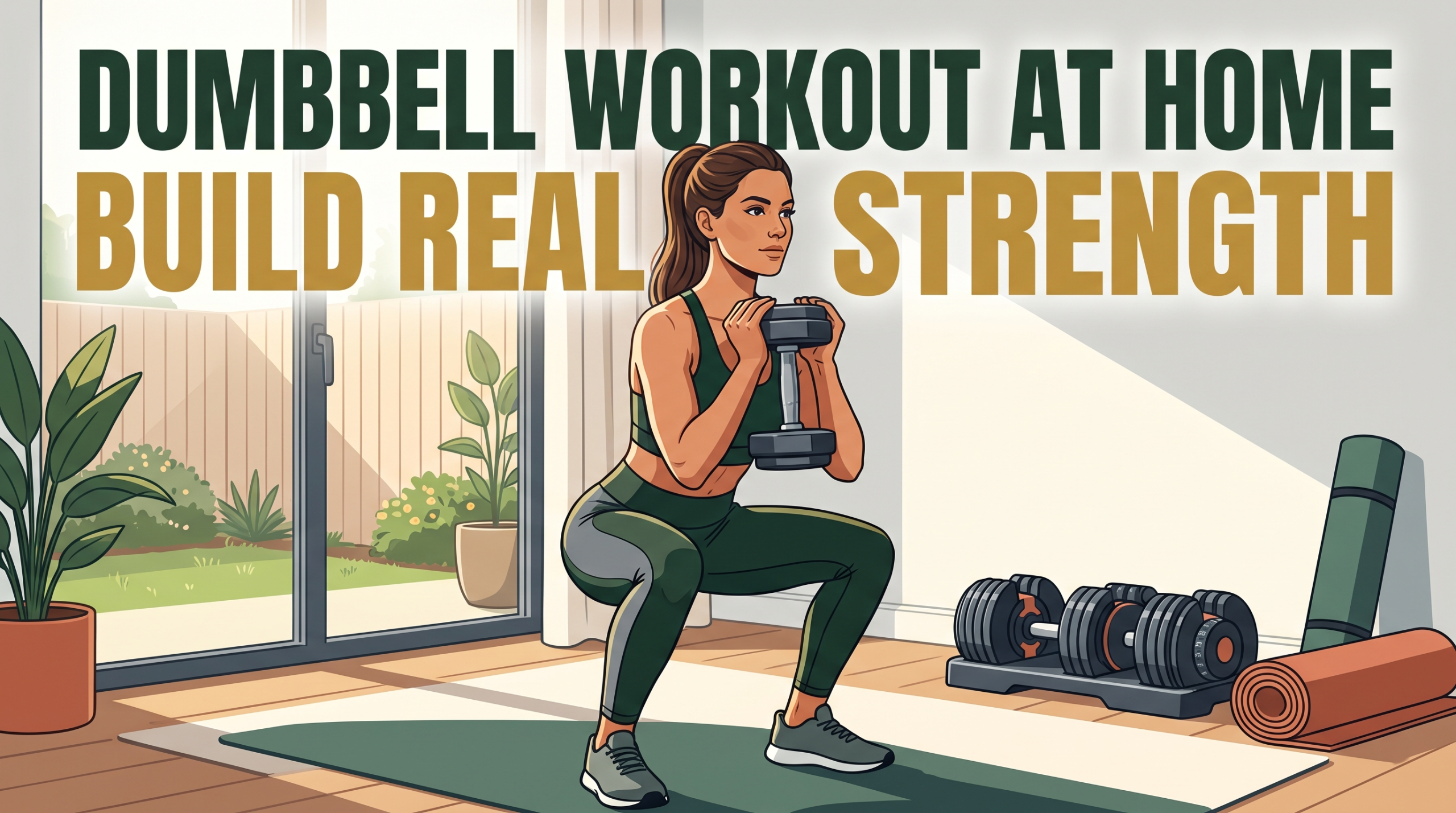
Building real strength doesn’t require expensive gym memberships or rooms full of equipment. A well-designed dumbbell workout for women at home can transform your fitness, boost metabolism, and develop functional strength that carries into everyday life.
Dumbbells represent one of the most accessible and effective tools for strength training. Research from the National Center for Biotechnology Information demonstrates that dumbbell exercises produce comparable muscle activation to more complex gym equipment, making them particularly effective for home training environments. Whether you’re beginning your fitness journey or refining an existing routine, this guide provides a comprehensive framework for building muscle and strength from your living room.
- 6-move circuit with easier and harder options
- Warm-up, cool-down and weekly tracker
- Printer-friendly, one page
Instant download • 100% free • No email required

Why Home-Based Dumbbell Training Works
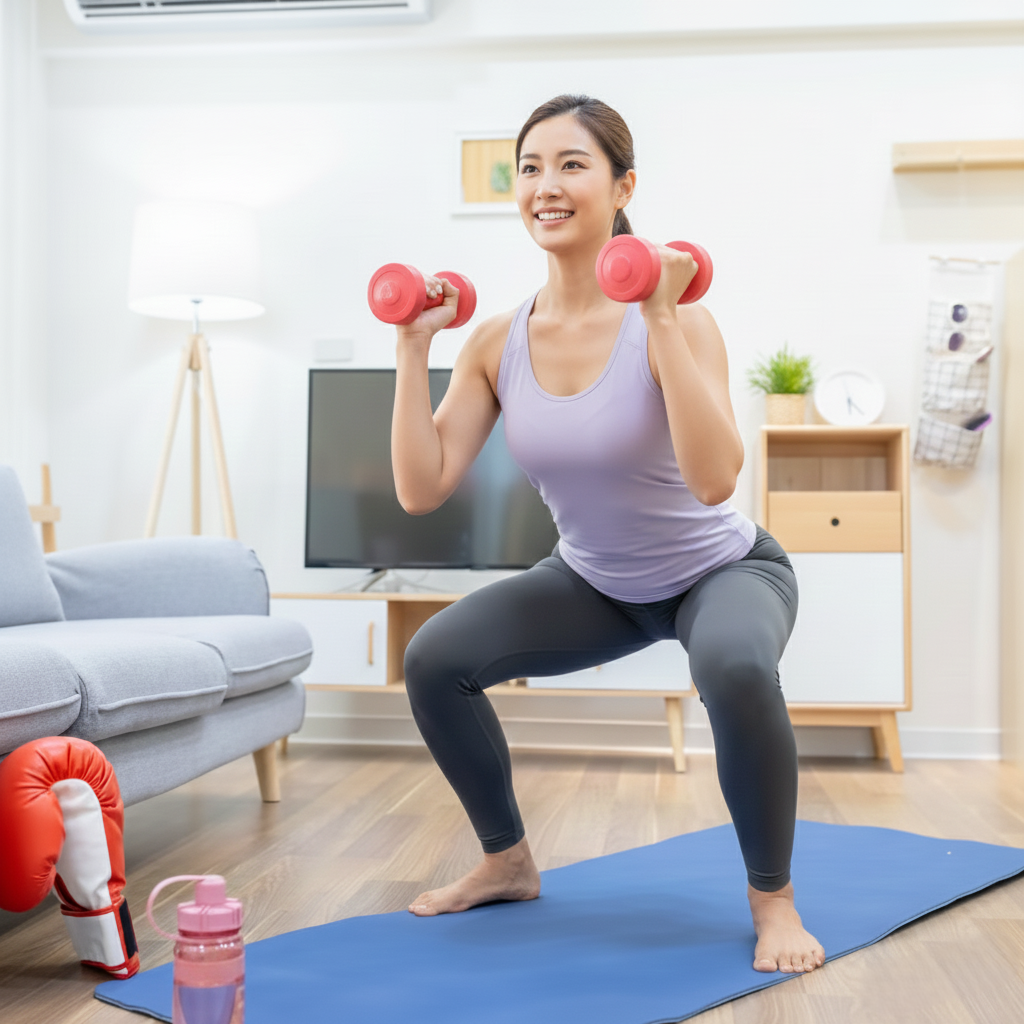
Dumbbells offer distinct advantages for women training at home. Unlike fixed-path machines that lock you into predetermined movement patterns, dumbbells allow natural, unrestricted motion that mirrors real-world activities.
A comprehensive meta-analysis published in BMC Sports Science, Medicine and Rehabilitation examined over 1,000 participants and found that free-weight training produces similar muscle growth and strength gains compared to machine-based training. The study concluded that both training methods demonstrate equal effectiveness for building muscle, providing flexibility in training approach.
What makes dumbbells particularly valuable is their versatility. You can target every major muscle group with just one or two weight sets. They develop intermuscular coordination—the ability of different muscles to work together—and intramuscular coordination, which involves recruiting more muscle fibers within specific muscles. This comprehensive training effect translates to improved performance in daily activities like carrying groceries, lifting children, or moving furniture.
Space and Budget Considerations
Home training requires practical solutions. A single pair of adjustable dumbbells can replace an entire rack of fixed weights, conserving both space and money. Monthly gym fees disappear, along with commute time. Training schedules become flexible—6 AM before work or 9 PM after children sleep—whatever fits your life.
Balanced Strength Development
Training with dumbbells prevents muscular imbalances. When using barbells or machines, stronger sides can compensate for weaker sides. Dumbbells force each arm or leg to work independently, ensuring balanced development and reducing injury risk.
Progressive Challenge Implementation
Building muscle requires progressive challenge. With dumbbells, you can increase weight incrementally, add repetitions, perform extra sets, or modify tempo. This flexibility enables continual progression without constantly purchasing new equipment.
The Science Behind Dumbbell Training for Women
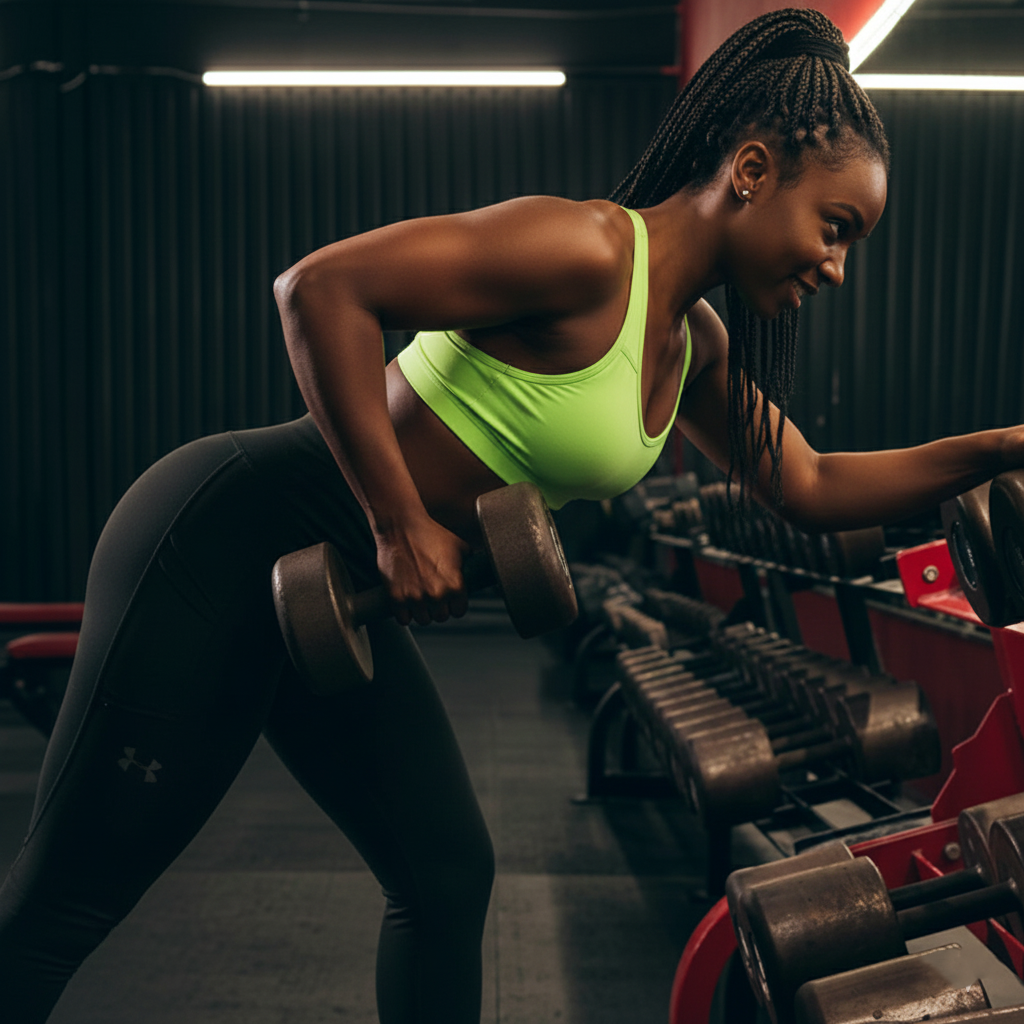
The effectiveness of dumbbell training extends beyond anecdotal evidence. Multiple studies demonstrate physiological benefits of resistance training for women.
Research published in the Journal of Strength and Conditioning Research examined muscle activation during dumbbell exercises in women across different experience levels. Shoulder presses produced the greatest activation in the anterior deltoid and upper trapezius, while bench and incline presses maximally engaged the pectoralis major muscle. Target muscle activation remained effective from complete beginners to experienced lifters.
Metabolic Benefits of Muscle Building
Strength training offers profound metabolic advantages. Research published in Current Sports Medicine Reports indicates that resistance training can increase resting metabolic rate by 7% and add approximately 1.4 kg of lean muscle mass in ten weeks. This muscle tissue burns more calories at rest compared to fat tissue, creating lasting metabolic elevation.
For women specifically, benefits extend beyond aesthetics. A 2024 study published in the Journal of the American College of Cardiology found that women engaging in regular muscle-strengthening exercise experience a 30% reduction in cardiovascular mortality. The research emphasized that both strength training and aerobic exercise should be prescribed for optimal health outcomes.
Hormonal and Bone Health Implications
Resistance training positively influences hormones critical for women’s health. While women naturally have lower testosterone levels than men, strength training optimizes hormonal balance, supporting muscle growth, bone density, and metabolic function.
Bone health becomes increasingly important with age. Strength training creates mechanical stress on bones, stimulating cells to form new bone tissue. This process helps prevent osteoporosis, a condition that disproportionately affects women after menopause.
Essential Equipment for Your Dumbbell Workout for Women at Home
Starting with minimal equipment prevents overwhelm and unnecessary expense. Here’s what you actually need:
Dumbbell Selection
For those beginning a dumbbell workout for women at home, start with two weight sets:
- Light set: 5-10 pounds for isolation exercises
- Medium set: 10-20 pounds for compound movements
As you progress, consider adjustable dumbbells that enable quick weight changes. Quality options include PowerBlock adjustable dumbbells (5-50 lbs per hand), Bowflex SelectTech adjustable dumbbells (5-52.5 lbs per hand), and Yes4All adjustable dumbbells for budget-conscious buyers.
Optional Supporting Equipment
- Exercise mat for floor exercises and comfort
- Resistance bands for warm-ups and supplementary work
- Bench or stable chair for elevated exercises
- Mirror for form verification
Structuring Your Home Dumbbell Workout Program
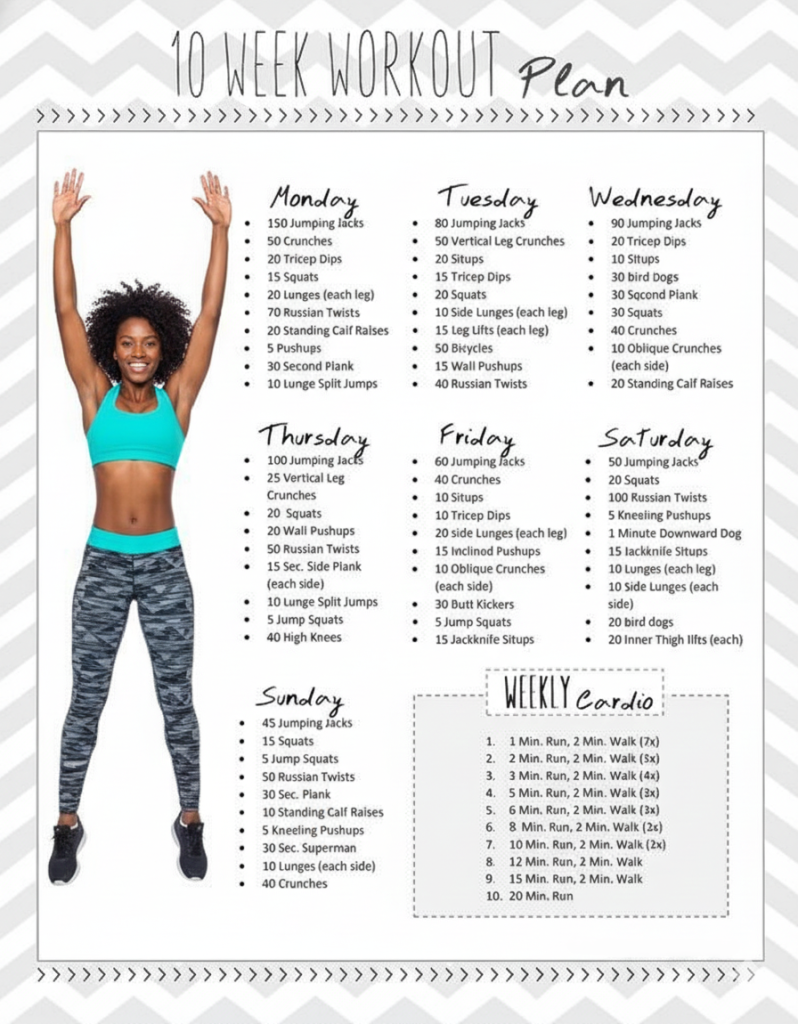
A well-designed full body dumbbell workout for women beginners follows clear structure that maximizes results while preventing injury.
Weekly Training Schedule
For optimal results, train 2-4 times weekly with at least one rest day between sessions. This schedule allows adequate recovery while providing sufficient stimulus for muscle growth.
Beginner Schedule:
- Monday: Full body workout
- Wednesday: Full body workout
- Friday: Full body workout
Intermediate Schedule:
- Monday: Upper body focus
- Tuesday: Lower body focus
- Thursday: Upper body focus
- Friday: Lower body focus
Workout Session Structure
Each training session should include:
Warm-Up (5-7 minutes): Dynamic movements prepare your body for work. Include arm circles, leg swings, bodyweight squats, and light movement to increase blood flow and joint mobility.
Compound Exercises (15-20 minutes): Multi-joint movements that work several muscles simultaneously. These form your workout foundation and deliver maximum efficiency.
Isolation Exercises (10-15 minutes): Single-joint movements targeting specific muscles. These exercises refine physique and address weak points.
Core Work (5-10 minutes): Strengthening your midsection improves stability, posture, and functional strength.
Cool-Down (3-5 minutes): Static stretching aids recovery and maintains flexibility.
Sets, Reps, and Rest Periods
For Muscle Building:
- Sets: 3-4 per exercise
- Reps: 8-12 per set
- Rest: 60-90 seconds between sets
For Strength Development:
- Sets: 4-5 per exercise
- Reps: 4-6 per set
- Rest: 2-3 minutes between sets
For Muscular Endurance:
- Sets: 2-3 per exercise
- Reps: 15-20 per set
- Rest: 30-45 seconds between sets
The Best Exercises for Your Dumbbell Workout for Women at Home
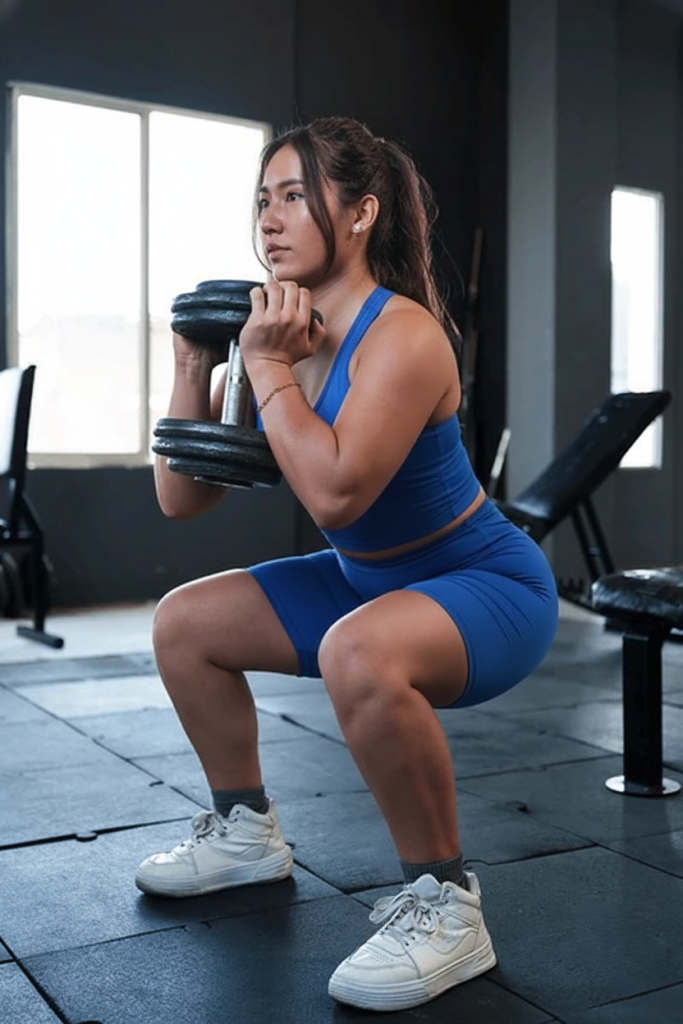
These exercises form the foundation of effective upper body dumbbell exercises for women and lower body training.
Lower Body Exercises
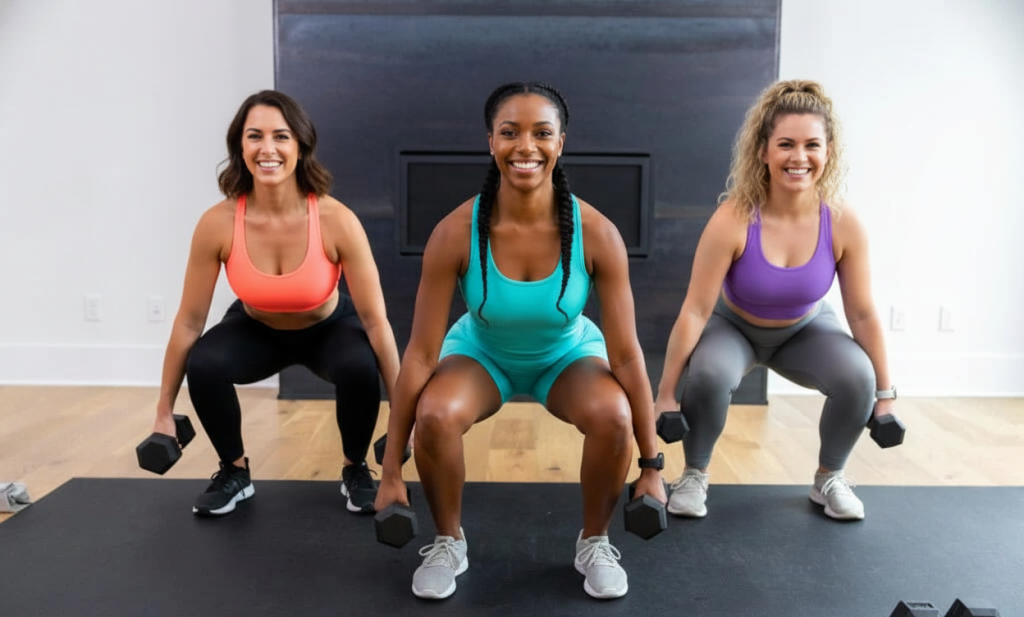
Goblet Squat: Hold a dumbbell vertically at chest height. Stand with feet shoulder-width apart, toes slightly out. Squat down by pushing hips back and bending knees, keeping chest elevated. Drive through heels to stand. Builds quads, glutes, and core strength.
Romanian Deadlift: Hold dumbbells at thigh level with palms facing your body. Hinge at hips, lowering weights along legs while maintaining slight knee bend. Feel the stretch in hamstrings. Drive hips forward to return to standing. Targets hamstrings, glutes, and lower back.
Reverse Lunges: Hold dumbbells at sides. Step back with one leg, lowering back knee toward floor. Front thigh should be parallel to ground. Push through front heel to return to start. Excellent for glutes, quads, and balance.
Bulgarian Split Squat: Place rear foot on bench or chair. Hold dumbbells at sides. Lower down by bending front knee until back knee nearly touches floor. Push through front heel to stand. Challenges single-leg strength and stability.
Dumbbell Hip Thrust: Sit on floor with upper back against bench. Place dumbbell across hips. Plant feet flat, shoulder-width apart. Drive through heels, lifting hips until body forms straight line from knees to shoulders. Squeeze glutes at top. Maximum glute activation.
Upper Body Exercises
Dumbbell Bench Press (or Floor Press): Lie on bench or floor holding dumbbells at chest level. Press weights up until arms extend. Lower with control until elbows reach 90 degrees. Builds chest, shoulders, and triceps.
Bent-Over Dumbbell Row: Hinge forward at hips, keeping back flat. Let dumbbells hang below shoulders. Pull weights to ribcage, squeezing shoulder blades together. Lower with control. Strengthens back and improves posture.
Dumbbell Shoulder Press: Stand or sit with dumbbells at shoulder height, palms forward. Press weights overhead until arms extend. Lower with control. Develops shoulder strength and stability.
Dumbbell Bicep Curl: Hold dumbbells at sides, palms forward. Curl weights up by bending elbows, keeping upper arms stationary. Lower slowly. Isolates and tones biceps.
Overhead Tricep Extension: Hold one dumbbell with both hands overhead. Lower weight behind head by bending elbows. Extend arms to return to start. Targets triceps for arm definition.
Core Exercises
Dumbbell Russian Twist: Sit on floor, knees bent, feet elevated. Hold one dumbbell at chest. Rotate torso to move weight from side to side. Builds rotational core strength and obliques.
Weighted Sit-Up: Lie on back, knees bent, holding dumbbell at chest. Sit up using core muscles, then lower with control. Strengthens abdominals.
Dumbbell Side Bend: Stand holding one dumbbell in right hand. Bend sideways to right, feeling stretch on left side. Return to center. Repeat, then switch sides. Targets obliques.
Plank to Row: Start in plank position with hands on dumbbells. Row one dumbbell to ribcage while maintaining plank. Alternate sides. Combines core stability with back strength.
Sample 30 Minute Dumbbell Workout for Toning Programs
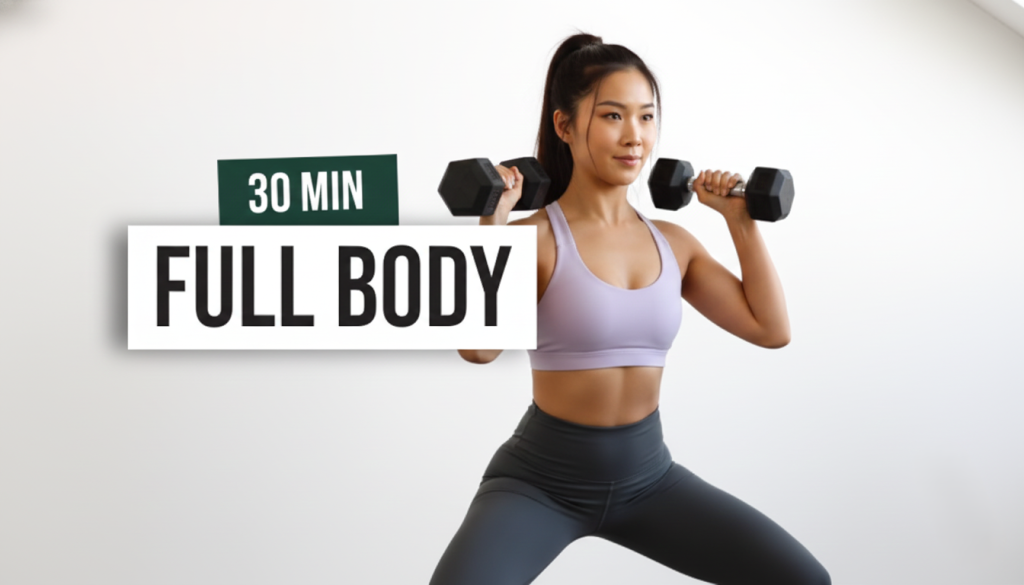
These three complete workouts rotate weekly, ensuring balanced development across all muscle groups.
Workout A: Full Body Strength
Warm-Up: 5 minutes dynamic stretching
Main Workout:
- Goblet Squat – 3 sets × 10 reps
- Dumbbell Bench Press – 3 sets × 8 reps
- Bent-Over Row – 3 sets × 10 reps per arm
- Romanian Deadlift – 3 sets × 12 reps
- Dumbbell Shoulder Press – 3 sets × 8 reps
- Weighted Sit-Ups – 3 sets × 12 reps
Cool-Down: 5 minutes stretching
This 30 minute dumbbell workout for toning hits all major muscle groups efficiently.
Workout B: Lower Body & Core Focus
Warm-Up: 5 minutes leg swings and hip circles
Main Workout:
- Bulgarian Split Squat – 3 sets × 10 reps per leg
- Romanian Deadlift – 4 sets × 8 reps
- Dumbbell Hip Thrust – 4 sets × 12 reps
- Reverse Lunges – 3 sets × 10 reps per leg
- Goblet Squat – 3 sets × 10 reps
- Russian Twists – 3 sets × 20 total reps
- Side Plank Hold – 3 sets × 30 seconds per side
Emphasizes glutes, hamstrings, and core stability.
Workout C: Upper Body & Arms
Warm-Up: 5 minutes arm circles and shoulder mobility
Main Workout:
- Dumbbell Shoulder Press – 3 sets × 10 reps
- Bent-Over Row – 3 sets × 10 reps per arm
- Dumbbell Floor Press – 3 sets × 10 reps
- Bicep Curls – 3 sets × 12 reps
- Overhead Tricep Extension – 3 sets × 12 reps
- Lateral Raises – 3 sets × 15 reps
- Russian Twists – 3 sets × 20 total reps
Develops upper body strength and arm definition.
Progressive Overload: The Key to Continuous Results
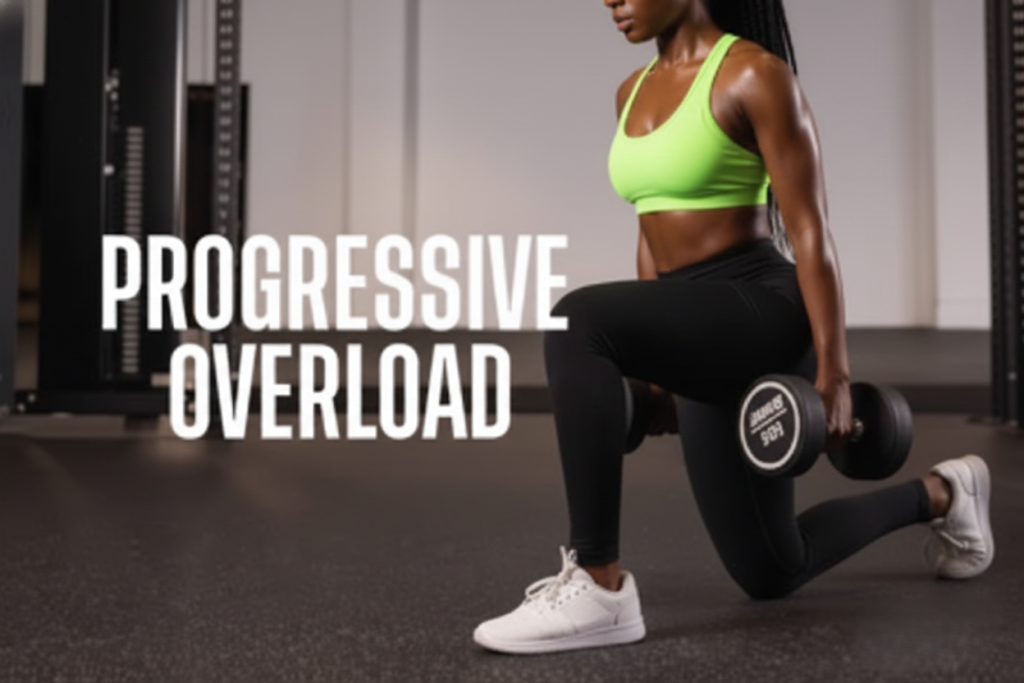
Building muscle requires progressively challenging your body. Here’s how to implement progressive overload with your dumbbell workout for women at home:
Increase Weight
When you can comfortably complete all prescribed reps with proper form, increase dumbbell weight by 2.5-5 pounds. This represents the most direct progression form.
Add Repetitions
Before advancing to heavier weights, add 1-2 reps per set. Once you exceed your target rep range, increase weight and return to the lower rep range.
Increase Sets
Adding an extra set increases total training volume. If performing 3 sets, try 4 sets for several weeks before adding weight.
Decrease Rest Time
Shortening rest periods between sets increases workout density and metabolic stress. Reduce rest by 15-30 seconds every few weeks.
Tempo Manipulation
Slowing down the eccentric (lowering) phase of each rep increases time under tension. Try 3-second lowering phases for greater muscle stimulus.
Exercise Variation
Periodically change exercises targeting the same muscles. Replace goblet squats with front squats or swap bench press for incline press. This prevents adaptation plateaus.
Nutrition to Support Your Training
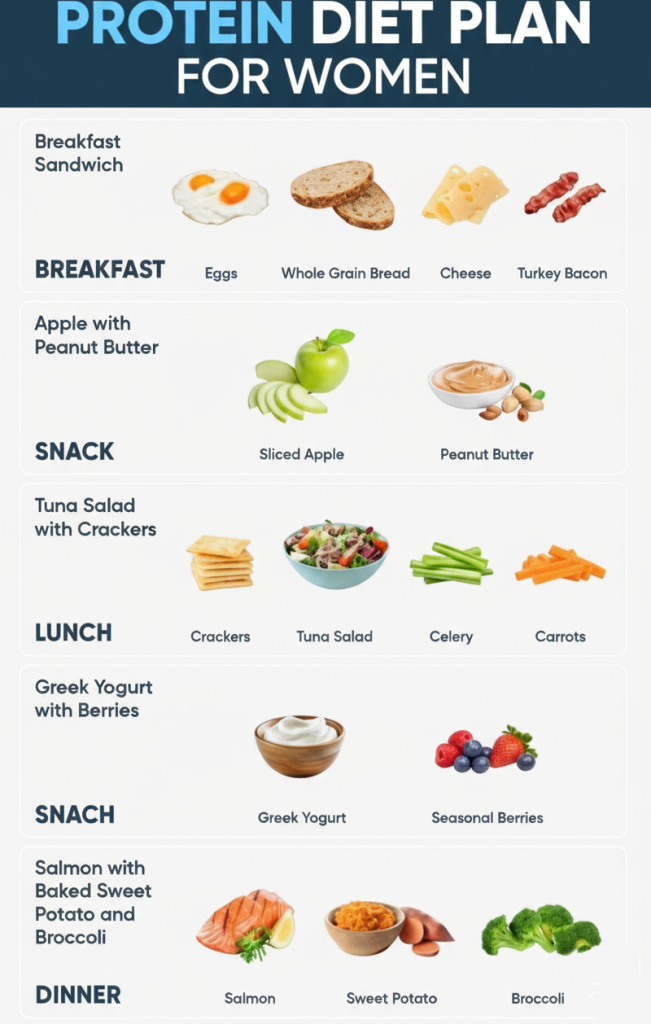
Exercise alone won’t build muscle. Your body needs proper nutrition to repair and grow stronger.
Protein Requirements
Women who strength train should consume 0.7-1 gram of protein per pound of body weight daily. For a 140-pound woman, that’s 98-140 grams of protein spread throughout the day.
- 6-move circuit with easier and harder options
- Warm-up, cool-down and weekly tracker
- Printer-friendly, one page
Instant download • 100% free • No email required
Quality protein sources include chicken breast, turkey, lean beef, fish and seafood, Greek yogurt and cottage cheese, eggs and egg whites, protein powder (whey or plant-based), and legumes and tofu.
Carbohydrates for Energy
Carbs fuel workouts and support recovery. Focus on complex carbohydrates: oats, quinoa, brown rice, sweet potatoes and regular potatoes, whole grain bread and pasta, and fruits and vegetables.
Timing matters. Consuming carbs before training provides energy, while post-workout carbs replenish glycogen stores and support recovery.
Healthy Fats
Fats support hormone production and overall health. Include avocados and olive oil, nuts and seeds, fatty fish like salmon, and nut butters.
Hydration
Muscle is approximately 75% water. Dehydration impairs performance and recovery. Drink at least 8-10 glasses of water daily, more on training days.
Meal Timing
While total daily intake matters most, strategic timing optimizes results:
Pre-Workout (1-2 hours before): Combine protein and carbs for sustained energy. Example: Greek yogurt with berries and granola.
Post-Workout (within 2 hours): Protein and carbs support recovery and muscle growth. Example: Protein shake with banana, or chicken with rice and vegetables.
Common Mistakes and How to Avoid Them
Even experienced exercisers make these errors. Awareness helps you train smarter.
Using Too Much Weight Too Soon
Starting with excessive weight compromises form and increases injury risk. Begin lighter than you think necessary. Perfect your technique before progressing to heavier weights. Quality movement builds lasting strength; rushed progression leads to setbacks.
Neglecting Progressive Overload
Performing the same workout with identical weights indefinitely won’t produce results. Your body adapts to consistent stimuli. Track your workouts and systematically increase challenge over time.
Inconsistent Training
Sporadic training prevents adaptation. Your body needs regular stimulus to change. Commit to a schedule you can maintain long-term, even if that means fewer sessions weekly.
Skipping Warm-Ups
Jumping straight into heavy lifting increases injury risk. Dynamic warm-ups prepare joints, activate muscles, and improve workout performance. Invest 5-7 minutes warming up properly.
Poor Form
Form always trumps weight. Bad technique doesn’t just limit results—it creates injuries. If you can’t maintain proper form throughout a set, reduce the weight. Consider filming yourself or working with a coach to refine technique.
Inadequate Recovery
Muscle grows during rest, not during workouts. Training breaks down muscle tissue; recovery builds it back stronger. Ensure 48 hours between training the same muscle groups. Get 7-9 hours of sleep nightly.
Ignoring Nutrition
You can’t out-train a poor diet. Without adequate protein, your body lacks building blocks for muscle. Without sufficient calories, your body won’t have energy to grow. Treat nutrition with the same importance as training.
Addressing Common Concerns Women Have About Lifting
Let’s tackle persistent myths that prevent women from strength training.
“I’ll Get Bulky”
This concern is physiologically unlikely. Women have 15-20 times less testosterone than men. Building significant muscle mass requires years of consistent training, strategic nutrition, and often genetic predisposition. What most women describe as “toned” is actually muscle development. The defined arms and lifted glutes you admire come from building muscle through resistance training.
“Lifting Will Make Me Stiff”
Proper resistance training through full range of motion actually improves flexibility and joint health. Strength training increases synovial fluid in joints, reduces inflammation, and maintains mobility. Pair your training with appropriate stretching for optimal results.
“I Should Do Cardio to Lose Weight”
While cardio burns calories during activity, strength training builds muscle that elevates metabolism continuously. Research consistently shows that combining resistance training with moderate cardio produces superior fat loss and body composition results compared to cardio alone. The afterburn effect (EPOC) from strength training keeps metabolism elevated for hours post-workout.
“I’m Too Old to Start”
Research demonstrates that individuals in their 60s, 70s, and even 80s can build muscle and strength. A 2019 study in Frontiers in Physiology showed that older adults respond similarly to resistance training as younger individuals. Starting later simply means starting now. The best time to begin was years ago; the second best time is today.
Tracking Progress Beyond the Scale
Body weight doesn’t tell the full story. Use these methods to accurately track progress:
Progress Photos
Take photos every 2-4 weeks in consistent lighting, clothing, and poses. Visual changes often appear before scale changes, especially when building muscle while losing fat.
Body Measurements
Measure these areas monthly:
- Chest (across nipple line)
- Waist (narrowest point)
- Hips (widest point)
- Thighs (midpoint)
- Arms (largest point of bicep)
Strength Gains
Track weights, sets, and reps in a training log. Lifting heavier weights for more reps represents undeniable progress.
Energy and Mood
Notice improvements in daily energy, sleep quality, mood, and stress management. These quality-of-life enhancements matter more than aesthetics.
Clothing Fit
How your clothes fit provides practical feedback. Jeans fitting better in the legs while loosening at the waist indicates muscle gain and fat loss.
Performance Milestones
Celebrate achievements like completing your first unassisted pull-up, pressing heavier dumbbells overhead, or squatting your body weight.
Adapting Your Program as You Progress
Your needs change as you advance. Here’s how to evolve your training.
Beginner Phase (Months 1-3)
Focus on learning proper form, establishing consistency, and building base fitness. Use moderate weights and higher reps (10-15). Train 2-3 times weekly with full rest days between sessions.
Early Intermediate (Months 4-6)
Increase training frequency to 3-4 times weekly. Introduce periodization—cycling between strength phases (5-8 reps) and hypertrophy phases (8-12 reps). Add exercise variations to prevent plateaus.
Intermediate Phase (Months 7-12)
Split your routine into upper/lower days or push/pull/legs. Increase training volume and intensity. Experiment with advanced techniques like drop sets, supersets, and tempo training.
Advanced Phase (Year 2+)
Design specialized programs targeting specific goals. Perhaps you want impressive glutes, defined shoulders, or increased overall strength. Structure mesocycles and microcycles to peak for specific timeframes. Consider working with a coach to optimize programming.
Sample 12-Week Progression Plan
This structured approach takes you from beginning to proficient.
Weeks 1-4: Foundation Building
- Focus: Learning exercises and establishing movement patterns
- Frequency: 3 times weekly (Mon/Wed/Fri)
- Intensity: 65-70% of maximum effort
- Reps: 10-15 per set
- Sets: 2-3 per exercise
Weeks 5-8: Strength Development
- Focus: Progressive overload and increasing weights
- Frequency: 3-4 times weekly
- Intensity: 75-80% of maximum effort
- Reps: 8-12 per set
- Sets: 3-4 per exercise
Weeks 9-12: Power and Refinement
- Focus: Maximizing strength and refining physique
- Frequency: 4 times weekly
- Intensity: 80-85% of maximum effort
- Reps: 6-10 per set
- Sets: 4-5 per exercise
Between phases, take a deload week using 50-60% of your normal weights to allow recovery and adaptation.
When to Consider Additional Equipment
As you progress with your dumbbell workout for women at home, supplementing dumbbells with other tools adds variety and challenge.
Resistance Bands
Excellent for warm-ups, activation exercises, and traveling. Provide variable resistance that increases through range of motion.
Kettlebells
Offer unique exercises like swings and snatches that emphasize power and conditioning. Complement dumbbell training well.
Pull-Up Bar
Enables bodyweight pulling exercises that dumbbells can’t replicate. Essential for developing back width and arm strength.
Adjustable Bench
Transforms your workout options. Enables incline presses, decline movements, and proper positioning for many exercises.
Barbell
Once you outgrow dumbbells for lower body lifts, a barbell allows you to lift significantly heavier loads for continued progression.
Building a Sustainable Fitness Lifestyle
Long-term success requires sustainable habits rather than short-term intensity.
Make It Enjoyable
Choose exercises you don’t dread. Listen to energizing music or podcasts. Train with a friend virtually. Make the process rewarding, not just the results.
Set Realistic Expectations
Building noticeable muscle takes months, not weeks. Losing significant fat while gaining strength is a gradual process. Expecting overnight transformation sets you up for disappointment. Embrace the journey.
Establish Non-Negotiables
Identify minimum viable workouts for busy weeks. Maybe that’s two 20-minute sessions instead of three 45-minute sessions. Some training beats no training.
Plan Around Life
Life happens. Kids get sick. Work demands surge. Rather than abandoning fitness during hectic periods, adapt. Do shorter workouts. Train at different times. Flexibility prevents all-or-nothing thinking.
Celebrate Small Wins
Notice when exercises feel easier. Acknowledge consistency streaks. Appreciate energy improvements. These victories fuel motivation better than distant aesthetic goals.
Join Communities
Connect with others pursuing similar goals. Online fitness communities provide accountability, answer questions, and celebrate progress. You’re not alone in this journey.
Frequently Asked Questions
How heavy should my dumbbells be?
Start with weights you can control for 10-15 reps with proper form, feeling challenged on the last few reps. For most women beginners, 5-15 pounds per hand works for starting weights. You’ll quickly progress heavier.
Can I build muscle with just dumbbells?
Absolutely. Dumbbells provide sufficient stimulus for significant muscle growth. Research shows free weights produce similar muscle development to complex gym machines. Progressive overload matters more than equipment variety.
How long until I see results?
Strength improvements appear within 2-3 weeks. Visible muscle changes typically emerge around 6-8 weeks with consistent training and nutrition. Fat loss becomes noticeable in 4-6 weeks.
Should I do cardio too?
Moderate cardio complements strength training. Add 2-3 sessions of 20-30 minutes weekly for cardiovascular health without interfering with recovery. Prioritize resistance training for body composition changes.
What if I can’t afford adjustable dumbbells?
Start with fixed-weight dumbbells in two or three weight increments. Secondhand sporting goods stores and online marketplaces often have affordable options. Resistance bands provide budget-friendly alternatives.
Do I need protein powder?
No. Whole food protein sources suffice. Protein powder offers convenience for meeting protein targets, especially post-workout or busy days. It’s supplementary, not mandatory.
How do I know if my form is correct?
Record yourself performing exercises. Compare your form to reputable tutorials. Consider a few sessions with a qualified trainer, even virtually, to establish proper technique. Form improvements continue throughout your training journey.
Your Action Plan: Getting Started Today
You have the knowledge. Now take action.
This Week
- Day 1: Purchase or identify dumbbells you’ll use
- Day 2: Select which workout program matches your schedule
- Day 3: Perform your first workout, focusing on form over weight
- Day 4: Rest and recovery
- Day 5: Second workout this week
This Month
- Complete 8-12 workouts (2-3 per week)
- Take initial progress photos and measurements
- Establish protein intake around 0.7-1g per pound bodyweight
- Identify potential barriers to consistency and problem-solve solutions
This Quarter
- Progress from beginner to early intermediate programming
- Increase dumbbell weights on at least 3-4 exercises
- Notice improved energy, mood, and physical capability
- Develop confidence in your training
This Year
- Build visible muscle and transform your physique
- Establish exercise as a non-negotiable lifestyle component
- Reach strength milestones you once thought impossible
- Inspire others through your transformation
The Bottom Line
A dumbbell workout for women at home delivers results comparable to any commercial gym. Research consistently demonstrates that free weights produce equivalent muscle growth and strength gains to complex equipment. What matters isn’t where you train or what equipment you have—it’s the consistency of your efforts, the quality of your nutrition, and the progressive challenge you provide your muscles.
This guide has equipped you with everything needed: exercise selection, program design, progression strategies, nutrition fundamentals, and realistic expectations. The only missing ingredient is your consistent action.
Start with the workouts provided. Focus on proper form. Gradually increase challenge. Fuel your body appropriately. Be patient with the process. Trust that small daily improvements compound into remarkable transformations.
Your strongest, most capable self exists on the other side of consistent training. Success comes from sustained effort applied intelligently over time.
You don’t need to wait for the perfect moment, the ideal setup, or complete confidence. Start today with what you have. Your future self will thank you for beginning.
- 6-move circuit with easier and harder options
- Warm-up, cool-down and weekly tracker
- Printer-friendly, one page
Instant download • 100% free • No email required