

Affiliate Disclosure: This article contains affiliate links. If you purchase through these links, we may earn a commission at no additional cost to you. We only recommend products we believe will benefit your fitness journey.
Functional fitness for men represents a paradigm shift from aesthetic-focused training to building practical strength that enhances every aspect of daily life. Instead of isolating muscles for appearance, functional training develops integrated movement patterns that improve how you lift, carry, twist, push, and pull in real-world situations.
Your body doesn’t function through isolated movements in everyday life. When you lift a heavy box, multiple muscle groups coordinate simultaneously—legs drive power, core stabilizes your spine, back and shoulders control the load, and grip strength maintains hold. Functional fitness for men replicates these multi-joint, multi-muscle patterns that actually matter outside the gym.
Traditional bodybuilding splits that dedicate entire sessions to single muscle groups create artificial strength that often fails to translate into practical capability. You might bench press impressive weight but struggle carrying awkward furniture up stairs. This disconnect occurs because real-world strength requires coordination, balance, and integrated muscle function that isolation exercises don’t develop.
According to the American Council on Exercise, functional training improves quality of life more effectively than traditional resistance training by enhancing the neuromuscular patterns used in daily activities. This approach builds bodies capable of handling life’s physical demands without injury while maintaining mobility and athletic performance as you age.
This comprehensive guide explores functional strength training workout plan principles, the best functional exercises for everyday life, and how compound movements for functional fitness create capable, resilient bodies. Whether you’re 30 or 55, desk-bound or physically active, functional fitness for men provides the foundation for lifelong strength and independence.
Understanding Functional Fitness for Men: Beyond the Gym Floor
Functional fitness for men trains movement patterns rather than muscles, developing strength that transfers directly into daily activities and athletic pursuits. This fundamental distinction separates functional training from conventional gym routines focused on muscle size and aesthetic development.
Movement Patterns vs. Muscle Groups
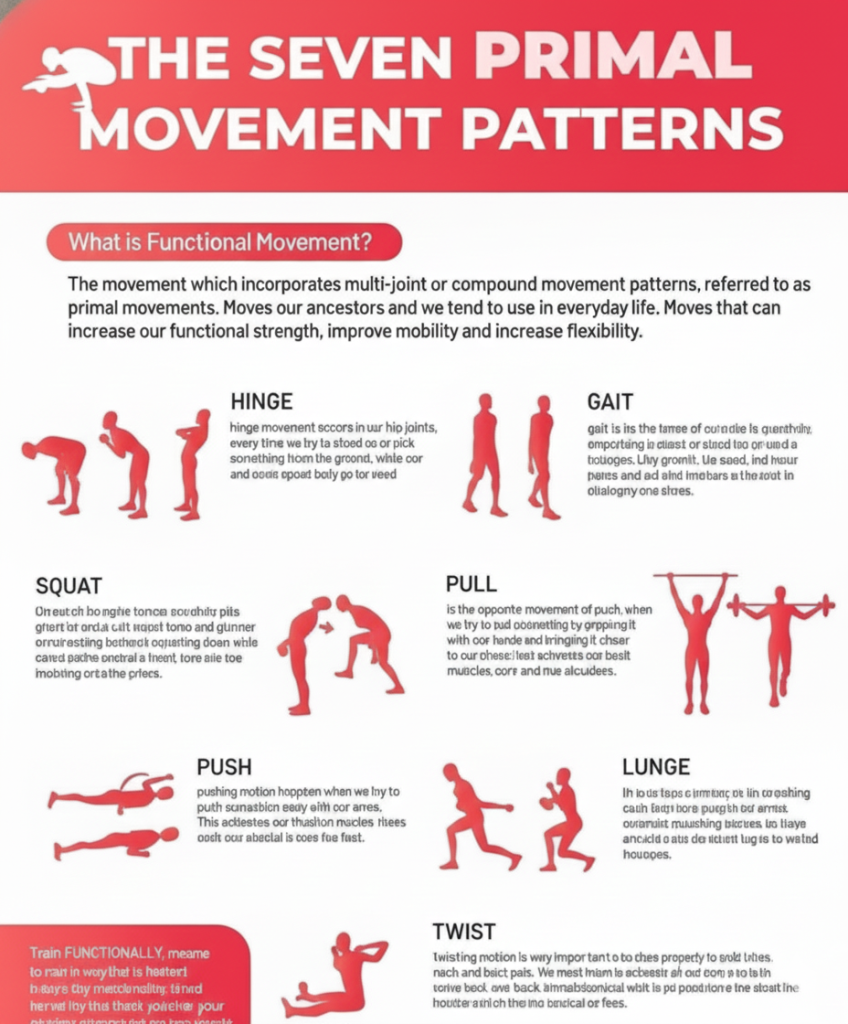
The human body performs seven fundamental movement patterns that encompass virtually all physical activities. Functional fitness for men organizes training around these patterns rather than anatomical muscle groups:
Push movements propel objects away from your body—pushing a stalled car, pressing overhead to place items on high shelves, or pushing yourself up from the ground. These patterns engage chest, shoulders, triceps, and core muscles in coordinated sequences.
Pull movements bring objects toward your body or move your body toward fixed objects—pulling open heavy doors, starting lawnmowers, climbing, or rowing. Back muscles, biceps, rear shoulders, and grip strength all contribute to pulling patterns.
Hinge movements involve bending at hips while maintaining neutral spine—lifting objects from the ground, loading luggage into overhead compartments, or any forward-bending activity. Hip hinge patterns develop posterior chain strength (glutes, hamstrings, lower back) essential for injury-free living.
Squat patterns require bending knees and hips to lower your body—sitting and standing from chairs, picking up children, working in gardens, or athletic movements. Squatting builds lower body strength while developing crucial mobility for maintaining independence throughout life.
Lunge movements involve split-stance positions with one leg forward—climbing stairs, stepping over obstacles, or any single-leg loading situation. These patterns develop unilateral strength and balance critical for preventing falls and maintaining athletic ability.
Rotation movements twist your torso—swinging golf clubs or baseball bats, throwing objects, or turning to look behind you while driving. Rotational strength protects your spine while generating power for countless activities.
Locomotion encompasses walking, running, crawling, and any movement transporting your body through space. This pattern integrates all others while developing cardiovascular endurance and full-body coordination.
The Integration Principle
Real-world activities never isolate single muscles. Carrying groceries engages grip strength, biceps, shoulders, core stabilizers, and legs simultaneously. Functional fitness for men replicates this integration through compound movements requiring multiple joints and muscle groups working in coordinated patterns.
This integration develops intermuscular coordination—your nervous system’s ability to orchestrate complex movement sequences. Enhanced coordination translates to improved athletic performance, reduced injury risk, and better movement quality in daily activities.
Stability and Mobility Balance
Functional fitness for men emphasizes the stability-mobility continuum. Certain joints require stability (spine, knees during specific movements) while others need mobility (hips, shoulders, thoracic spine). Traditional training often neglects this distinction, creating imbalances that limit function and increase injury risk.
The best functional exercises for everyday life address both stability and mobility requirements. Your core provides stable foundation while your hips and shoulders move freely through full ranges of motion. This balance enables efficient, pain-free movement across all activities.
Core Benefits of Functional Fitness for Men
Adopting functional fitness for men over traditional training approaches delivers comprehensive benefits extending far beyond the gym. Understanding these advantages helps maintain motivation and appreciate progress beyond simple aesthetics.
Injury Prevention and Resilience
Functional fitness for men dramatically reduces injury risk through several mechanisms. By strengthening stabilizer muscles often neglected in traditional training, you develop more robust joint support that prevents strains and tears during unexpected movements.
The multi-planar nature of functional exercises—moving in forward-backward, side-to-side, and rotational planes—prepares your body for the unpredictable forces encountered in daily life and sports. Traditional gym training predominantly occurs in single planes (forward-backward), leaving you vulnerable when moving laterally or rotationally.
According to research from the National Strength and Conditioning Association, functional training improves dynamic stability and reduces lower back pain incidence by strengthening deep spinal stabilizers while maintaining mobility. The integrated core work inherent in functional movements protects your spine far more effectively than isolated ab exercises.
Enhanced Athletic Performance
Athletes across all sports benefit from functional strength training workout plan approaches that develop power, agility, and sport-specific movement capacity. The explosive, multi-directional nature of functional training closely mimics athletic demands better than traditional strength training.
Compound movements for functional fitness like kettlebell swings, medicine ball slams, and plyometric variations develop rate of force development—how quickly you generate power. This quality determines performance in virtually every sport from tennis to basketball to golf.
Improved Posture and Movement Quality
Modern sedentary lifestyles create postural dysfunction and movement compensations that functional fitness for men directly addresses. Hours spent hunched over computers shorten chest and hip flexor muscles while weakening back and glute muscles—imbalances that functional training corrects.
Functional exercises emphasize pulling movements and posterior chain development that counteract desk-job postures. The integrated core strengthening maintains spine alignment during all activities. Over time, these adaptations transfer into improved daily posture without conscious effort.
Time Efficiency
Functional fitness for men delivers comprehensive fitness benefits in less time compared to traditional split routines. Because compound movements train multiple muscle groups simultaneously, you achieve full-body stimulation in 45-minute sessions rather than requiring separate days for different body parts.
This efficiency proves invaluable for busy men balancing work, family, and fitness. Three focused functional training sessions weekly produce better real-world results than five days of traditional bodybuilding training for most people’s goals.
Longevity and Quality of Life
Perhaps the most valuable benefit emerges decades after starting functional fitness for men. Men who maintain functional fitness throughout middle age preserve independence, mobility, and physical capability well into their senior years.
The strength, balance, and mobility developed through functional training directly combat sarcopenia (age-related muscle loss), prevent falls, and maintain the physical capability required for independent living. This long-term perspective makes functional fitness an investment in quality of life spanning decades.
Essential Equipment for Functional Fitness for Men Training
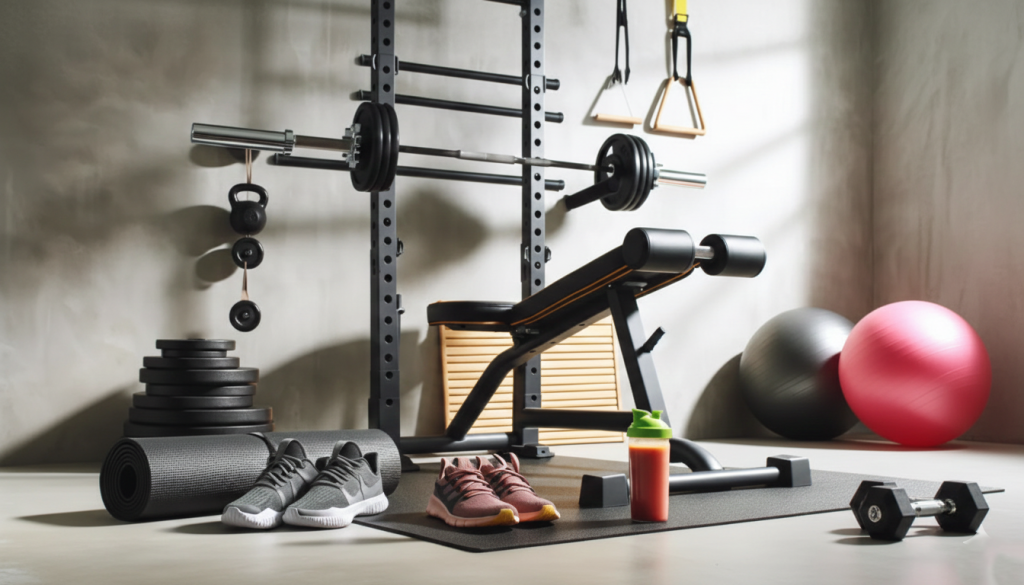
Starting your functional strength training workout plan requires strategic equipment selection that maximizes versatility while fitting your budget and space constraints. These tools enable comprehensive training covering all movement patterns.
Minimal Equipment Foundations
Your Bodyweight represents the most accessible and versatile training tool available. Push-ups, squats, lunges, planks, and countless variations provide substantial training stimulus without requiring any equipment. Bodyweight mastery forms the foundation of functional fitness for men before adding external loads.
Pull-Up Bar enables critical pulling movements often neglected in home training. Doorway-mounted or wall-mounted bars provide the anchor point for pull-ups, chin-ups, hanging knee raises, and resistance band exercises. This single piece of equipment covers numerous functional pulling patterns.
Resistance Bands offer portable, affordable resistance across all movement patterns. Loop bands, therapy bands with handles, and long resistance bands together enable hundreds of exercises. Bands create unique resistance curves—increasing tension as you stretch them—that complement free weight training.
Mid-Range Investment Equipment
Kettlebells deliver unmatched versatility for functional fitness for men. Their unique shape enables swings, cleans, snatches, and Turkish get-ups—dynamic movements impossible with traditional dumbbells. Start with a single 16kg (35lb) kettlebell for most men, adding lighter (12kg) and heavier (24kg) options as you progress.
Kettlebell training develops explosive power, grip strength, and cardiovascular conditioning alongside traditional strength. The offset weight creates stability challenges that enhance core development throughout every movement.
Dumbbells provide familiar, effective tools for countless functional exercises. Adjustable dumbbells like PowerBlock or Bowflex SelectTech eliminate the need for multiple fixed-weight pairs, saving money and space. Alternatively, purchasing several fixed-weight pairs (20, 35, 50 pounds) covers most training needs.
Plyo Box or sturdy bench enables box jumps, step-ups, Bulgarian split squats, and incline/decline pressing variations. A 20-24 inch box suits most men’s functional training needs. DIY wooden boxes work perfectly and cost minimal amounts compared to commercial options.
Medicine Ball adds dynamic, explosive training options through slams, throws, and rotational exercises. A 10-15 pound medicine ball enables powerful core and full-body explosive movements that develop athleticism and power output.
Advanced Equipment Options
Sandbag creates unique training stimulus through unstable, shifting weight that forces maximum stabilizer engagement. Loading sandbags onto shoulders, carrying them, or performing traditional exercises with them builds genuine, transferable strength that applies directly to the best functional exercises for everyday life scenarios.
Barbell and Plates enable the heaviest loading for progressive strength development in fundamental patterns—squats, deadlifts, presses, and rows. A basic Olympic barbell, squat rack with safety bars, and 300 pounds of plates create a complete strength training setup.
While substantial investment and space are required, barbell training provides unmatched progression potential for absolute strength development that complements functional training approaches.
Fundamental Best Functional Exercises for Everyday Life
These best functional exercises for everyday life form the foundation of effective functional fitness for men programs. Mastering proper technique in these movements before progressing to advanced variations ensures safe, effective training.
1. Goblet Squat: Lower Body Foundation
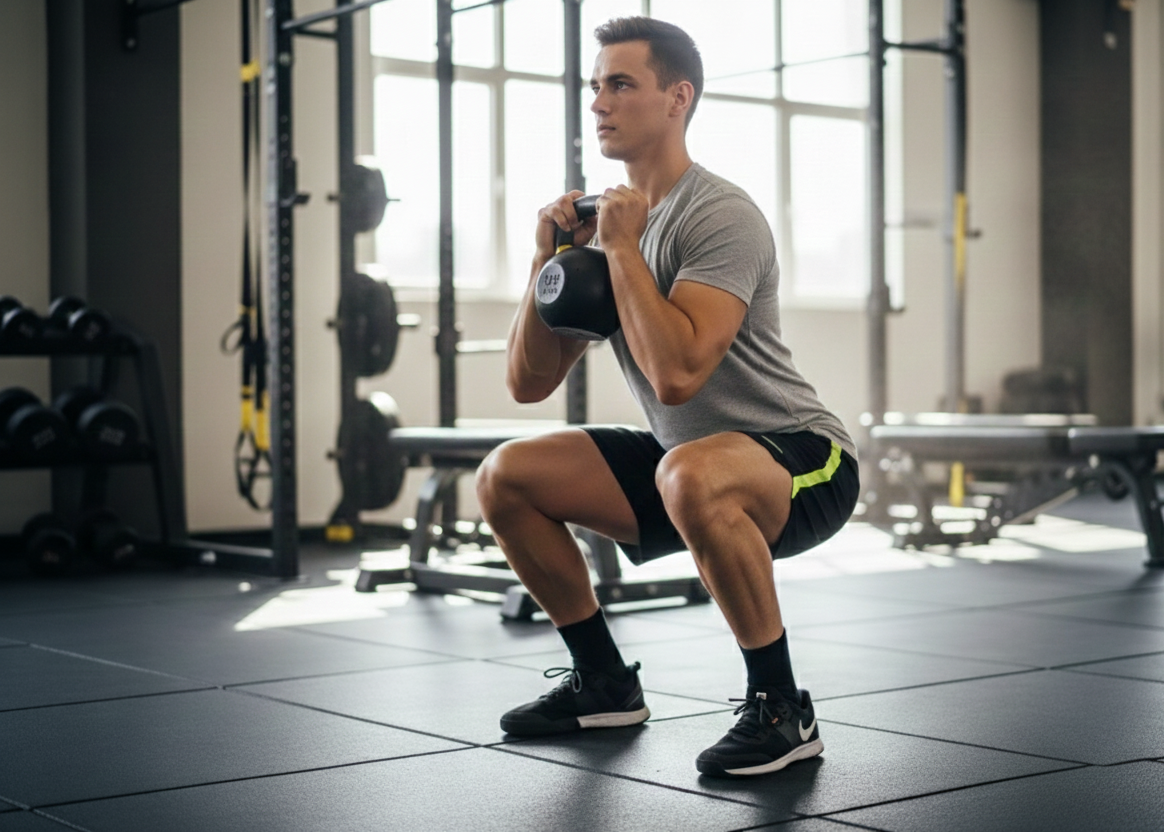
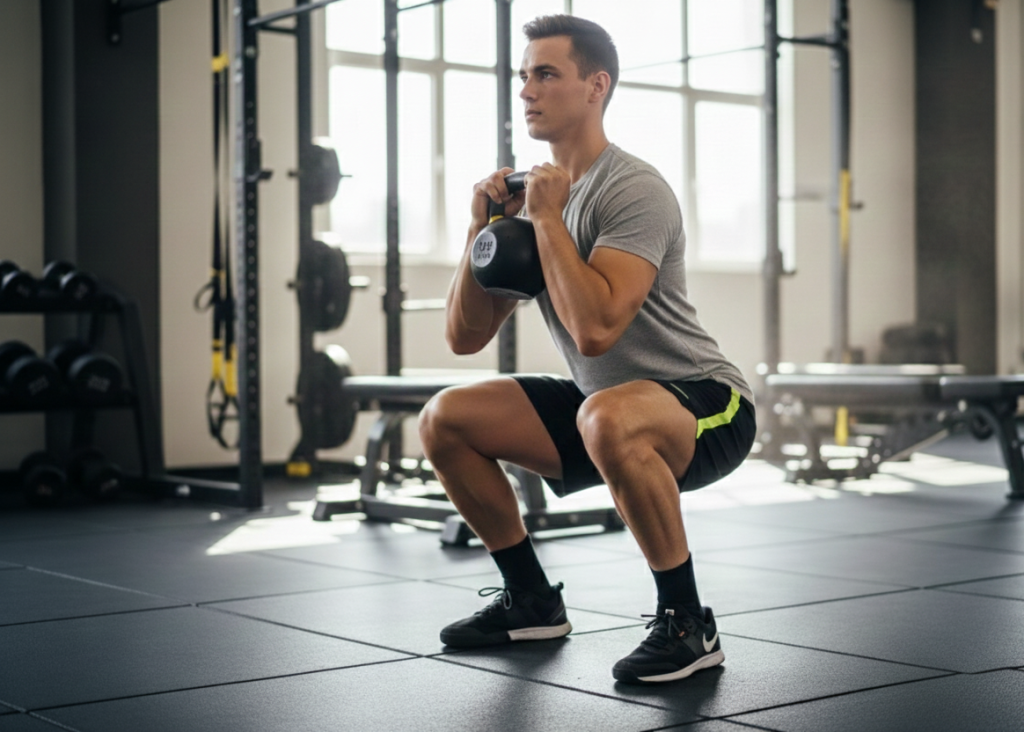
The goblet squat teaches proper squatting mechanics while loading the pattern safely for beginners through advanced trainees. Hold a kettlebell or dumbbell vertically at chest height with both hands. Stand with feet slightly wider than hip-width, toes pointing slightly outward.
Initiate movement by pushing hips back while simultaneously bending knees. Descend until your elbows touch inside your knees while maintaining upright torso and chest elevation. The weight’s front-loaded position naturally encourages proper form—excessive forward lean becomes immediately uncomfortable.
Drive through entire foot to return to standing, squeezing glutes at the top. This fundamental squat variation teaches movement pattern basics before progressing to back squats or front squats with heavier loads.
Why It’s Functional: Squatting patterns replicate sitting and standing from chairs, picking up objects from low positions, and countless daily movements. The goblet position mimics carrying objects while maintaining good posture.
2. Romanian Deadlift (RDL): Hip Hinge Mastery
The Romanian deadlift develops proper hip hinge mechanics essential for safe lifting and posterior chain strength. Hold dumbbells or a barbell with arms hanging straight in front of thighs. Stand with feet hip-width apart, knees slightly bent.
Push hips backward while maintaining neutral spine (natural curves preserved, no rounding or excessive arching). The weight travels straight down close to your legs. You should feel intense hamstring stretch. Lower only as far as hamstring flexibility allows while maintaining flat back.
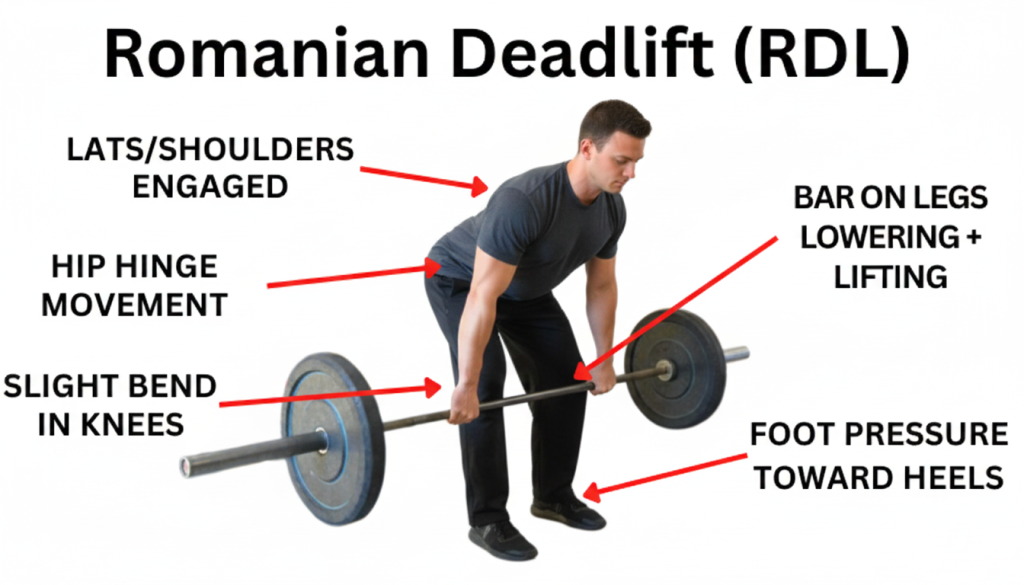
Drive hips forward to return to standing by contracting glutes and hamstrings, not by lifting with your back. The movement emphasizes the hip hinge—bending at hips with minimal knee bend—rather than squatting motion.
Why It’s Functional: Hip hinge patterns protect your spine during any forward-bending activity. Proper hinging mechanics prevent the back rounding that causes disc injuries during lifting, bending, or reaching forward.
3. Push-Up: Horizontal Pushing
The push-up develops pressing strength, core stability, and shoulder health through natural scapular movement impossible with bench pressing. Start in plank position with hands slightly wider than shoulder-width, body forming straight line from head to heels.
Lower body as a unit by bending elbows, keeping them at approximately 45-degree angles from your torso (not flared wide). Descend until chest nearly touches floor while maintaining rigid core—no sagging hips or pike positioning.
Press through palms to return to start position. Your shoulder blades should move freely—retracting as you lower, protracting as you press up. This scapular motion maintains shoulder health unlike fixed-position bench pressing.
Why It’s Functional: Pushing patterns appear constantly in daily life—pushing doors, pressing overhead to place items on shelves, or pushing yourself up from the ground. The integrated core engagement replicates how you actually use pushing strength functionally.
4. Single-Arm Dumbbell Row: Pulling Development
Rows develop back strength and postural muscles while training unilateral patterns common in real-world activities. Place left hand and knee on bench with right foot on floor. Hold dumbbell in right hand with arm hanging straight, shoulder square (not rotated open).
Pull dumbbell toward hip by driving elbow back and up, keeping elbow close to body. Focus on squeezing shoulder blade toward spine rather than simply bending arm. Your torso should remain stable without rotation—core muscles prevent twisting during the row.
Lower with control to full arm extension. Complete all reps on one side before switching.
Why It’s Functional: Pulling patterns replicate opening heavy doors, starting lawnmowers, bringing objects toward you, or any situation requiring pulling force. The unilateral format develops side-to-side balance and prevents dominant side compensation.
5. Farmer’s Carry: Loaded Locomotion
This deceptively simple exercise develops grip strength, core stability, postural endurance, and full-body conditioning. Hold heavy dumbbells, kettlebells, or specialized farmer’s carry handles at your sides. Stand tall with shoulders back, chest up, core braced.
Walk forward with controlled steps, maintaining perfect posture throughout. The weight wants to pull you into forward lean or side bend—resist these forces through active postural muscles engagement. Continue for distance (30-50 meters) or time (30-60 seconds).
Why It’s Functional: Carrying represents one of the most practical strength applications—groceries, luggage, equipment, children, or any objects requiring transport. Farmer’s carries build the postural endurance and grip strength required for real-world carrying.
6. Turkish Get-Up: Ultimate Integration
The Turkish get-up integrates virtually every movement pattern into one complex sequence developing strength, mobility, and body control. Lie on back holding kettlebell in right hand with arm extended straight up. Bend right knee with foot flat on floor.
The complete sequence involves nine distinct positions transitioning from lying to standing while keeping the kettlebell stable overhead. This exercise requires dedicated practice to master proper technique across all transitions.
Why It’s Functional: The get-up replicates the complex movement required to stand from the ground—a fundamental skill that declines with age and sedentary living. It develops shoulder stability, hip mobility, and core control simultaneously.
7. Medicine Ball Slam: Explosive Power
Medicine ball slams develop explosive full-body power through dynamic, athletic movements. Hold medicine ball overhead with arms extended. Rise onto toes with slight body extension (like preparing to jump).
Explosively throw ball downward with maximum force while dropping into quarter squat. Catch the ball on first bounce or pick it up, return to overhead position, and repeat. This exercise emphasizes maximum effort and explosive power output.
Why It’s Functional: Explosive power enables quick movements in sports and emergency situations—sprinting to catch a bus, throwing objects, or any situation requiring rapid force generation. The controlled aggression of slams provides excellent stress relief alongside physical benefits.
Building Your Functional Strength Training Workout Plan
Creating effective functional fitness for men programming requires strategic organization around movement patterns, progressive overload, and recovery. These frameworks enable consistent progress without burnout or injury.
Training Frequency and Split Options
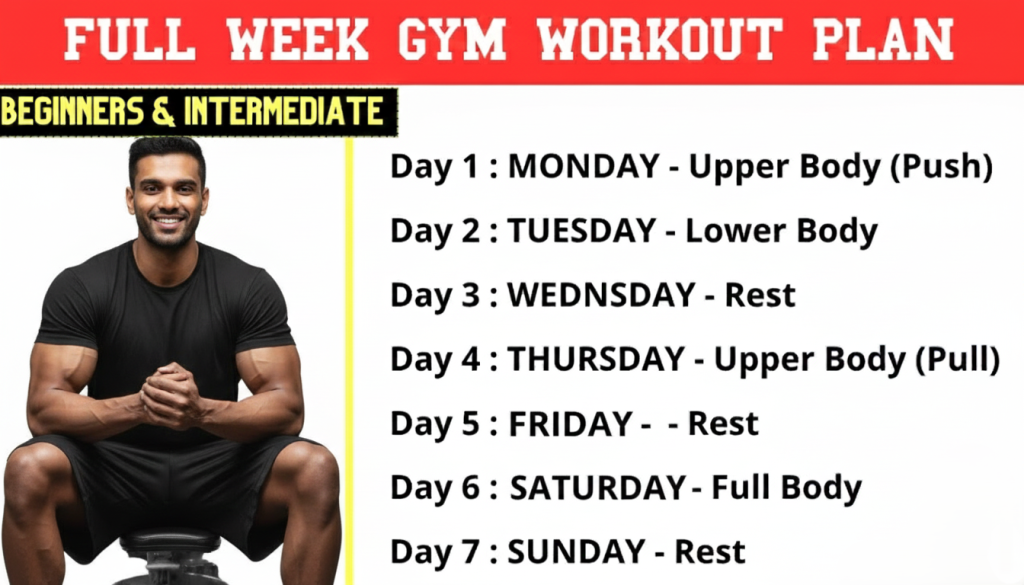
Full-Body Training (3x/Week)
Most men achieve excellent results with three weekly full-body functional sessions. This frequency provides sufficient stimulus for adaptation while allowing adequate recovery between workouts. Schedule sessions on non-consecutive days like Monday, Wednesday, Friday.
Each session includes exercises covering all primary movement patterns: squat, hinge, push, pull, and core. This repetition frequency—training each pattern 3x weekly—produces rapid skill development and strength gains for beginners through intermediate trainees.
Sample Full-Body Framework:
- Squat pattern (goblet squats, front squats)
- Hinge pattern (RDLs, kettlebell swings)
- Horizontal push (push-ups, dumbbell presses)
- Vertical pull (pull-ups, lat pulldowns)
- Core exercise (planks, Pallof press)
- Loaded carry or conditioning finisher
Progressive Overload Strategies
Consistent progress requires systematically increasing training difficulty over time. Functional fitness for men offers numerous progression variables beyond simply adding weight.
Load Progression: Increase weight lifted in 2.5-5 pound increments for upper body exercises, 5-10 pounds for lower body. Only progress when you can complete prescribed sets and reps with excellent form.
Volume Progression: Add sets or repetitions before increasing weight. Progress from 3 sets of 8 reps to 3 sets of 10, then 3 sets of 12 before increasing load and returning to 3 sets of 8 with heavier weight.
Density Progression: Complete the same work in less time by reducing rest periods. This progression develops work capacity and conditioning alongside strength.
Complexity Progression: Advance from simpler to more complex exercise variations. Goblet squats → front squats → overhead squats represents increasing complexity demanding greater mobility and stability.
Sample Beginner Full-Body Workout
Warm-Up (10 minutes):
- Hip circles and leg swings: 10 each direction
- Arm circles: 10 forward, 10 backward
- Bodyweight squats: 15 reps
- Push-ups (knee or regular): 10 reps
- Cat-cow stretches: 10 reps
- Plank hold: 30 seconds
Strength Circuit (3 rounds):
- Goblet squats: 12 reps
- Push-ups: 10 reps (modify as needed)
- Dumbbell Romanian deadlifts: 12 reps
- Dumbbell rows: 10 reps per arm
- Plank holds: 45 seconds
Rest 90-120 seconds between rounds.
Finisher:
- Farmer’s carries: 3 x 30 meters
- Kettlebell swings: 3 x 15 reps
Cool-Down (5-10 minutes):
- Hip flexor stretches: 30 seconds per side
- Hamstring stretches: 30 seconds per side
- Chest doorway stretch: 30 seconds
- Child’s pose: 60 seconds
Sample Intermediate Full-Body Workout
Dynamic Warm-Up (10 minutes):
- Jump rope or jumping jacks: 2 minutes
- Walking lunges with rotation: 10 per side
- Inchworms: 8 reps
- World’s greatest stretch: 5 per side
- Glute bridges: 15 reps
- Band pull-aparts: 20 reps
Main Strength Work:
A1. Front squats: 4 x 8 reps
A2. Pull-ups: 4 x 8 reps (weighted if possible)
Rest 2 minutes, repeat pairing 4 times
B1. Single-leg Romanian deadlifts: 3 x 10 per leg
B2. Dumbbell bench press: 3 x 10 reps
Rest 90 seconds, repeat 3 times
C1. Kettlebell swings: 3 x 20 reps
C2. Turkish get-ups: 3 x 2 per side
Rest 90 seconds, repeat 3 times
Core Finisher:
- Pallof press: 3 x 12 per side
- Ab wheel rollouts: 3 x 10 reps
Recovery and Deload Weeks
Every 4-6 weeks, schedule a deload week reducing training volume by 40-50%. Maintain exercise selection and weight but perform fewer sets or reps. This strategic recovery allows accumulated fatigue to dissipate, enabling renewed progress.
Deload weeks prevent burnout, reduce injury risk, and often precede periods of rapid strength gains. Many men resist deloading thinking more is always better—this mindset inevitably leads to plateaus or injuries.
Nutrition for Functional Strength Development
Training provides the stimulus for adaptation, but nutrition supplies the raw materials your body needs to build strength, recover from workouts, and support optimal performance. These evidence-based nutrition strategies amplify your functional fitness for men results.
Protein for Muscle Development and Recovery
Protein provides amino acids essential for muscle protein synthesis—repairing and building muscle tissue damaged during training. Men engaged in regular strength training require approximately 0.7-1.0 grams of protein per pound of body weight daily.
Distribute protein across 3-4 meals rather than concentrating it in one sitting. Your body can effectively utilize 25-40 grams per meal for muscle building, with excess being oxidized for energy. Four meals with 30-35 grams each optimizes muscle protein synthesis throughout the day.
High-quality protein sources include:
- Animal proteins: chicken, turkey, lean beef, pork, fish, eggs, Greek yogurt
- Dairy: cottage cheese, milk, protein powder (whey or casein)
- Plant proteins: tofu, tempeh, legumes, quinoa
- Protein supplements: convenient but not necessary if dietary protein is adequate
Carbohydrates for Performance and Recovery
Carbohydrates fuel intense training by providing muscle glycogen—your primary energy source during resistance exercise. Inadequate carb intake compromises workout intensity, slows recovery, and may impair testosterone production in active men.
Most men training 3-4 times weekly benefit from 150-250 grams of carbohydrates daily, adjusted based on body size, training volume, and goals. Those pursuing fat loss might reduce carbs moderately, while men focused purely on strength gain may consume higher amounts.
Emphasize complex carbohydrates providing sustained energy:
- Whole grains: oats, brown rice, quinoa, whole grain bread
- Starchy vegetables: sweet potatoes, regular potatoes, winter squash
- Legumes: beans, lentils, chickpeas
- Fruits: provide carbs plus valuable micronutrients

Fats for Hormone Production
Dietary fat supports testosterone and other hormone production essential for strength gains and recovery. Men require adequate fat intake—roughly 0.3-0.5 grams per pound body weight—to maintain optimal hormonal function.
Very low-fat diets impair testosterone production and recovery capacity. Include healthy fat sources at most meals:
- Monounsaturated fats: olive oil, avocados, nuts, seeds
- Omega-3 fatty acids: fatty fish (salmon, mackerel, sardines), walnuts, flaxseed
- Saturated fats: whole eggs, grass-fed beef, dairy (in moderation)
- Avoid: trans fats and excessive omega-6 vegetable oils
Hydration and Performance
Dehydration impairs strength, endurance, and recovery. Drink at least half your body weight in ounces daily—a 200-pound man needs 100 ounces minimum. Increase intake on training days and in hot weather.
Monitor urine color: pale yellow indicates adequate hydration, dark yellow suggests insufficient intake. Don’t wait until feeling thirsty—by then you’re already somewhat dehydrated.
Supplements Worth Considering
While whole foods should provide most nutrition, certain supplements offer convenient, evidence-based benefits:
Creatine Monohydrate: The most researched sports supplement, creatine increases strength, power, and muscle growth. Take 3-5 grams daily—timing doesn’t matter significantly.
Protein Powder: Convenient protein source when whole foods aren’t practical. Whey protein digests quickly for post-workout use; casein digests slowly for overnight recovery.
Omega-3 Fish Oil: Most men consume insufficient omega-3s from diet alone. Quality fish oil supplements (2-3 grams daily) support inflammation management and cardiovascular health.
Common Mistakes and How to Avoid Them
Even well-intentioned functional fitness for men efforts can go awry through common errors that limit results or increase injury risk. Recognizing these pitfalls helps you maintain productive, safe training.
Mistake 1: Neglecting Mobility Work
Many men jump directly into strength training without addressing mobility limitations that compromise movement quality and increase injury risk. Restricted hip, thoracic spine, and shoulder mobility prevent proper squat, deadlift, and pressing mechanics.
Solution: Dedicate 10-15 minutes before workouts to dynamic mobility focusing on hips, thoracic spine, and shoulders. Include exercises like hip circles, world’s greatest stretch, cat-cow stretches, and arm circles. Address specific limitations through targeted stretching on rest days.
Mistake 2: Progressing Too Quickly
Enthusiasm about new training approaches often leads men to add weight or volume too aggressively, outpacing their body’s adaptation capacity. This creates injury risk and leads to form breakdown that undermines functional training benefits.
Solution: Progress conservatively using the “two good workouts” rule—only increase difficulty after completing two consecutive sessions with excellent form and manageable fatigue. Strength development is a marathon, not a sprint.
Mistake 3: Ignoring Unilateral Training
Focusing exclusively on bilateral exercises (using both limbs simultaneously) neglects the single-limb strength demands common in real-world activities and sports. This creates strength imbalances and leaves gaps in functional capability.
Solution: Include single-leg exercises (split squats, lunges, single-leg RDLs) and single-arm exercises (single-arm rows, single-arm presses) in every program. These movements develop balanced strength while improving stability and preventing compensation by dominant sides.
Mistake 4: Insufficient Recovery
Training enthusiasm sometimes leads to excessive frequency or volume without adequate recovery. Your body adapts during rest periods between workouts—insufficient recovery prevents progress and increases injury and overtraining risk.
Solution: Most men achieve optimal results with 3-4 weekly training sessions. Ensure at least one complete rest day weekly with no structured training. Prioritize 7-9 hours of quality sleep nightly. Listen to persistent soreness, fatigue, or mood disturbances as warning signs requiring additional recovery.
Mistake 5: Neglecting Core Training
Some men assume compound movements for functional fitness provide sufficient core work without dedicated core training. While compounds do engage core muscles, specific core exercises develop the stability and strength required for optimal functional performance.
Solution: Include 2-3 core exercises per workout focusing on anti-extension (planks, ab wheel rollouts), anti-rotation (Pallof press, single-arm carries), and anti-lateral flexion (side planks, suitcase carries). These functional core patterns directly support all other movements.
Measuring Progress in Functional Fitness for Men
Tracking appropriate metrics keeps you motivated and provides feedback about whether your functional strength training workout plan is working effectively. Functional fitness for men success extends beyond simple weight numbers, requiring comprehensive progress assessment.
Performance Benchmarks
Track concrete performance improvements in key functional exercises:
- Goblet Squat: Record weight for 3 sets of 10 reps with perfect form
- Push-Ups: Count maximum quality reps achieved in one set
- Pull-Ups: Track total pull-ups achieved across 3 sets
- Farmer’s Carry: Measure distance or time carrying specific loads
- Turkish Get-Up: Note maximum weight successfully completed for 3 reps per side
Test these benchmarks monthly to quantify strength gains. Improvements demonstrate effective training regardless of body weight changes.
Functional Capacity Tests
Beyond gym performance, assess real-world functional improvements:
- Can you maintain good form carrying heavy groceries for extended distances?
- How easily can you get up from the floor without using hands for assistance?
- Do you notice improved performance in sports or recreational activities?
- Has physical work (yard work, home projects) become easier and less fatiguing?
These qualitative assessments often provide the most meaningful feedback about functional training’s practical benefits.
Body Composition Changes
While not the primary goal, functional fitness for men typically improves body composition. Track waist circumference and progress photos monthly rather than obsessing over scale weight. Muscle gain simultaneous with fat loss can mask progress on scales alone.
Clothing fit provides practical feedback—pants fitting better despite minimal scale weight changes indicates positive body composition shifts.
Conclusion
Functional fitness for men represents the most practical, sustainable approach to building strength that actually matters in daily life. Unlike aesthetic-focused training creating impressive muscles with limited real-world application, functional fitness for men develops integrated movement patterns, stability, and mobility that enhance every physical activity from household chores to competitive sports.
The best functional exercises for everyday life—squats, hinges, pushing, pulling, lunges, rotation, and carries—replicate movement patterns your body actually performs outside the gym. This direct carryover makes functional training immediately applicable and deeply satisfying as you notice improved capability across all activities.
Building an effective functional strength training workout plan doesn’t require expensive equipment or complicated programming. The fundamental movement patterns, progressive overload principles, and recovery strategies outlined in this guide provide everything needed for consistent, long-term progress accessible to men across all fitness levels.
Compound movements for functional fitness develop strength, power, stability, and mobility simultaneously—comprehensive physical development impossible through isolation exercises or machines. This integrated training creates resilient, capable bodies prepared for anything life demands.
Beyond immediate performance benefits, functional fitness for men represents an investment in lifelong independence and quality of life. The strength, balance, and mobility you develop now directly determines your physical capability decades into the future. Men who maintain functional fitness throughout middle age preserve independence and vitality well into their senior years.
Start today with fundamental movement patterns using whatever equipment you have available—even just your bodyweight. Focus on mastering proper technique, progressing conservatively, and training consistently. These foundational practices create the capable, resilient body that serves you well across all of life’s physical demands.
P.S. Many men find that investing in quality equipment early accelerates their functional fitness journey. While bodyweight training provides an excellent foundation, adding versatile tools like kettlebells and resistance bands unlocks hundreds of additional exercise variations. Starting with the right equipment eliminates barriers to long-term consistency.