

High fiber foods for weight loss create sustained satiety through delayed gastric emptying and reduced caloric absorption efficiency, supporting fat loss without conscious caloric restriction.
This guide identifies 30 high-fiber foods categorized by macronutrient profile and practical application within calorie-controlled eating patterns.
What This Guide Covers
This analysis focuses exclusively on whole-food fiber sources and their role in weight management through satiety extension. It excludes fiber supplements, meal replacement products, and foods where fiber content is artificially enhanced through fortification.


- Weekly grid for breakfast, lunch, dinner and snacks
- Plate guide and shopping basics checklist
- Built-in water tracker
Instant download • 100% free • No email required
The ranking prioritizes fiber density per 100 calories, preparation flexibility, and accessibility in standard U.S. grocery environments.

How High Fiber Foods for Weight Loss Work
Dietary fiber reduces energy density in two ways. Soluble fiber forms viscous gel structures in the digestive tract, slowing nutrient absorption and prolonging fullness signals to the hypothalamus. Insoluble fiber increases food volume without contributing metabolizable calories, creating mechanical satiation before excess energy intake occurs.
Clinical observations indicate that individuals consuming 25-35 grams of fiber daily report reduced hunger intensity between meals compared to those consuming 10-15 grams. This pattern holds across varied dietary approaches when total protein and caloric intake remain controlled.
Fiber also modulates blood glucose response following carbohydrate consumption. Blunted glucose spikes prevent rapid insulin-mediated hunger rebounds that typically occur 90-120 minutes after low-fiber meals.
However, fiber alone does not create fat loss. It functions as a satiety tool within an existing caloric deficit. Weight loss still requires total energy intake to fall below expenditure over time.
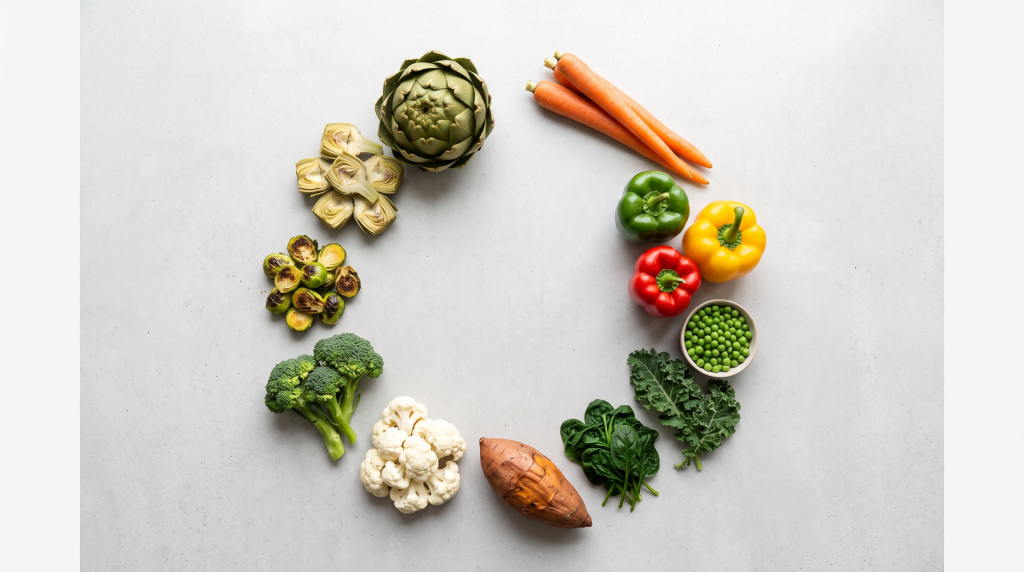
Top 10 Vegetable Fiber Sources
1. Artichoke Hearts
Artichokes deliver 7 grams of fiber per 100-gram serving at approximately 47 calories. The fiber content concentrates in the base and inner leaves, which contain both soluble and insoluble forms.
Preparation typically involves steaming or boiling. Canned artichoke hearts offer comparable fiber content when packed in water without added oils.
2. Brussels Sprouts
Brussels sprouts provide 3.8 grams of fiber per 100 grams at 43 calories. Roasting at high temperature reduces bitterness while preserving fiber structure.
Common preparation errors include overcooking, which creates sulfurous off-flavors and may reduce palatability. Target internal temperature of 190-200°F maintains texture while ensuring digestibility.
3. Broccoli
Broccoli contains 2.6 grams of fiber per 100 grams at 34 calories. Both florets and stems contribute fiber, though stems require longer cooking to soften lignin structures.
Raw broccoli retains maximum fiber but may cause digestive discomfort in individuals with sensitive colonic function. Light steaming for 4-5 minutes softens cell walls while maintaining fiber integrity.
4. Cauliflower
Cauliflower offers 2 grams of fiber per 100 grams at 25 calories. The low energy density makes it suitable for volume eating strategies where large portion sizes prevent psychological deprivation.
Roasting caramelizes surface sugars without degrading fiber content. Rice-processed cauliflower maintains fiber but loses structural integrity that contributes to satiety through chewing time.
5. Carrots
Carrots provide 2.8 grams of fiber per 100 grams at 41 calories. Pectin concentration increases with maturity, explaining why older carrots feel more fibrous when raw.
Cooking does not significantly reduce fiber content but does break down cell wall structures, potentially accelerating digestion. Raw carrots require extended chewing, which activates early satiety signals before swallowing.
6. Sweet Potatoes
Sweet potatoes contain 3 grams of fiber per 100 grams at 86 calories. Fiber concentrates near the skin, making unpeeled preparation preferable for weight management applications.
Baking or steaming preserves fiber better than boiling, which leaches water-soluble components into cooking liquid. Cooling after cooking increases resistant starch formation, which functions similarly to fiber in the digestive tract.
7. Spinach
Cooked spinach delivers 2.4 grams of fiber per 100 grams at 23 calories. Raw spinach contains similar fiber per weight but occupies significantly more volume, limiting practical serving sizes.
Oxalate content in spinach may bind minerals, but this does not affect fiber function or satiety impact. Pairing with vitamin C sources during meals enhances iron absorption without reducing fiber benefits.
8. Kale
Kale provides 2 grams of fiber per 100 grams at 35 calories. Tough stems contain higher fiber concentrations but require removal or extended cooking for palatability.
Massaging raw kale with acidic dressing breaks down cellulose structures, improving texture while maintaining fiber content. This preparation method suits individuals who experience bloating from large quantities of raw cruciferous vegetables.
9. Green Peas
Green peas contain 5.7 grams of fiber per 100 grams at 81 calories. The combination of fiber and protein creates dual satiety mechanisms through both physical and hormonal pathways.
Frozen peas retain fiber content equivalent to fresh. Overcooking creates mushiness that reduces chewing requirements and may decrease satiety intensity despite unchanged fiber quantity.
10. Bell Peppers
Bell peppers offer 2.1 grams of fiber per 100 grams at 31 calories. The water content amplifies volume without adding calories, supporting satiety through gastric distension.
Raw preparation maximizes crunch and chewing time. Roasting concentrates flavors but slightly reduces water content, decreasing volume per calorie while maintaining absolute fiber levels.
Top 10 Fruit Fiber Sources
“When selecting high fiber foods for weight loss, whole fruits offer essential vitamins alongside soluble fiber.”
11. Raspberries
Raspberries deliver 6.5 grams of fiber per 100 grams at 52 calories, creating the highest fiber-to-calorie ratio among commonly consumed fruits. The small seed structures provide insoluble fiber that increases fecal bulk.
Fresh raspberries offer maximum volume and chewing satisfaction. Frozen versions maintain fiber but lose structural integrity after thawing, potentially reducing perceived fullness from texture.
12. Blackberries
Blackberries contain 5.3 grams of fiber per 100 grams at 43 calories. Similar to raspberries, the seed content contributes significant insoluble fiber alongside the fruit flesh’s soluble components.
Washing immediately before consumption prevents premature softening. Mold develops rapidly on damaged berries, requiring prompt sorting and storage in breathable containers.
13. Pears
Pears provide 3.1 grams of fiber per 100 grams at 57 calories. Fiber concentrates in the skin, which also contains phenolic compounds that may support metabolic function independent of fiber effects.
Ripeness significantly affects texture and digestive speed. Firm pears require extended chewing and delay gastric emptying more effectively than fully ripe specimens, though absolute fiber content remains constant.
14. Apples
Apples contain 2.4 grams of fiber per 100 grams at 52 calories. Pectin concentration varies by variety, with tart apples generally containing more soluble fiber than sweet cultivars.
Eating unpeeled apples provides approximately 30% more fiber than peeled versions. The skin also requires additional chewing, activating cephalic phase satiety signals before significant caloric intake occurs.
15. Strawberries
Strawberries offer 2 grams of fiber per 100 grams at 32 calories. The external seed distribution creates surface texture that slows consumption rate through sensory feedback.
Slicing strawberries increases perceived portion size without adding volume, a psychological effect that enhances satisfaction independent of actual fiber quantity. This preparation suits individuals who eat rapidly and benefit from visual portion cues.
16. Oranges
Oranges provide 2.4 grams of fiber per 100 grams at 47 calories. The membrane and pith contain substantially more fiber than the juice vesicles, making whole-fruit consumption preferable to juicing for weight management.
Sectioning oranges manually preserves membrane attachment, maintaining fiber while improving palatability compared to eating whole segments with thick albedo layers.
17. Bananas
Bananas contain 2.6 grams of fiber per 100 grams at 89 calories. Resistant starch content peaks in green bananas and decreases as ripening progresses, affecting both fiber function and glycemic response.
Less ripe bananas create greater satiety through slower digestion, though flavor and texture acceptance decreases. Individuals prioritizing satiety may prefer bananas with slight green coloration at the stem end.
18. Grapefruit
Grapefruit delivers 1.6 grams of fiber per 100 grams at 42 calories. The bitter compounds may suppress appetite through mechanisms separate from fiber, though research remains preliminary.
Segmenting grapefruit and eating with membranes attached provides maximum fiber. Sprinkling with minimal salt or zero-calorie sweetener improves palatability without significantly affecting energy density.
- Weekly grid for breakfast, lunch, dinner and snacks
- Plate guide and shopping basics checklist
- Built-in water tracker
Instant download • 100% free • No email required
19. Avocado
Avocado contains 6.7 grams of fiber per 100 grams at 160 calories. The high fat content increases caloric density but creates prolonged satiety through delayed gastric emptying independent of fiber effects.
Quarter or half portions suit weight loss contexts better than whole avocados due to caloric concentration. The fiber and fat combination produces sustained fullness lasting 4-5 hours in observed eating patterns.
20. Kiwi
Kiwi provides 3 grams of fiber per 100 grams at 61 calories. Eating with skin increases fiber by approximately 50% while adding negligible calories, though texture acceptance varies significantly between individuals.
The small black seeds contribute insoluble fiber similar to berries. Actinidin enzyme content may support protein digestion, potentially improving nutrient absorption efficiency without affecting fiber function.
Top 5 Legume Fiber Sources
“Legumes represent some of the most effective high fiber foods for weight loss due to their protein-to-fiber ratio.”
21. Lentils
Lentils contain 7.9 grams of fiber per 100 grams cooked at 116 calories. The combination of fiber and protein creates robust satiety through complementary mechanisms affecting both gastric emptying and hormonal signaling.
Red lentils cook faster but break down into softer texture, potentially reducing chewing time compared to brown or green varieties that maintain structural integrity. This textural difference may influence satiety intensity despite identical fiber content.
22. Black Beans
Black beans provide 8.7 grams of fiber per 100 grams cooked at 132 calories. The resistant starch content increases when beans are cooked and then refrigerated, adding fiber-like effects without altering labeled values.
Proper preparation requires soaking and rinsing to reduce oligosaccharide content that causes digestive discomfort. Individuals new to high-fiber eating should introduce beans gradually to allow colonic adaptation.
23. Chickpeas
Chickpeas deliver 7.6 grams of fiber per 100 grams cooked at 164 calories. Roasted preparation removes water weight, concentrating calories while maintaining absolute fiber quantities.
Hummus processing disrupts cell wall structures, potentially accelerating digestion compared to whole chickpeas despite unchanged fiber content. Whole chickpeas in salads create more prolonged fullness through increased chewing requirements.
24. Split Peas
Split peas contain 8.3 grams of fiber per 100 grams cooked at 118 calories. The processing that creates split peas removes the outer hull, slightly reducing fiber compared to whole dried peas while improving cooking speed.
Split peas form thick textures in soups without added thickeners, increasing volume and reducing energy density of complete meals. This property makes them particularly effective for weight management when used as soup bases.
25. Kidney Beans
Kidney beans provide 6.4 grams of fiber per 100 grams cooked at 127 calories. The firm texture maintains integrity in mixed dishes, supporting chewing time and mechanical satiation.
Canned versions offer convenience with comparable fiber to dried beans prepared from scratch. Rinsing canned beans reduces sodium by approximately 40% without affecting fiber content.
Top 5 Grain Fiber Sources
“Whole grains serve as versatile high fiber foods for weight loss when portioned appropriately.”
26. Oats
Steel-cut oats contain 10.1 grams of fiber per 100 grams dry at 379 calories. The beta-glucan soluble fiber forms viscous solutions during digestion, significantly delaying gastric emptying.
Steel-cut oats require longer cooking but produce more textured results than rolled oats, potentially extending eating time and enhancing satiety signals. Instant oats contain identical fiber but digest more rapidly due to processing that gelatinizes starch structures.
27. Quinoa
Quinoa provides 2.8 grams of fiber per 100 grams cooked at 120 calories. The complete protein profile complements fiber for sustained satiety, particularly when protein intake from other sources is suboptimal.
Rinsing quinoa before cooking removes bitter saponin coating without affecting fiber or protein content. Proper water ratios prevent mushinesㅁs that reduces chewing requirements and may decrease satiety intensity.
28. Brown Rice
Brown rice contains 1.8 grams of fiber per 100 grams cooked at 111 calories. The bran layer provides fiber absent in white rice, though the difference is moderate compared to legume or vegetable sources.
Cooling cooked brown rice increases resistant starch formation, creating fiber-like effects that reduce net caloric availability. This effect applies to refrigerated rice that is subsequently reheated or eaten cold.
29. Whole Wheat Bread
Whole wheat bread delivers approximately 6-7 grams of fiber per 100 grams at 247 calories, though values vary significantly by formulation. True whole wheat products list whole wheat flour as the first ingredient without enriched flour additions.
Bread texture affects satiety independent of fiber content. Denser breads with visible grain particles require more chewing and create greater fullness than soft, uniform varieties despite similar fiber quantities per weight.
30. Barley
Pearl barley provides 3.8 grams of fiber per 100 grams cooked at 123 calories. The beta-glucan content rivals oats, creating viscous digestive solutions that slow nutrient absorption.
Pearl barley lacks the outer hull, slightly reducing fiber compared to hulled barley while improving cooking characteristics and palatability. Adding cooked barley to soups increases volume and fiber density of complete meals.

How to Structure High-Fiber Meals
Effective fiber distribution across meals prevents digestive overload while maximizing satiety duration. Target 8-10 grams of fiber per meal for individuals consuming three meals daily, or 5-7 grams across four smaller eating occasions.
Pairing fiber sources with adequate protein amplifies satiety through complementary mechanisms. A meal containing 30 grams protein and 10 grams fiber creates more sustained fullness than either macronutrient alone at equivalent caloric totals.
Water intake must increase proportionally with fiber consumption. Inadequate hydration combined with high fiber intake can cause constipation and discomfort that undermines adherence to eating patterns supporting weight loss.
Introducing fiber gradually prevents gastrointestinal distress. Individuals currently consuming 10-15 grams daily should increase by 5 grams weekly rather than jumping immediately to 30+ grams, allowing gut bacteria populations to adapt.
Who Should Limit Fiber Intake
Individuals with inflammatory bowel conditions during active flare periods may require temporary fiber restriction. The mechanical irritation from insoluble fiber can exacerbate symptoms when intestinal inflammation is present.
Those with diagnosed gastroparesis experience delayed gastric emptying independent of fiber intake. Additional fiber may worsen symptoms by further slowing stomach clearance, requiring medical guidance on appropriate fiber levels.
Individuals taking medications with narrow absorption windows should separate high-fiber meals from medication timing by 2-3 hours. Fiber can bind certain pharmaceuticals, reducing bioavailability and therapeutic effectiveness.
Anyone experiencing persistent bloating, cramping, or changes in bowel patterns after increasing fiber intake should reduce consumption and consult healthcare providers to rule out underlying digestive disorders.
Common Fiber Mistakes
Relying exclusively on grain sources concentrates fiber intake into carbohydrate-dense foods, potentially creating difficulty maintaining caloric deficits. Vegetable and legume sources provide comparable fiber at lower caloric costs per serving.
Juicing fruits removes the majority of fiber content while concentrating sugars, eliminating the primary weight management benefit. Whole fruit consumption preserves fiber structure that slows digestion and extends satiety.
Fiber supplements create satiety inferior to whole-food sources due to absence of food volume, chewing requirements, and complementary nutrients. Supplements suit individuals unable to meet targets through diet but should not replace food-based fiber.
Assuming all high-fiber foods support weight loss ignores caloric density variations. Nuts and seeds provide substantial fiber but contain concentrated calories requiring portion control within weight management contexts.
Realistic Expectations
Fiber increases satiety and reduces hunger intensity between meals when incorporated into controlled caloric intake. It does not create weight loss independent of energy balance or eliminate the need for caloric awareness.
Individual responses to fiber vary significantly based on gut bacteria composition, baseline fiber intake, and meal timing patterns. Some individuals report dramatic hunger reduction from increased fiber, while others experience minimal subjective changes despite meeting intake targets.
Fiber benefits accumulate gradually. Immediate satiety improvements may appear within 3-5 days, but metabolic adaptations supporting sustained weight management require 4-6 weeks of consistent intake.
Weight loss from increased fiber typically ranges from 0.5-1.5 pounds per week when combined with appropriate caloric restriction. Fiber functions as a tool supporting adherence rather than an intervention creating rapid fat loss.
Final Guidance
High-fiber foods support weight management by extending satiety duration and reducing total energy intake without conscious restriction. The mechanism functions through delayed gastric emptying, increased food volume, and blunted glycemic responses that prevent rapid hunger rebounds.
Prioritize whole-food fiber sources distributed across meals rather than concentrated at single eating occasions. Target 25-35 grams daily from varied sources spanning vegetables, fruits, legumes, and whole grains to ensure both soluble and insoluble fiber adequacy.
Increase fiber gradually while monitoring digestive comfort and adjusting intake based on individual tolerance. Pair fiber with adequate protein and water to maximize satiety benefits and prevent gastrointestinal complications.
Fiber creates conditions supporting successful weight management but does not replace the fundamental requirement for sustained caloric deficits over time.
- Weekly grid for breakfast, lunch, dinner and snacks
- Plate guide and shopping basics checklist
- Built-in water tracker
Instant download • 100% free • No email required