


Optimizing muscle recovery and injury prevention requires an integrated strategy that combines active movement prep, myofascial release, systemic load management, and hormonal alignment. When you understand the biomechanical demands of training, you can significantly reduce tissue strain, prevent overuse syndromes, and maintain peak athletic output across consecutive workouts.
Quick Summary
- Biomechanical Warm-Ups: Replacing static stretching with dynamic movement patterns reduces soft tissue strain and optimizes muscle spindle reactivity.
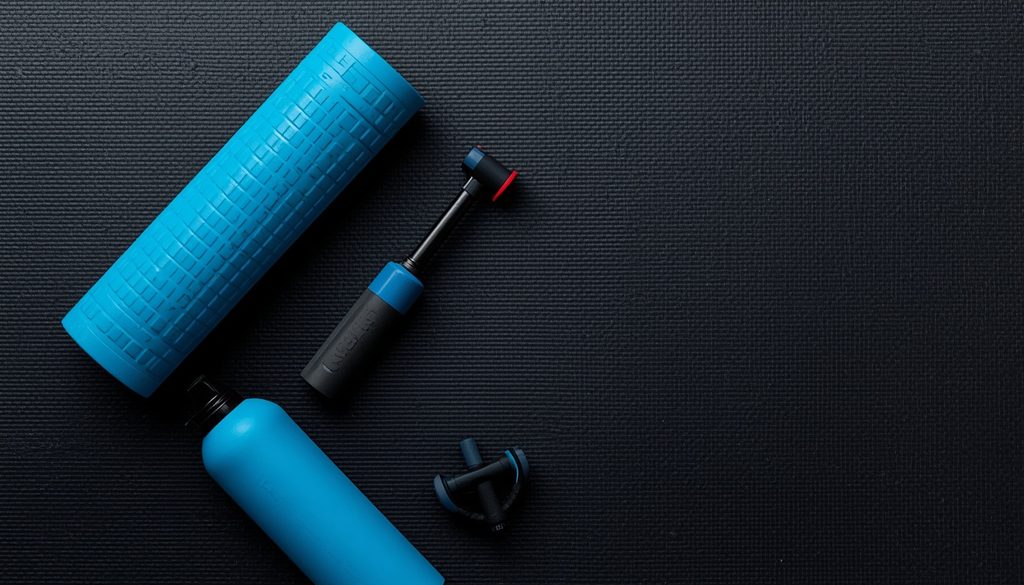
- Targeted Recovery Tools: Utilizing a foam roller or percussion massage gun accelerates localized metabolic waste clearance without disrupting neuromuscular firing patterns.
- Sleep & Hormonal Repair: Stages 3 and 4 deep NREM sleep drive anabolic growth hormone release essential for microtrauma reconstruction.
- Systemic Load Management: Monitoring session rate of perceived exertion (sRPE) prevents chronic central nervous system (CNS) fatigue and joint capsule breakdown.

Why Muscle Recovery and Injury Prevention Drive Long-Term Athletic Adaptation
Effective muscle recovery and injury prevention are not passive outcomes; they represent active physiological processes requiring deliberate intervention. During resistance training or high-intensity conditioning, muscle fibers sustain structural micro-tears, specifically within the sarcomere Z-discs. This micro-damage triggers an acute inflammatory cascade responsible for delayed onset muscle soreness (DOMS). While acute inflammation signals the body to initiate structural adaptation, unmanaged cumulative stress degrades connective tissue integrity, predisposing ligaments and tendons to overuse injuries.
From a certified trainer perspective, athlete failure rarely stems from inadequate training volume. Instead, structural failure occurs when stress accumulation outpaces the rate of tissue remodeling. Connective tissues such as fascia, tendons, and articular cartilage possess inferior vascularity compared to skeletal muscle bellies. Consequently, while muscle bellies adapt rapidly to metabolic demand, dense collagenous structures require sustained, low-shear mechanical input and extended recovery timelines to repair fully.
- One short workout a day, no equipment
- Active rest day and stretch day included
- Printable one-page plan with tips
Instant download • 100% free • No email required
Understanding Soft Tissue Microtrauma and Repair Physiology
When muscle fibers experience eccentric contractions under load, mechanical strain disrupts the muscular plasma membrane (sarcolemma). This disruption permits extracellular calcium ions to enter the intracellular matrix, activating autolytic enzymes that break down structural proteins. Within 24 hours, circulating neutrophils and macrophages infiltrate the damaged tissue to clear cellular debris.
If a secondary heavy stimulus is introduced during peak macrophage activity without adequate soft tissue restoration, the repair cascade gets interrupted. Fibroblastic laying down of new type I collagen becomes disordered, leading to adhesions, altered muscular force vectors, and localized compensation patterns that overload secondary synergist muscles.
Dynamic Movement Preparation: Warm-Up Protocols That Protect Joints
Static stretching prior to heavy loading alters muscle spindle sensitivity, temporarily suppressing maximum force production and joint stability. Modern athletic conditioning relies on dynamic movement preparation following the RAMP framework: Raise, Activate, Mobilize, and Potentiate.
The RAMP Warm-Up Framework
1. Raise Core Body Temperature: Spend 3 to 5 minutes performing low-intensity global movement, such as light rowing or air cycling, to elevate intramuscular temperature. Increased temperature reduces fluid viscosity within muscle tissue and synovia, lowering passive joint stiffness.
2. Activate Latent Muscle Groups: Perform target-specific isometric holds to fire secondary stabilizers. For example, glute bridges activate the gluteus maximus, protecting the lumbar spine during heavy bilateral hip hinge patterns.
3. Mobilize Active Ranges: Move key joint complexes through full dynamic ranges of motion without external loading. Dynamic multi-planar leg swings and thoracic spines rotations restore mobility in restricted planes.
4. Potentiate Neuromuscular Firing: Execute rapid explosive bodyweight movements, such as short sprints or broad jumps, to recruit high-threshold motor units prior to working sets.
Never substitute dynamic warm-ups with excessive static stretching before heavy compound lifts. Prolonged static holds exceeding 60 seconds reduce muscle spindle reflex latency, decreasing immediate joint stabilization and elevating acute ligament sprain risk during max-effort attempts.
Comparative Evaluation of Self-Myofascial Release (SMR) Tools
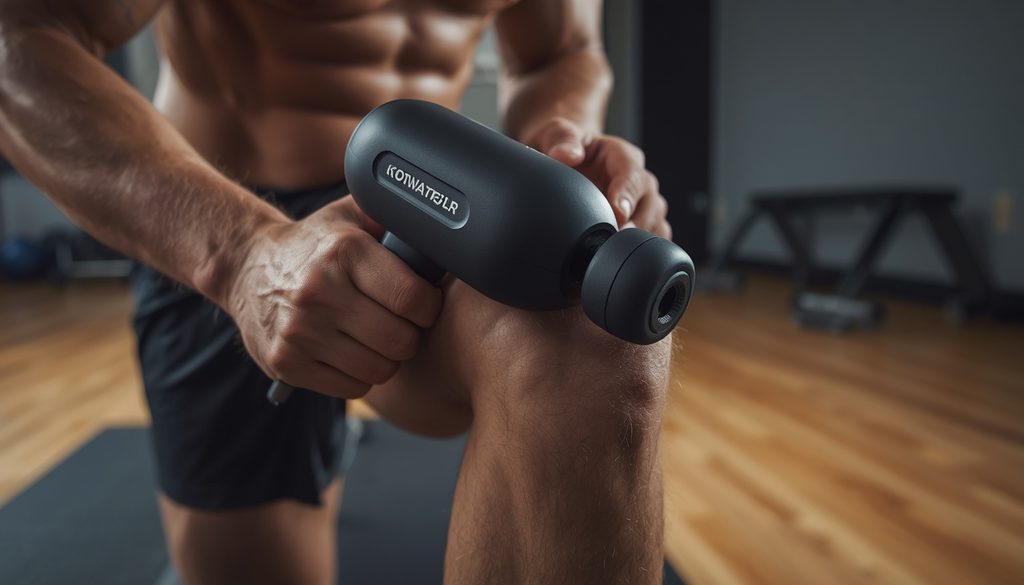
Self-Myofascial Release (SMR) tools alter localized tissue tone and alter nociceptive sensory feedback to the central nervous system. Selecting the appropriate recovery tool depends on the targeted tissue depth and user mobility.
Percussion Therapy Pros
- High-frequency vibration alters pain perception rapidly via neurological gate control mechanisms.
- Adjustable head attachments allow precise targeting of deep structural muscular bellies like the piriformis.
- Requires minimal effort and physical exertion compared to bodyweight floor rolling.
Percussion Therapy Cons
- Higher financial entry cost compared to traditional high-density foam rollers.
- Improper usage directly over bony prominences can cause localized periosteal inflammation.
- Motor noise can interfere with relaxation protocols if used late at night.
Skip If: You have acute bone fractures, active deep vein thrombosis, open skin lesions, or severe unmanaged neuropathy.
Sleep Architecture and Hormonal Reconstruction
Sleep serves as the single most powerful recovery modality available to human physiology. While external tools assist localized blood flow, systemic hormonal repair occurs almost exclusively during non-rapid eye movement (NREM) stage 3 and stage 4 slow-wave sleep.
Hormonal Cascade During Deep Sleep
During deep NREM sleep, the anterior pituitary gland secretes large pulses of Human Growth Hormone (HGH). HGH stimulates amino acid uptake and protein synthesis within skeletal muscle and connective tissues. Simultaneously, systemic cortisol levels drop to their lowest daily baseline, inhibiting muscular breakdown (catabolism) and suppressing systemic systemic systemic inflammatory signaling.
- Sleep Extension Protocol: Aim for 7.5 to 9 hours of uninterrupted sleep per night, aligning with 90-minute ultradian sleep cycles.
- Circadian Lighting Control: Limit exposure to artificial blue light 120 minutes before bed to allow natural pineal melatonin secretion.
- Thermal Regulation: Maintain a bedroom ambient temperature of 65°F to 68°F (18°C to 20°C) to facilitate core body temperature drop needed for rapid sleep onset.
- 7-day recovery checklist
- Soreness vs warning signs guide
- 10-minute mobility routine and weekly log
Instant download • 100% free • No email required
Nutrition, Hydration, and Metabolic Waste Removal
Intramuscular recovery depends directly on metabolic substrate availability. Without proper macronutrient distribution and fluid balance, structural tissue repair stalls regardless of resting duration.
Protein Kinetics and Amino Acid Profiling
To maximize muscle protein synthesis (MPS), consume 0.25 to 0.40 grams of high-quality protein per kilogram of body mass every 3 to 4 hours. Ensure each protein dose contains approximately 2.5 to 3.0 grams of leucine, the essential amino acid responsible for triggering the mTORC1 pathway.
Electrolyte Dynamics and Fascial Hydration
Fascia relies on fluid movement to slide without friction across muscle sheaths. Dehydration reduces fascial pliability, increasing shear stress between muscle groups during high-velocity contractions. Consume 30 to 40 milliliters of water per kilogram of body weight daily, supplemented with sodium, potassium, and magnesium to sustain cellular membrane potential and prevent muscle cramps.
Key Takeaways
- Dynamic movement preparation optimizes neural firing while preserving dynamic joint stability.
- Self-myofascial release tools lower tissue hypertonicity and reduce subjective muscle soreness.
- Slow-wave NREM sleep is non-negotiable for anabolic hormone secretion and structural tissue repair.
- Consistent daily protein distribution and electrolyte balance maintain fascial glide mechanics.
| Recovery Modality | Primary Physiological Mechanism | Optimal Timing | Target Outcome |
|---|---|---|---|
| Dynamic RAMP Warm-Up | Elevates intramuscular temp & reduces synovial fluid viscosity | 15-20 mins Pre-Workout | Joint protection & neural readiness |
| Self-Myofascial Release | Alters nociceptive feedback & lowers localized tissue tone | Post-Workout / Rest Days | Reduced soreness & improved glide |
| Stage 3/4 Deep Sleep | Drives HGH secretion & suppresses baseline cortisol | Nightly (7.5 – 9 Hours) | Systemic cellular tissue repair |
| Substrate Refueling | Triggers mTORC1 pathway & restores glycogen stores | Every 3-4 Hours Daily | Optimal muscle protein synthesis |
Programming Work-to-Rest Ratios and Managing Systemic Load
Preventing injury long-term mandates structured load management. Chronic overuse injuries occur when acute load spikes dramatically relative to the athlete’s chronic workload history (the Acute-to-Chronic Workload Ratio, or ACWR).
Managing Acute-to-Chronic Workload Ratio (ACWR)
Calculate your weekly training load by multiplying total training session minutes by your Session Rate of Perceived Exertion (sRPE on a 1-10 scale). Maintain an ACWR between 0.8 and 1.3. When the acute workload exceeds chronic baseline load by a ratio greater than 1.5, injury probability increases by over 300% across subsequent weeks.
Implementing Planned Deload Weeks
Schedule a mandatory deload week every 4 to 6 weeks of continuous intense training. Reduce total set volume by 40% to 50% while keeping load intensity (weight on the bar) moderately high. This strategy unloads accumulated joint strain and resets central nervous system sensitivity without causing muscular atrophy or strength loss.
Bottom Line
- Prioritize dynamic movement prep over static stretching prior to heavy loading sessions.
- Utilize localized myofascial release tools to manage tissue hypertonicity post-workout.
- Protect slow-wave sleep cycles to ensure physiological hormonal synthesis occurs uninterrupted.
- Maintain your Acute-to-Chronic Workload Ratio within the 0.8–1.3 safe zone using periodic deloads.
Frequently Asked Questions About Muscle Recovery and Injury Prevention
How does proper muscle recovery and injury prevention improve long-term strength gains?
Consistent muscle recovery and injury prevention protocols prevent missed training sessions caused by joint inflammation or soft tissue strain. Consistent progression without forced lay-offs allows cumulative linear progressive overload over years.
Should I use cold therapy or heat therapy immediately after a heavy strength session?
Avoid immediate post-workout cold water immersion if your goal is muscle hypertrophy, as extreme cold blunts anabolic signaling pathways. Heat therapy or light active movement is preferable, as it promotes localized blood flow without suppressing protein synthesis adaptation.
How often should I use a foam roller or percussion massager?
Self-myofascial release tools can be used daily for 5 to 10 minutes per muscle group. Focus on low-intensity, broad passes over hypertonic muscular zones rather than aggressive, high-pressure bone contact.
Can dynamic warm-ups completely replace static stretching?
Before training, dynamic warm-ups should entirely replace static stretching. Static stretching can be performed post-workout or during separate flexibility sessions when joint stability is no longer required under heavy external loads.
What is the ideal deload frequency for intermediate lifting programs?
Most intermediate lifters benefit from a deload week every 4 to 6 weeks. Older lifters or high-stress individuals may require deload intervals every 3 to 4 weeks to balance recovery capacity with life stress.
How do I know if I am suffering from central nervous system (CNS) fatigue versus normal muscle soreness?
Normal muscle soreness is localized to specific muscle bellies. CNS fatigue manifests as systemic lethargy, depressed grip strength, impaired sleep quality, elevated resting heart rate, and loss of training motivation.
Does targeted hydration really reduce tendon injury risk?
Yes. Tendons and ligaments consist primarily of water and collagen matrices. Dehydration decreases fluid movement within tendon sheaths, increasing friction and micro-tearing under high tensile loads.
What macronutrient ratio best supports active soft tissue repair?
Aim for a balanced macronutrient intake featuring 1.6 to 2.2 grams of protein per kilogram of body weight, alongside adequate carbohydrates to replenish intramuscular glycogen and spare protein for tissue construction.
- 7-day recovery checklist
- Soreness vs warning signs guide
- 10-minute mobility routine and weekly log
Instant download • 100% free • No email required