

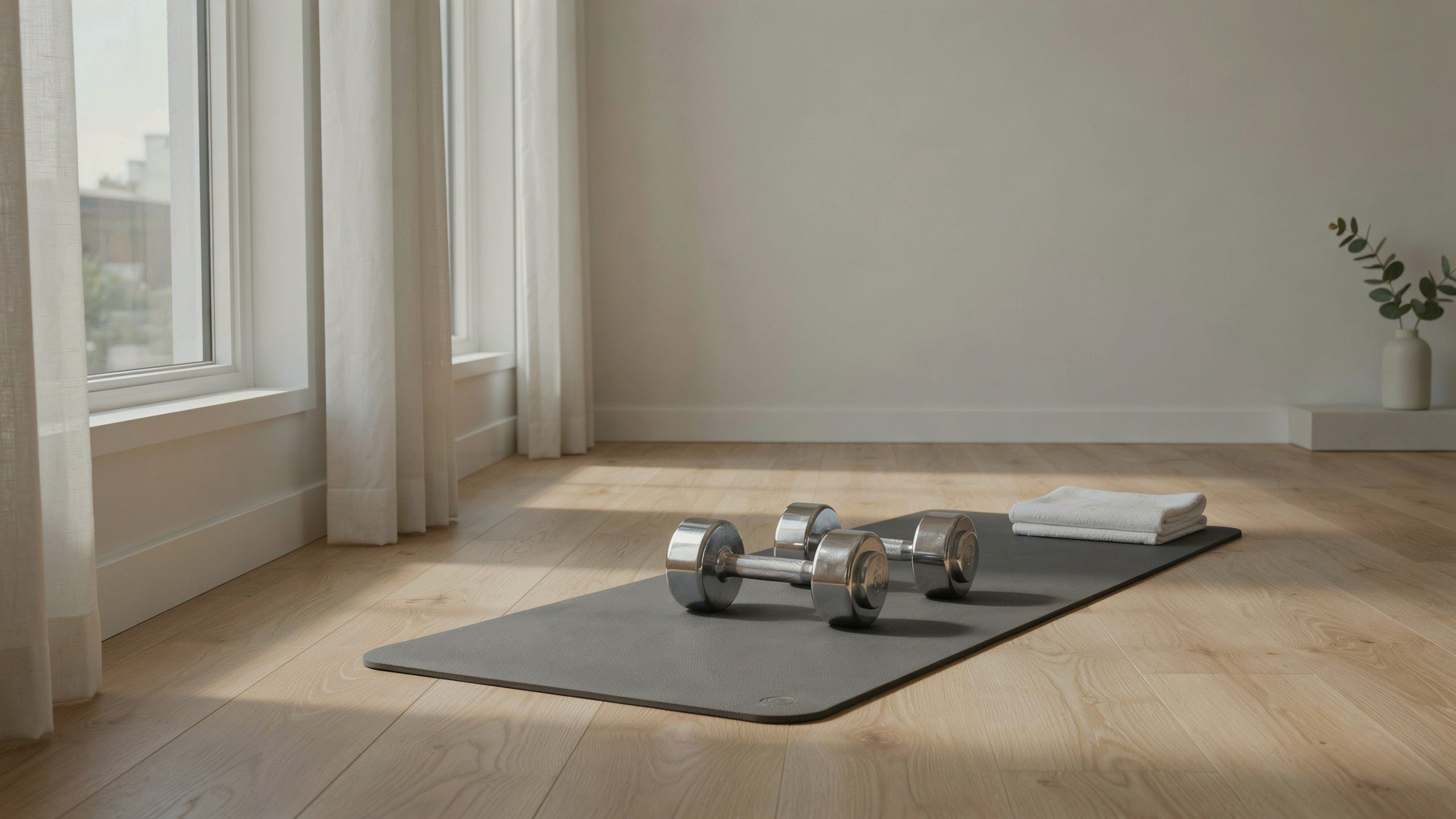
When starting a resistance program, choosing between bodyweight training vs weight training for beginners comes down to how you plan to apply progressive overload, your available equipment, and your timeline for muscle hypertrophy. Bodyweight exercises rely on changing leverage and body position to increase difficulty, offering high movement versatility with zero initial cost. Weight training uses external resistance such as dumbbells or barbells, making mechanical loading linear and precise. Both modalities stimulate muscular adaptations, but external weights generally produce faster hypertrophy due to straightforward loading variables.
Quick Summary
- Bodyweight training builds relative strength, balance, and joint control using zero initial equipment.
- Weight training simplifies progressive overload through direct, incremental weight additions.
- Hypertrophy occurs with both methods, but external weights shorten the learning curve for isolated muscle target loading.
Scope Declaration: Comparing Fundamental Resistance Methods
This comparison focuses strictly on novice trainees entering their first 6 to 12 months of structured resistance exercise. We evaluate calisthenics and free-weight training based on mechanical tension, setup complexity, physical spatial requirements, and progress tracking efficiency. Specialized athletic conditioning and advanced gymnastics progressions fall outside the scope of this beginner analysis.
Mechanics of Progressive Overload and Resistance
Muscular growth requires increasing mechanical tension over time. In weight training, progressive overload is simple: you add small weight plates or move to a heavier dumbbell. This precise control allows systematic progression without altering exercise geometry.
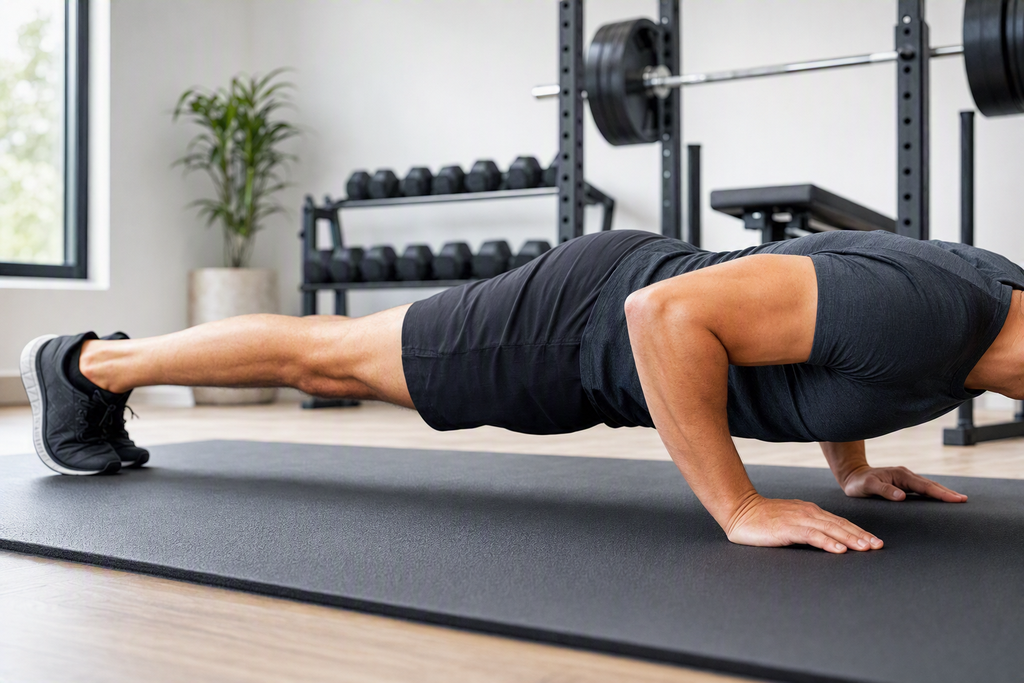
In bodyweight training, overload relies on biomechanical manipulations. You progress by altering leverage, decreasing stability, or increasing range of motion. For example, moving from standard push-ups to decline push-ups increases the percentage of body weight loaded onto the upper body, requiring greater shoulder girdle stability.
Key Takeaways
- Weights offer quantifiable, micro-adjustable resistance increments.
- Calisthenics develops high movement awareness and joint stability.
- Combining basic equipment like adjustable dumbbells with bodyweight movement creates a balanced starting routine.
| Evaluation Variable | Bodyweight Training | Weight Training |
|---|---|---|
| Overload Precision | Requires lever changes | Direct weight increment |
| Equipment Barrier | None to minimal | Requires weights/gym access |
| Lower Body Loading | Limited without single-leg mastery | Highly scalable (squats, deadlifts) |
| Skill Learning Curve | Moderate to high | Low to moderate |
Bodyweight Advantages
- Train anywhere without gym memberships.
- Enhances spatial awareness and core integration.
- Low risk of external impact injuries.
Bodyweight Disadvantages
- Difficult to isolate specific muscle groups.
- Lower body progressive overload caps quickly.
- Skill barriers can delay high intensity work.
- 6-move circuit with easier and harder options
- Warm-up, cool-down and weekly tracker
- Printer-friendly, one page
Instant download • 100% free • No email required
Equipment Needs and Setup Accessibility
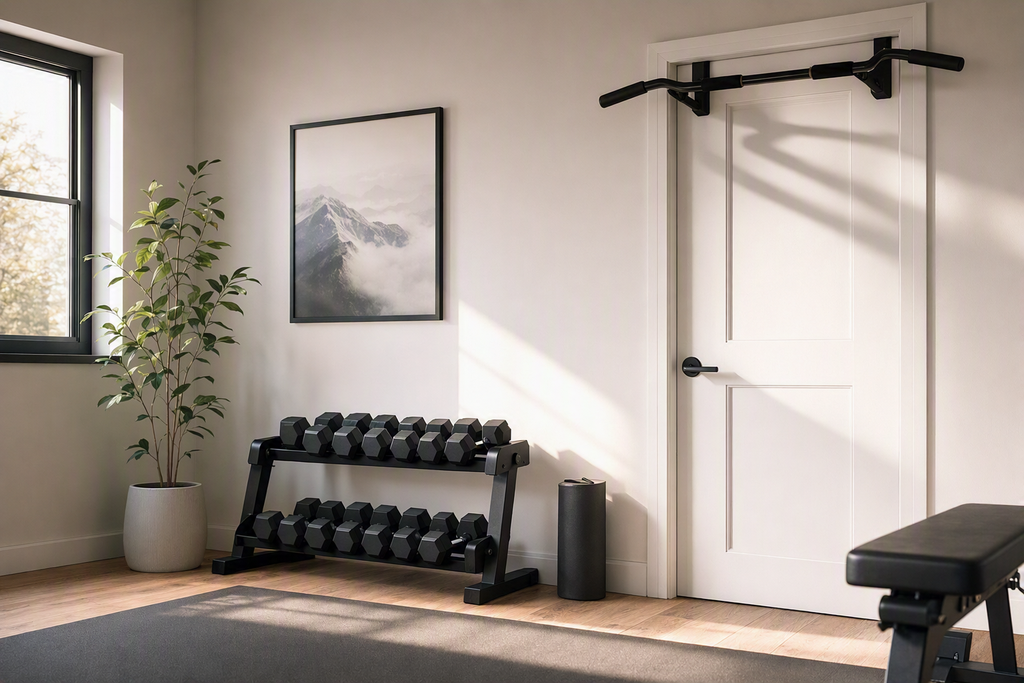
Bodyweight training requires minimal setup. A doorway pull-up bar, a floor mat, and parallel bars or sturdy furniture provide complete upper and lower body coverage. This eliminates financial barriers and commuting friction.
Weight training requires external gear. Beginners can start with basic home equipment or gym access. External weights allow precise targeting of posterior chain muscles, particularly the glutes and hamstrings, which are challenging to overload with bodyweight alone.
Realistic Muscle-Gain Timelines
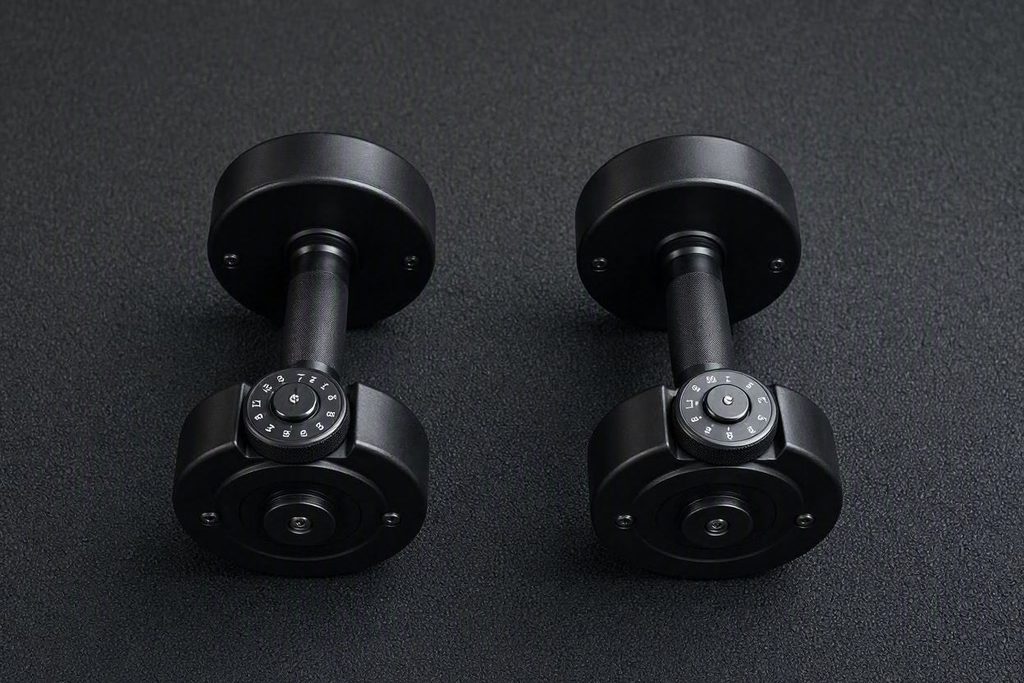
Hypertrophy depends on total volume, proximity to muscular failure, and progressive overload consistency. Beginners following structured programming typically observe initial changes within 6 to 8 weeks.
Weight training often yields visible hypertrophy slightly faster in the first 3 to 6 months. This efficiency stems from immediate isolation control. Bodyweight athletes achieve comparable hypertrophy over 6 to 12 months, though upper body development occurs rapidly once pull-up and dip variations are mastered.
Common beginner errors include sacrificing range of motion to achieve higher repetition counts. In bodyweight movements, half-reps reduce muscle recruitment. In weight training, excessive loading compromises lumbar spine alignment during deadlifts and squats. Maintain controlled eccentric movement phases (2-3 seconds down) across all exercises.
Skip If: Your primary target is maximal leg hypertrophy without learning complex single-leg balance skills.
Bottom Line
- Bodyweight training develops excellent functional movement and core stability at minimal cost.
- Weight training offers simpler, more measurable progressive overload for pure muscle growth.
- A hybrid approach combining bodyweight pulls with weighted hip hinges yields optimal beginner adaptations.
Frequently Asked Questions
Can you build significant muscle with bodyweight exercises alone?
Yes. By utilizing mechanical variations, high-density sets, and advanced leverage progressions like feet-elevated push-ups and single-leg squats, you can build substantial muscle hypertrophy.
Is weight training dangerous for absolute beginners?
No. When starting with light loads, controlled movement speeds, and sound mechanics, weight training is safe and effective for strengthening bones, tendons, and skeletal muscle.
How many days a week should a beginner train?
A full-body routine performed 3 days per week with at least 48 hours of recovery between sessions yields optimal adaptation for novice lifters in both modalities.
- 6-move circuit with easier and harder options
- Warm-up, cool-down and weekly tracker
- Printer-friendly, one page
Instant download • 100% free • No email required