

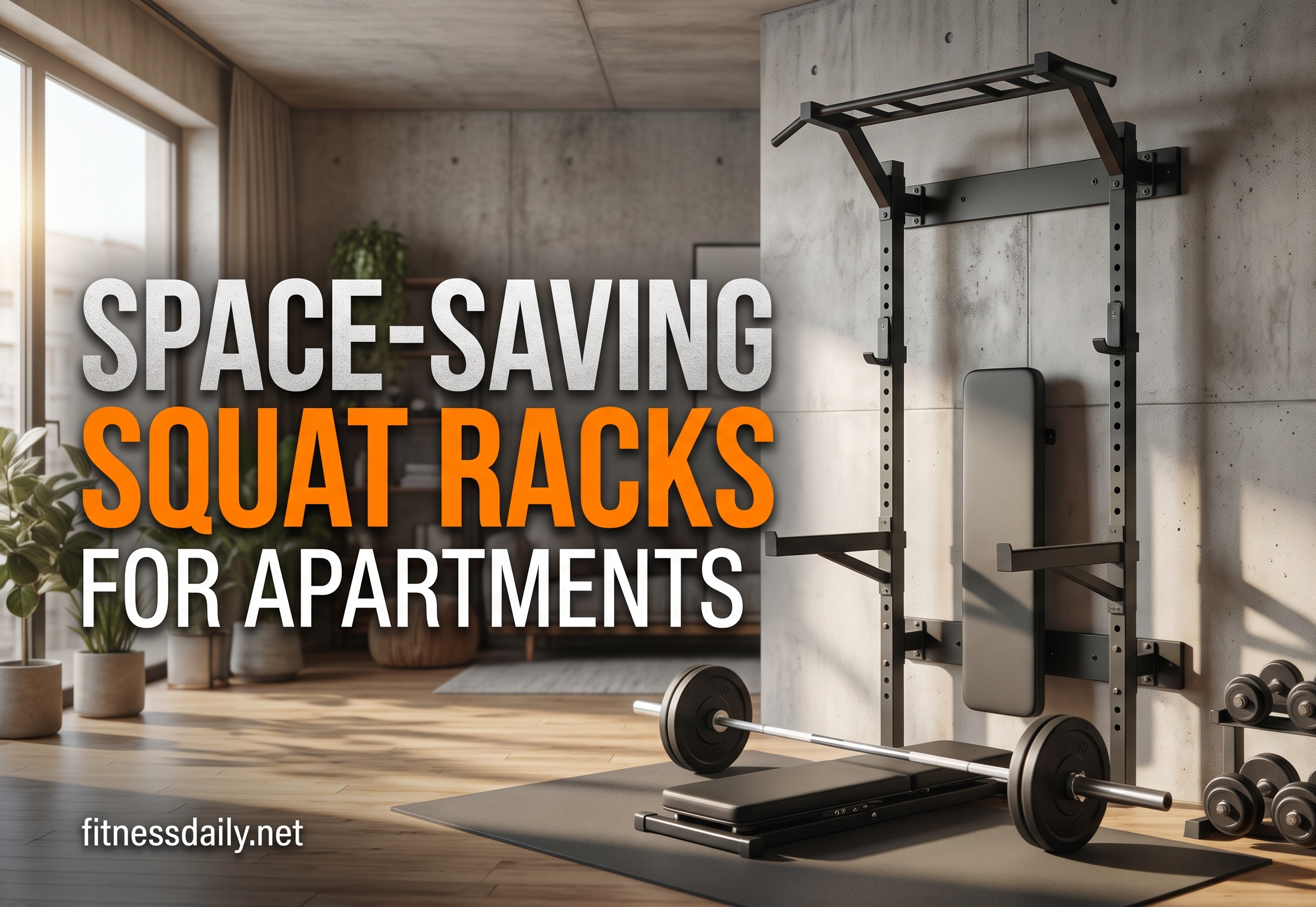
Installing a foldable squat rack apartment setup allows strength training enthusiasts to execute heavy compound lifts without sacrificing valuable residential floor space. For lifters residing in urban apartments, balancing equipment stability, structural load limits, and landlord installation restrictions requires careful equipment evaluation. A space-saving squat rack must fold flush against a wall or tuck neatly into a closet while maintaining structural integrity during heavy squats, overhead presses, and bench pressing.
Quick Summary
- Foldable squat racks reduce home gym depth from 48 inches down to under 5 inches when stowed.
- Wall-mounted folding racks require secure anchoring into wood studs, making them ideal for property owners.
- Free-standing foldable squat racks offer non-permanent strength options for renters avoiding wall holes.
- Selecting heavy-duty 11-gauge steel ensures high weight capacity and frame stability during heavy barbell drops.
Why a Foldable Squat Rack Apartment Setup Makes Sense
Urban residential living demands efficient utilization of limited square footage. Traditional power cages consume upwards of 15 to 20 square feet of dedicated floor space permanently. A foldable squat rack apartment design solves this layout bottleneck by utilizing heavy-duty wall hinges or telescoping frame pins to collapse the uprights flat when workout sessions conclude.
When folded against a wall, most compact racks project fewer than six inches into the living space. This minimalist profile enables living rooms, bedrooms, or dining nooks to function normally throughout the day. Furthermore, exercising at home eliminates commute times and commercial gym membership friction, making consistency easier to maintain.
Renters vs. Owners: Navigating Installation Constraints
The decision between wall-mounted folding racks and free-standing collapsible units largely depends on residential tenure. Wall-mounted designs anchor directly into vertical wall studs using heavy-duty lag bolts. While these units offer superior frame rigidity, they leave significant structural anchor holes that require drywall repair and painting upon move-out.
Renters must evaluate lease agreements carefully before drilling into building studs. Property managers often restrict structural wall modifications or cap total wall-fastener weight ratings. In contrast, non-mounted free-standing folding racks utilize cross-member hinge pins to fold flat without requiring wall penetration. These free-standing models preserve security deposits while offering solid structural stability for squatting and benching.
According to structural engineering standards and safety guidelines published by the U.S. Consumer Product Safety Commission, physical fitness equipment anchored to residential walls must interface directly with structural timber framing rather than hollow drywall anchors to prevent cataclysmic pull-out failure under heavy dynamic loading.
Key Takeaways
- Wall-mounted models provide maximum rigidity but require stud drilling and wall repairs upon move-out.
- Free-standing folding racks protect rental security deposits by eliminating permanent wall anchors.
- Always measure ceiling height, door clearance, and unfolded depth before finalizing equipment selection.
- High-grade 11-gauge steel tubing provides superior torsional stability compared to lighter 14-gauge alternatives.
| Rack Feature | Wall-Mounted Folding Rack | Free-Standing Folding Rack |
|---|---|---|
| Stowed Depth | 4 to 6 inches | 10 to 14 inches |
| Wall Damage | High (Lag bolt holes in studs) | Zero (Self-supporting frame) |
| Installation Effort | High (Stud finder, leveling, drilling) | Moderate (Bolt assembly) |
| Weight Capacity | 800+ lbs | 500 to 700 lbs |
| Best Suited For | Homeowners and long-term tenants | Apartment renters and temporary spaces |
Key Specifications to Evaluate Before Purchase
When reviewing technical specifications for a space-conscious rack, pay close attention to steel tubing dimensions and gauge thickness. Commercial-grade racks utilize 3×3-inch or 2×3-inch steel uprights crafted from 11-gauge steel. Lighter 14-gauge steel frames may feel flexy under loads exceeding 300 pounds and can show structural wear around pin connection points over time.
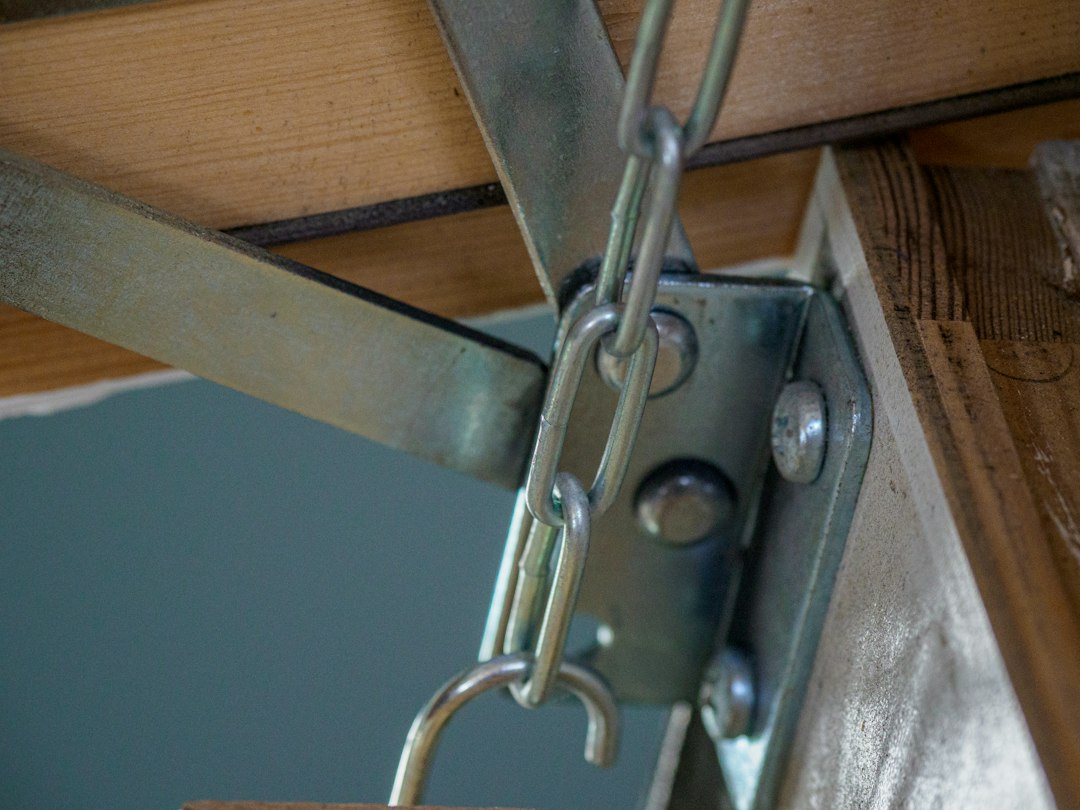
Pivot mechanisms and locking pins require precise tolerance engineering. High-quality folding racks incorporate detent pins, heavy-duty stringer plates, and smooth hinge joints that swing effortlessly without dragging across hardwood or carpeted floors. Ensure that the rack uprights include laser-cut hole spacing, preferably Westside spacing through the bench press zone, allowing precise safety arm height adjustments.
Safety-First Installation and Usage Checklist
Executing heavy barbell movements inside an apartment requires uncompromising safety protocols. Proper installation ensures equipment longevity while protecting living spaces from structural damage. Follow this practical checklist during initial setup:
- Locate Wall Stud Centers: Use a high-accuracy magnetic or electronic stud finder to identify the exact center of two adjacent wall studs (typically spaced 16 inches or 24 inches apart).
- Install Heavy Stringer Boards: Mount thick wooden stringers (such as 2×10 lumber) horizontally across wall studs before attaching rack hinges. Stringers distribute pulling forces across multiple framing members.
- Check Floor Levelness: Unlevel apartment floors cause frame distortion and binding during folding. Use shims beneath upright bases if floor slopes are present.
- Verify Overhead Clearance: Measure ceiling height against total rack height and pull-up bar elevation. Ensure adequate space remains above the bar for head clearance during chin-ups.
If you are working with restricted vertical room or unique room dimensions, check our detailed guide on garage gym setups for low ceilings and small spaces to maximize overhead clearance and equipment positioning.
- Space measuring, starter kit and later upgrades
- Safety check and flooring guide
- Budget notes to buy in stages
Instant download • 100% free • No email required
Proper biomechanical alignment during squatting and benching requires stable footing. Research published by the National Strength and Conditioning Association emphasizes that base stability and secure safety catches are vital components in mitigating traumatic lifting injuries during heavy unassisted home training workouts.
Evaluating Real-World Space Constraints and Equipment Versatility
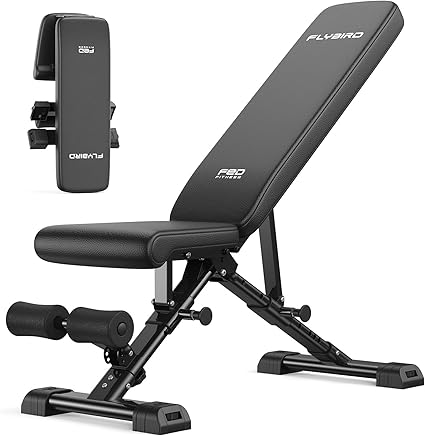
A collapsible squat rack must integrate seamlessly with auxiliary home gym gear. Adjustable weight benches, spotter arms, and barbell storage attachments must also store efficiently when the main frame is stowed. Selecting accessories designed with quick-release pins simplifies daily teardown routines.
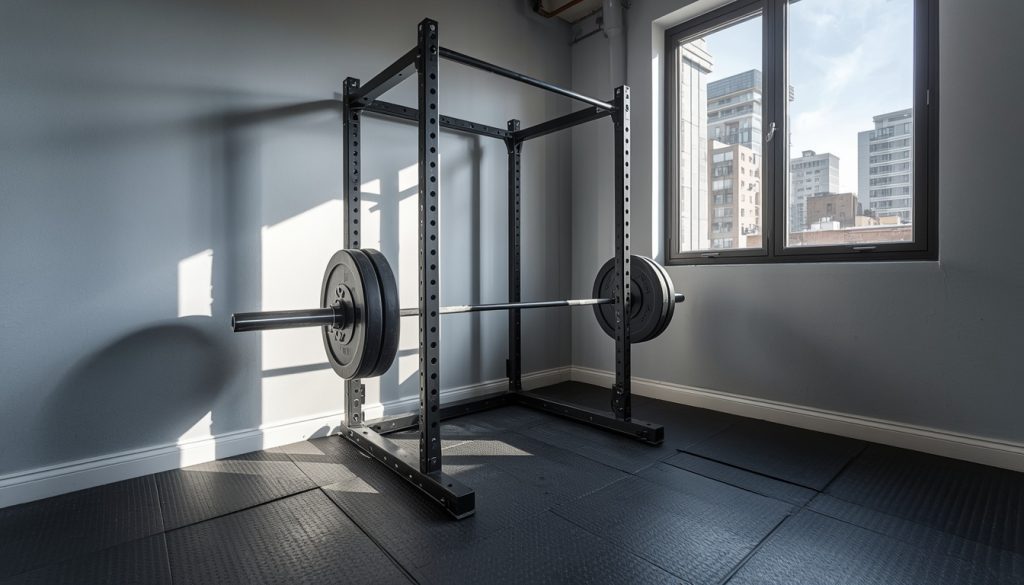
To cushion heavy barbell drops and protect underlying floor joists, placing heavy duty rubber gym mats under the rack frame is essential for apartment lifters. High-density rubber dampens acoustic vibrations and prevents heavy iron plates from scarring residential flooring.
Pros
- Reclaims over 80% of floor space when stowed flat against the wall.
- Supports heavy compound movements including squats, presses, and pull-ups.
- Heavy-duty steel construction delivers commercial-grade lifting stability at home.
Cons
- Wall-mounted models require stud drilling and permanent structural modification.
- Unfolding and installing locking pins adds minor setup time prior to workouts.
- May require dedicated stringer boards for non-standard wall stud intervals.
Skip If: You live in a short-term rental where all wall drilling is strictly prohibited and lack floor space for a free-standing folding alternative.
Bottom Line
- A foldable squat rack provides a full-featured barbell training platform tailored for compact residential living.
- Property owners can maximize space and load capacity with heavy-duty wall-mounted designs anchored to studs.
- Tenants should opt for non-anchored free-standing folding units or secure written landlord clearance prior to wall installation.
Frequently Asked Questions
Can a foldable squat rack handle heavy squat loads over 400 pounds?
Yes, quality foldable squat racks crafted from 11-gauge steel and properly anchored into structural studs are rated for loads ranging between 800 and 1,000 pounds. Always check the manufacturer’s rated static load capacity before purchasing.
How far does a folded squat rack extend from the wall?
Most wall-mounted folding squat racks project between 4 and 6 inches from the wall surface when fully collapsed and pinned. Free-standing folding units generally require 10 to 14 inches of depth when folded.
Do I need stringer boards to install a wall-mounted folding rack?
While some racks can bolt directly to studs spaced exactly 16 inches apart, mounting heavy wood stringer boards horizontally across studs first provides superior load distribution and allows flexible hinge positioning regardless of stud alignment.
Can I perform pull-ups on a folding squat rack in an apartment?
Yes, most folding racks include an adjustable pull-up bar cross-member. Ensure your ceiling height provides at least 12 to 18 inches of clearance above the bar so your head does not contact the ceiling during pull-up repetitions.
Will dropping a heavy deadlift or squat damage apartment floor joists?
Dropping heavy weights on unpadded residential floors can crack subflooring and transmit loud acoustic shocks to lower floors. Always lay down 3/4-inch rubber stall mats or crash pads beneath your lifting area to cushion impact forces.
Are free-standing folding racks safe without wall anchors?
Free-standing folding racks feature wide base frames and structural cross-members that maintain stability during standard lifting movements. However, lifters should avoid aggressive dynamic movements that could tip unanchored lightweight racks.
- Space measuring, starter kit and later upgrades
- Safety check and flooring guide
- Budget notes to buy in stages
Instant download • 100% free • No email required