


When comparing a power rack vs half rack for small home gym setups, the decision ultimately comes down to available floor depth, ceiling clearance, and the need for enclosed safety systems. A full power rack provides four vertical uprights, creating an enclosed lifting cage that offers maximum security during heavy barbell movements. However, it demands a significantly larger footprint. A half rack utilizes two main uprights, saving valuable space by moving the lifting zone outside the frame.
For lifters building a training space in a standard garage or a spare apartment room, maximizing every square inch of the floor is a priority. Choosing the wrong rack style can severely limit your range of motion or compromise your ability to train safely without a spotter.

Quick Summary
- Power racks require more floor depth but provide 360-degree safety for solo lifting.
- Half racks save space but require lifting outside the frame, relying heavily on spotter arms.
- Garage gyms usually accommodate power racks, while apartments often necessitate a half rack.
Table of Contents
Power Rack vs Half Rack: Spatial and Safety Comparison
This comparison focuses strictly on spatial efficiency, biomechanical safety, and exercise versatility in constrained environments. It analyzes how different rack footprints interact with standard barbell lengths and how each structure handles load failure during heavy resistance training.
Evaluating these two options requires looking past the marketing specifications. A rack’s true footprint includes the operational space required for the human body, the barbell, and plate loading clearances.
Primary Evaluation Criteria
Before purchasing, a lifter must measure their available space dynamically. Static dimensions do not account for the movement patterns of the barbell.
- Operational Depth: A full rack needs clearance in front and back. A half rack can sit nearly flush against a wall.
- Safety Mechanisms: Pin pipes inside a cage capture weight securely. Spotter arms on the front of a half rack alter the unit’s center of gravity during a drop.
- Ceiling Clearance: Both racks offer short variations, but pull-up bar placement often dictates the minimum required height.
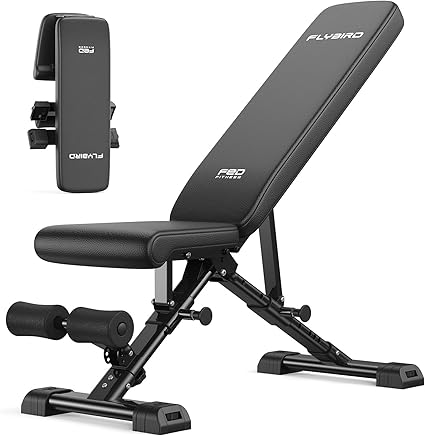
Pairing your rack with a good flat weight bench will determine how much internal depth you actually need for horizontal pressing movements.
Structural Comparison and Lifting Range
A power rack creates an internal lifting zone. When you step back with a heavy load, you remain entirely inside the structure. If form breaks down, the lateral pin pipes catch the bar directly between the four uprights. This keeps the load centered over the rack’s base, preventing tipping.
A half rack forces you to walk the weight out in front of the base uprights. The safety spotter arms extend outward to catch the bar. Because you lift outside the frame, you gain unrestricted overhead clearance for movements like the overhead press, which might hit the cross-members of a shorter power rack.
- When lifting outside the uprights on a half rack, the center of gravity shifts forward.
- If you fail a heavy back squat and drop the bar onto the spotter arms, the rack can tip forward violently.
- Always bolt a half rack to the floor or weigh down the rear base extensions with heavy plates.

Key Takeaways
- Power racks are optimal for heavy, solitary strength training where safety is the priority.
- Half racks provide superior overhead mobility for Olympic lifts and standing presses.
- A half rack is heavily dependent on rear-weighting or floor anchoring to remain stable under impact.
| Feature | Power Rack | Half Rack |
|---|---|---|
| Footprint Depth | High (48+ inches) | Low (24-36 inches) |
| Solo Lifting Safety | Excellent (Enclosed) | Moderate (Spotter Arms) |
| Overhead Clearance | Restricted by top cross-members | Unrestricted (Lift happens outside) |
- Space measuring, starter kit and later upgrades
- Safety check and flooring guide
- Budget notes to buy in stages
Instant download • 100% free • No email required
Suitability Filter: Which Rack Fits Your Needs?
Your physical location and training style dictate the correct choice. Applying the wrong rack to a specific environment creates ongoing friction in your training routine.
Who Should Choose a Power Rack?
Lifters prioritizing maximum load capacity should opt for a power rack. If you train alone in a garage gym with ample floor depth, the four-post design provides unmatched peace of mind during maximum-effort squats and bench presses.
Who Should Choose a Half Rack?
If you are confined to a spare bedroom or a crowded single-car garage, the half rack is the superior tool. It is also the correct choice for athletes performing dynamic Olympic weightlifting movements, as stepping back out of the rack allows for unhindered overhead mobility.
Risks and Training Limitations
Choosing a half rack introduces the risk of leverage instability. Because the safety spotters extend horizontally away from the uprights, a dropped barbell acts as a lever, pulling the rack forward. This necessitates strict adherence to floor-anchoring protocols.
Conversely, a power rack’s primary limitation is spatial consumption. Once assembled, it dominates the room. If the internal depth is too shallow (under 24 inches), lifters may find their barbell clipping the uprights during the natural arc of a heavy back squat.
Final Decision Framing
Evaluate your training environment honestly. Measure from the wall to the point where your barbell will travel, and ensure you have an absolute minimum of 7 feet of lateral clearance for the bar itself, regardless of which rack you choose.

Bottom Line
- If your space allows for a 48-inch depth, invest in the structural security of a power rack.
- If depth is restricted and you train dynamic overhead movements, a half rack is the necessary compromise.
Make your selection based on safety and spatial reality, not on aesthetic preferences. A functional gym must safely support the lifter’s biomechanical needs above all else.
Frequently Asked Questions
Can I perform pull-ups on a half rack?
Yes, most half racks feature a pull-up bar connecting the two uprights. However, doing pull-ups on an unanchored half rack can cause tipping. Always secure the base.
Do I have to bolt down a power rack?
While many power racks are heavy enough to remain stable without bolting, manufacturers heavily recommend it. Flat-footed power racks with a rear stabilizer bar offer better unanchored stability.
Is a half rack safe for bench pressing?
Yes, a half rack is safe for bench pressing provided you use high-quality, properly rated spotter arms and ensure the bench is positioned correctly relative to the uprights.
Can I fit a power rack in an apartment?
It is possible, but challenging. You must verify floor load-bearing limits, ceiling height, and room dimensions. Short power racks exist specifically for low-ceiling environments.
What is the difference between a half rack and a squat stand?
A squat stand generally lacks overhead cross-members and integrated pull-up bars. A half rack is a more robust structure that includes upper stabilization and longer base supports.
How much space do I need around the rack?
You need a minimum of 7 feet of width to load a standard 7-foot barbell, plus at least 18 inches of clearance on each side to comfortably slide weight plates onto the sleeves.
- Space measuring, starter kit and later upgrades
- Safety check and flooring guide
- Budget notes to buy in stages
Instant download • 100% free • No email required