


Progressive overload is the fundamental training principle of systematically increasing the physical demands placed on your muscular system to stimulate continuous adaptations in strength and muscle size. When beginners get stuck lifting the exact same weight week after week, the solution is rarely to force heavier plates onto the bar prematurely. Instead, you break strength plateaus by manipulating four primary overload levers: rep ranges, movement tempo, total set volume, and training density.
If your progress has stalled on key compound exercises, continuing to push higher loads with compromised execution increases joint fatigue and elevates injury risk without delivering additional stimulus. The most effective approach for novice and intermediate lifters is to expand your definition of overload beyond the barbell weight alone.
Skip this if you have been lifting for less than two weeks or are currently recovering from an acute joint injury; in those cases, strict adherence to foundational movement mechanics with fixed light loads takes absolute precedence over any form of progression.
- One short workout a day, no equipment
- Active rest day and stretch day included
- Printable one-page plan with tips
Instant download • 100% free • No email required
Quick Summary
- Progressive overload requires challenging muscles beyond their current capacity, but load is only one of six viable progression levers.
- The double progression method allows beginners to master a rep range (e.g., 8 to 12 reps) before increasing the working weight.
- Manipulating tempo and slowing down the eccentric phase increases time under tension without taxing delicate connective tissues.
- Increasing set density and total weekly volume provides a strong hypertrophic signal when weight additions stall out.

The Physiological Science Behind Progressive Overload
Your muscular and nervous systems operate on the principle of adaptation under stress. When subjected to a specific physical demand, muscle fibers undergo micro-tears and mechanical tension, signalling cellular pathways like mTOR to synthesize new proteins. Simultaneously, your central nervous system improves motor unit recruitment and firing frequency. According to established research on mechanical tension and muscle hypertrophy, mechanical tension is the single driver of muscular growth.
However, the body quickly grows accustomed to familiar stress. If you perform three sets of ten reps with fifty pounds every Monday, your body adaptively neutralizes that specific stimulus. Once the baseline accommodation occurs, muscle growth and strength gains cease. This state of stagnation is known as a lifting plateau.
Many beginners mistake progressive overload for an ego-driven mandate to add 5 pounds to the barbell every single session. While linear progression works during the first few months of training, neural adaptations eventually taper off. Forcing weight increases when your neuromuscular system is unready leads to breakdown in form, shorter ranges of motion, and compensation patterns where secondary muscle groups absorb the load.
Why Beginners Get Stuck on the Same Load
Understanding why you hit a plateau is essential before selecting an overload strategy. Stagnation on a specific weight usually traces back to four primary root causes:
- Insufficient Recovery Capacity: Inadequate sleep, high life stress, or caloric deficits limit muscle tissue repair and systemic nervous system readiness.
- Micro-Load Gaps: Standard gym plates increase load by 5 to 10 pounds total. On smaller muscle groups like deltoids or biceps, a 5-pound jump represents a massive 15% to 20% increase in total resistance, which exceeds short-term strength gains.
- Sub-Optimal Movement Execution: Rushing through reps using momentum bypasses the target muscle, creating a false plateau where target fibers are never fully recruited under control.
- Fixed Mindset Around Weight: Viewing the numerical value on the dumbbell as the sole indicator of progress leads lifters to ignore improvements in control, stamina, and movement quality.
To overcome these barriers, professional fitness trainers utilize a broad toolkit of overload variables. By shifting focus toward reps, tempo, volume, and frequency, you maintain progress without risking joint stress from prematurely heavy loads.
Key Takeaways
- Weight is a result of progressive overload, not the sole definition of it.
- Leveraging rep ranges via double progression prevents neural burnout and technical failure.
- Eccentric tempo control amplifies mechanical tension without changing plate weight.
- Adding set volume expands your training capacity safely over multi-week training blocks.
| Overload Lever | Primary Adaptation | Fatigue Impact | Ideal Beginner Scenario |
|---|---|---|---|
| Load (Weight) | Maximal Neural Drive & Bone Density | High Central Nervous System | First 8-12 weeks of linear progression |
| Repetitions | Hypertrophy & Local Endurance | Moderate Muscular Fatigue | Stuck between standard dumbbell jumps |
| Tempo / TUT | Hypertrophy & Tendon Resilience | High Metabolic Strain | Overcoming joint irritation or mini-plateaus |
| Set Volume | Work Capacity & Tissue Growth | Moderate Systemic Fatigue | Transitioning from novice to intermediate |
| Density / Rest | Metabolic Conditioning & Efficiency | High Cardiovascular/Local | Time-restricted workout routines |
Lever 1: Repetitions and the Double Progression Model
When external load cannot be increased, adding repetitions with the exact same weight is the most natural method of progressive overload. If you bench press 135 pounds for three sets of eight repetitions in week one, and then successfully complete three sets of nine repetitions in week two, your total tonnage lifted has increased substantially.
Total Tonnage Calculation: Weight x Reps x Sets = Tonnage
Week 1: 135 lbs x 8 reps x 3 sets = 3,240 lbs lifted.
Week 2: 135 lbs x 9 reps x 3 sets = 3,645 lbs lifted.
By adding just one rep per set, you increased total work output by 405 pounds without adding a single plate to the bar. To standardize this practice, certified strength coaches utilize the Double Progression System.
How Double Progression Works Step-by-Step
- Select a target rep range rather than a fixed number (e.g., 8 to 12 reps).
- Choose a working weight you can handle with pristine form for 3 sets of 8 reps.
- In subsequent sessions, keep the weight constant and attempt to add reps to each set.
- Once you reach 3 sets of 12 reps with immaculate technique, earn the right to increase the weight by the smallest available increment (e.g., 2.5 to 5 pounds).
- Upon increasing the load, your rep count naturally drops back down to 3 sets of 8. Repeat the process.
Double progression eliminates guesswork and prevents ego-driven jumps in resistance, making it the safest overload protocol for home and commercial gym training alike.
Lever 2: Tempo and Time Under Tension (TUT)
Movement tempo dictates the rate at which muscle fibers contract during different phases of an exercise. A standard prescription is written as a four-digit code, such as 3-1-1-0:
- First Digit (3): Eccentric phase in seconds (lowering the load under tension).
- Second Digit (1): Isometric pause at the bottom/stretched position in seconds.
- Third Digit (1): Concentric phase in seconds (lifting or driving the load up).
- Fourth Digit (0): Pause at the top/shortened position in seconds.
If you drop a barbell rapidly during a squat and bounce off your knees, muscle fibers experience minimal tension during the lowering phase. Momentum does the work. By imposing a 3-second eccentric tempo, muscle fibers are forced to actively resist gravity, producing significant mechanical strain and signaling muscular hypertrophy.
In accordance with American College of Sports Medicine guidelines, controlling phase velocity maximizes fiber recruitment while safeguarding joint structures against high peak impact forces. If you are stuck using a 30-pound dumbbell on overhead presses, slowing your eccentric lowering from 1 second to 3 seconds transforms that familiar load into a completely fresh training stimulus.
Lever 3: Total Set Volume and Workload Manipulation
Volume represents the total number of hard, high-effort working sets performed for a given muscle group over a training cycle. Muscle hypertrophy operates along a volume-response curve: higher volume generally yields greater tissue adaptation up to your Maximum Recoverable Volume (MRV).
When load and reps stall across three sets, adding a fourth working set increases overall stimulus by 33%. Consider this four-week progression block for dumbbell chest pressing:
- Week 1: 3 sets of 10 reps @ 40 lbs (Total Volume: 30 reps / 1,200 lbs)
- Week 2: 3 sets of 11 reps @ 40 lbs (Total Volume: 33 reps / 1,320 lbs)
- Week 3: 4 sets of 10 reps @ 40 lbs (Total Volume: 40 reps / 1,600 lbs)
- Week 4 (Deload): 2 sets of 8 reps @ 40 lbs (Recovery phase)
By increasing sets rather than load, you elevate stimulus while remaining within an execution boundary where technique remains flawless.
Lever 4: Training Density and Rest Interval Control
Training density refers to the amount of mechanical work completed within a specific timeframe. You can overload your muscles by completing the exact same volume of work in less time.
- 10 exercise rows with 4 sets each
- Notes column for each exercise
- Session check for warm-up, form, energy and sleep
Instant download • 100% free • No email required
If you currently perform 3 sets of 10 dumbbell rows with 120 seconds of rest between sets, your recovery interval is long enough to clear metabolic byproducts completely. By systematically reducing your rest periods by 15 seconds each week (120s → 105s → 90s → 75s), you force local muscle tissue to regenerate energy under elevated metabolic stress.
Higher metabolic stress enhances the recruitment of high-threshold motor units in shorter timeframes. This overload lever is exceptionally effective for isolation exercises such as lateral raises, dumbbell curls, and tricep extensions where heavy weight loading can irritate elbow and shoulder joints.
Lever 5: Range of Motion (ROM) and Execution Quality
Increasing the range of motion through which a muscle operates under load represents one of the most underutilized forms of progressive overload. Performing a quarter squat with 200 pounds imposes far less mechanical tension on the quadriceps and gluteals than performing a full deep squat with 135 pounds.
If you are stuck on a specific exercise load, audit your movement depth. Progressing from a partial range of motion to a full, pain-free range of motion increases the distance the weight travels, effectively expanding total mechanical work done without changing the weight plates.
Furthermore, training muscle tissue at longer muscle lengths (in the deep stretch position) creates distinct hyper-trophic stimuli. Adding an pause in the stretched position of a dumbbell fly or lunges increases mechanical strain exponentially.
Trainer Breakdown: Applying Overload to Key Compound Movements
To put these concepts into practical execution, let us review three foundational movements. As a professional trainer, I insist on mastering positioning before altering any load variable.
1. The Goblet Squat
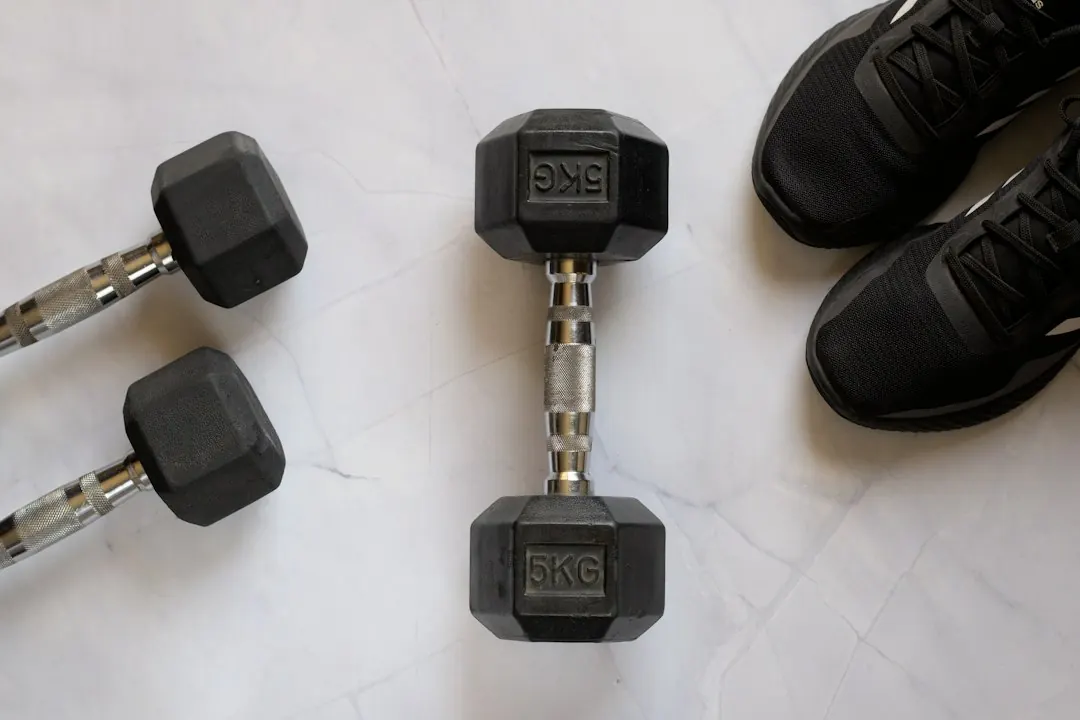
The goblet squat builds anterior core stability and quad strength. Owning a versatile adjustable dumbbell set allows fine-grained load jumps at home, but when load is fixed, tempo and depth are your primary levers.
- Hold the weight vertically against your sternum with elbows tucked inward.
- Set your feet slightly wider than shoulder-width, pointing toes outward 15 to 30 degrees.
- Inhale deep into your abdomen, brace your core, and lower your hips down between your ankles over a full 3-second count.
- Pause for 1 second at the bottom position without resting the bell on your thighs.
- Drive through your full foot to return to the top standing position under control.
2. The Romanian Deadlift (RDL)
The RDL targets the posterior chain—specifically hamstrings and glutes—through hip hinge mechanics. Overloading this movement via range of motion and stretch tempo yields phenomenal hypertrophy.
- Stand tall holding resistance at hip height with soft, unlocked knees.
- Push your hips backward toward the wall behind you while keeping your spine rigid and neutral.
- Lower the weight along your thighs over a 3 to 4 second eccentric tempo until you feel a deep stretch in your hamstrings.
- Stop lowering when your hips can no longer travel backward; do not round your lower back to reach the floor.
- Contract your glutes forcefully to pull your torso upright into the starting position.
3. The Single-Arm Dumbbell Row
This pulling pattern builds latissimus dorsi and upper back thickness. Increasing execution quality and top-position isometric hold duration overcomes rowing plateaus instantly.
- Place your left knee and left hand firmly on a flat bench to support your spine.
- Hold the weight in your right hand with a neutral grip and fully extend your shoulder forward to stretch the lat.
- Pull your elbow back toward your hip pocket, squeezing your shoulder blade toward your spine.
- Hold the fully contracted top position for 2 seconds before lowering under a 3-second tempo.
Pros
- Prevents joint wear associated with constant heavy loading.
- Allows continuous progress using limited home gym equipment.
- Builds superior movement quality, tendon durability, and core stability.
- Reduces risk of central nervous system overtraining and injury.
Cons
- Requires meticulous tracking in a workout logbook or app.
- Demands mental discipline to avoid cheating on tempos and pauses.
- Will eventually require physical weight additions at advanced stages.
Skip If: You are an advanced powerlifter peaking specifically for a 1-rep max competition where absolute load velocity takes absolute precedence.

Downsides and Limits of Unchecked Progressive Overload
While progressive overload is indispensable, applying it blindly without fatigue management leads to diminished returns and physical breakdown. You cannot force linear or non-linear adaptation infinitely without encountering clear biological boundaries.
1. Connective Tissue Overload
Muscular tissue adapts faster than tendons and ligaments due to superior blood supply. If you push progressive overload aggressively week after week without planned recovery phases (deloads), your muscles may handle the work, but patellar, Achilles, or elbow tendons will develop micro-trauma leading to tendinopathy.
2. Systemic Central Nervous System Fatigue
Constantly taking sets to absolute muscular failure in pursuit of rep progression places significant demands on your central nervous system. Over time, high nervous system fatigue manifests as poor sleep quality, elevated resting heart rate, irritability, and sudden drop-offs in strength performance across all exercises.
Structured Step-by-Step Plateau-Breaker Protocol
If you have been unable to add weight or reps to a primary exercise for three consecutive workouts, execute this four-step diagnostic protocol:
- Step 1: Audit Form and Range of Motion. Film your working sets. Ensure you are not cutting depth or using momentum as sets become challenging.
- Step 2: Pivot to Tempo Manipulation. Lock the weight at its current load. Shift to a 3-1-1-0 tempo for two training sessions to build eccentric control and fiber recruitment.
- Step 3: Implement Double Progression. Drop back to the bottom of your chosen rep range (e.g., from 10 reps down to 8) and rebuild rep counts with pristine control.
- Step 4: Take a Deload Week. If performance continues to drop, reduce your training volume and load by 40% for 7 days to flush out accumulated systemic fatigue before re-testing.
Bottom Line
- Never let ego dictate load additions; true strength is built on movement quality and controlled stimulus.
- Rotate through reps, tempo, volume, and density whenever load progression stalls.
- Track every set, rep, and tempo parameter in a dedicated training log to verify progression objective reality.
Frequently Asked Questions About Progressive Overload
How often should a beginner progressive overload?
Beginners in their first 3 to 6 months can often progress in reps or load weekly. However, progress is non-linear. As you gain experience, expect progress to occur every 2 to 4 weeks across various overload variables.
Do I have to go to absolute muscle failure to apply progressive overload?
No. Training to absolute failure is not required for muscle growth or strength gains. Leaving 1 to 3 repetitions in reserve (RIR) allows you to stimulate adaptations while minimizing systemic fatigue and keeping form intact.
Can you build muscle with progressive overload without adding heavy weight?
Yes. Muscle tissue detects mechanical tension and effort, not the external weight label. By increasing reps, expanding range of motion, slowing down movement tempo, and shortening rest intervals, you create substantial overload without adding physical weight.
What should I do if my progress stops on all exercises at once?
When progress halts across your entire program simultaneously, the issue is systemic recovery rather than exercise design. Take a planned deload week, prioritize 7-9 hours of nightly sleep, ensure adequate caloric intake, and reduce external life stressors.
How long should I stay on a single rep range before changing it?
Stay within a specific rep range (e.g., 8 to 12 reps) as long as you are making progress using double progression. Only alter the rep range or core exercise structure when performance completely plateaus for more than 3 to 4 consecutive weeks.
### How do I know if I added weight too quickly?
If adding weight causes your range of motion to shorten, forces you to swing or use momentum, or shifts work away from the target muscle group toward your joints, you added load too quickly. Reduce the weight immediately and rebuild using tempo or higher repetitions.
- 10 exercise rows with 4 sets each
- Notes column for each exercise
- Session check for warm-up, form, energy and sleep
Instant download • 100% free • No email required